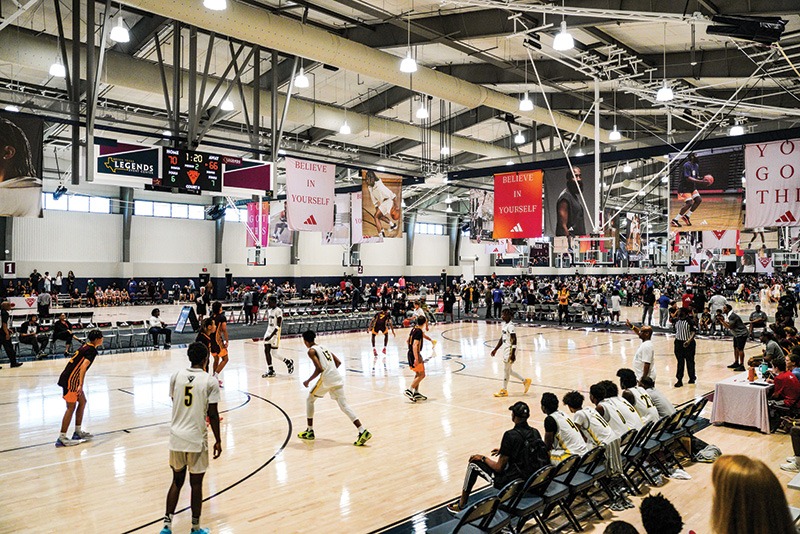
Communities across the U.S. are increasingly exploring the development of sports facilities, whether to better serve local residents, boost year-round tourism, or anchor broader mixed-use redevelopment projects. However, as appealing as these projects are, they are also real estate-intensive, capital-intensive, and operationally complex. Success requires more than a compelling vision.
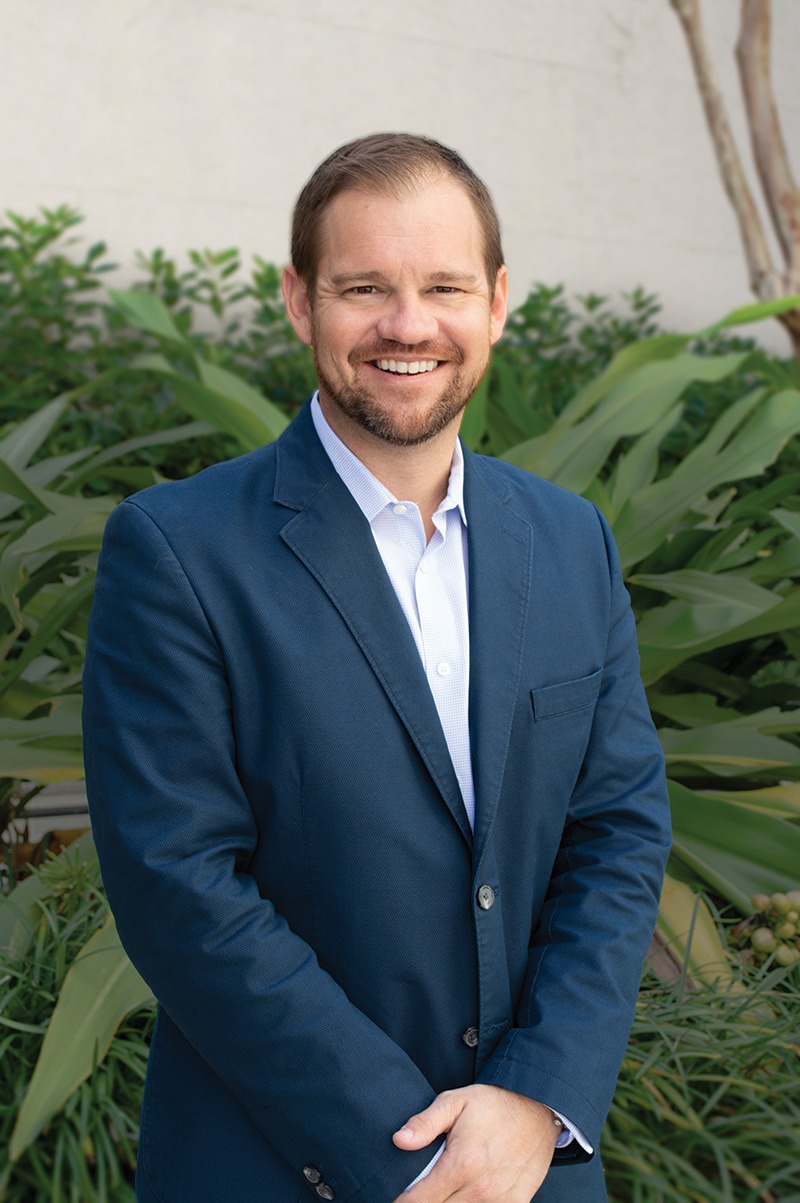
Few people understand that better than Eric Sullivan, a founding partner with the Sports Facilities Companies (SFC), which supports communities nationwide in planning, designing, and operating sports venues. His team has worked with more than 3,000 communities and currently operates more than 100 facilities. Sullivan says the communities that succeed are the ones that enter the process with clarity, flexibility, and a willingness to ground big ideas in financial and operational reality.
Here are seven essential lessons he shares for any community considering a major sports facility investment.
1. Define what success means—before you build anything
The most important early decision has nothing to do with design or construction. It’s about purpose. “The biggest factor for me would be really defining what success is for the community,” Sullivan says. “If we’re trying to serve our local residents and clubs and user groups, that can be a great outcome and that can look like a more traditional recreation facility.”
But communities with tourism goals require a very different approach. “If the goal is driving more tourism into the market—heads in beds—then we’re going to be talking about larger sports tourism complexes,” he explains. These must be sized to attract teams from beyond a four- to six-hour drive radius, which is the threshold where overnight stays become likely.
A third and increasingly common vision is to serve both locals and visitors. Sullivan notes that many of today’s blended-use or mixed-use developments are anchored by facilities “that are not just a destination during travel tourism seasons—they’re a destination 365 days a year.”
Clarifying which of these outcomes you want will shape every decision that follows.
2. Right-size your vision to fit your market
Once success is defined, the next question is scale—but bigger isn’t always better, and smaller isn’t always safer.
Sullivan emphasizes that the right approach begins with community context. “Part of that conversation is rightsizing,” he says. Land availability, funding mechanisms, hotel inventory, and existing seasonal tourism patterns all influence what’s viable.
Communities don’t need massive complexes to have an impact. Some successfully operate six-court indoor facilities or four to six outdoor fields. “The way they program it, they still have significant impact,” he says.
But if your goal is to host major regional or national events, the bar rises. “On the indoor court side, you probably need a minimum of eight to 10 basketball courts, which then double as 16 to 20 volleyball courts,” Sullivan says. “On the outdoor side… getting up to 10, 12, 16, and even more than 20 fields isn’t unheard of.”
The key is matching your ambition to your community’s actual capacity—not the other way around.
3. Let a detailed financial pro forma be your guide
If communities struggle with one thing most, Sullivan says, it’s tying their vision back to financial reality. “The most important pre-development step for communities is developing a thorough and detailed financial analysis,” he says. This pro forma becomes “the sandbox” in which every component of the project is tested and refined.
That analysis covers far more than construction costs. Among other components, it must also account for the following:
- Land costs (including terrain balancing, timber clearing, wetlands mitigation)
- Furniture, fixtures, and equipment (FF&E)
- Owner-supplied equipment, from balls and cones to pinnies and signage
- Operational startup costs, which many communities underestimate
“We don’t just open the doors day one and start to incur costs,” he notes. “We need to hire people before we open. We need to start marketing before we open.”
Revenue forecasting must also be meticulous. Local-use revenue streams can include leagues, camps, clinics, fitness memberships, and after-school programming. Tourism-driven revenue includes tournaments, showcases, meets, destination camps, and other events people are willing to travel for.
Each revenue stream must be matched with direct expenses, followed by overhead expenses, including staffing, insurance, branding, marketing, training, and third-party management. Only then can a community understand the potential net operating income—or the level of subsidy it may need.
Sullivan sees too many projects falter because people “live in vision… and they don’t tie that vision back to a financial reality.” But when done correctly, the pro forma becomes the foundation architects and engineers use to design a facility that matches the true needs, goals, and budget of the community.

4. Do your homework before going public
It’s tempting to generate excitement early, but Sullivan cautions strongly against taking a loosely formed idea to the public. “Before you take the vision out to the public, do some of this homework so you can answer the hard questions,” he says. Without accurate information, expectations can spiral quickly. “If you don’t control the message, the message controls you.”
Because the public has a stake in the outcome—and often in the funding—communities need to approach communication with caution. Promising features that later get removed, discovering land constraints mid-process, or revealing underestimated costs can erode trust.
Some pre-development work can be conducted quietly within a municipality’s existing structures—such as CVBs, parks and recreation departments, or economic development offices—before any announcements are made. The more prepared you are when public engagement begins, the smoother the process will be.
5. Be creative about land—imperfect sites can become remarkable assets
“These facilities are real estate intensive,” Sullivan says. Outdoor complexes can require 50, 80, even 100 acres, making land one of the biggest hurdles. But the best solutions often come from thinking differently.
Sullivan highlights several categories of underused or overlooked land that have become successful sports destinations:
Fairgrounds: “They’re only used maybe one time or a couple times a year,” he says. “So, they sit vacant.” For example, SFC worked on Rosenberg, Texas’ Fort Bend Epicenter, which sits on fairground land.
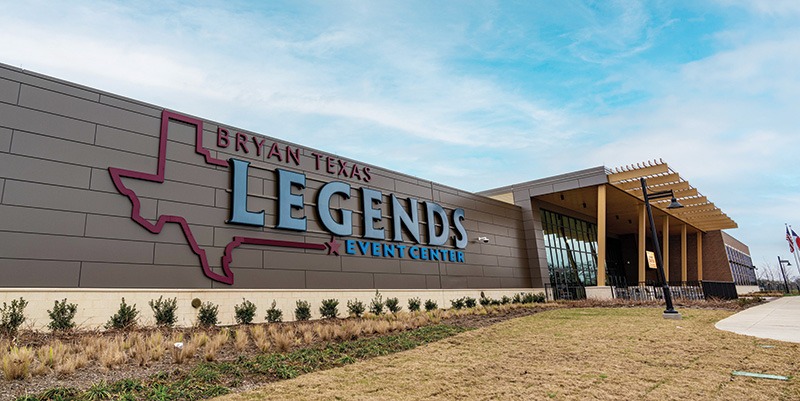
Golf courses: Many municipalities inherited golf courses during earlier booms. Some now recognize they’re “not in the business of golf” and are converting courses into multiuse recreation assets. In Bryan, Texas, for example, the city transformed an underused course into a mix of parkland, an indoor sports center, sand volleyball courts, and a driving-range entertainment venue.
Utility corridors: Areas under or above major utility infrastructure often can’t support vertical development but can be ideal for ball fields or other horizontal uses.
Floodplains: While unsuitable for permanent vertical structures, they can accommodate athletic fields that can be repaired and reopened after flooding.
Brownfields: Sullivan cites examples in Rhode Island and Philadelphia where contaminated former industrial land became the home of professional soccer stadiums and youth training facilities.
College and university partnerships: Higher-education campuses often have land and shared-use goals that align with municipal needs.
The takeaway is clear, though, don’t limit your thinking to large empty parcels. “Creative uses of land that might not be right for other purposes can be repurposed into a community asset,” Sullivan says.
6. Design for flexibility in both vision and facility
Flexibility matters in two ways: how you approach the project, and how you build it.
From a planning standpoint, Sullivan encourages communities not to get locked into a single concept. “Having that flexibility to right-size your program and to leverage the experience of others is really important,” he says.
On the facility side, flexibility is essential for maximizing year-round use. “It’s very rare that we are building a facility for a specific use,” he explains. Even ice rinks, he notes, melt down in summer for dry-floor programming such as ball hockey or box lacrosse—or are adapted for stage setups and events.
Indoor centers increasingly host multiple activities simultaneously. At Rocky Mount Event Center, for example, a wedding might take place in a special-events area while a wrestling tournament runs in the gymnasium. Outdoor turf fields must support a variety of activities, including soccer, lacrosse, football, field hockey, marching bands, and large community gatherings. “The density of uses, the number and diversity of uses, is super important,” he says.
This is not only a financial strategy; it’s about serving the full community. “For these to really serve their impact in the community, it’s not just for athletes,” Sullivan adds.
7. Collaboration is key
Sports facilities require broad community support, especially when public funds or land are involved. That means multiple groups need to be aligned—not pushing competing visions.
“Collaboration is a core strategy for us,” Sullivan says. “If I come in as the soccer guy, I’m only going to get so much interest from the soccer people.”
Instead of framing projects around a single sport, communities should build coalitions that encompass all major user groups. “Let’s bring out an athletic complex and figure out how we can do both,” he says. This avoids silos and builds momentum.
And because few projects are funded by a single source, collaboration is essential not just among user groups but also among hoteliers, chambers of commerce, CVBs, economic development teams, and municipal leaders. “It often has to be supported by multiple user groups to get off the ground,” he says.
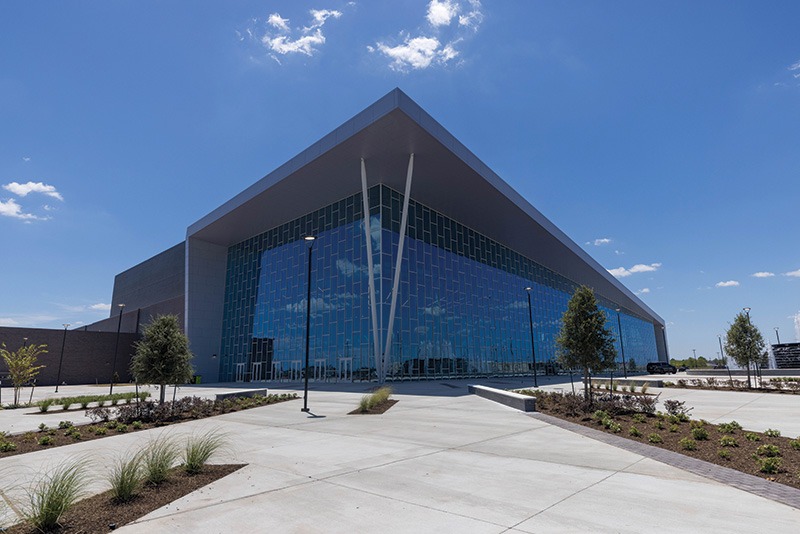
Building a sports facility is not fast or simple. “This is typically a three- to five-year journey,” Sullivan says. While a shovel-ready site with financing in place can shorten the timeline, most projects require years of careful planning, stakeholder engagement, design, and construction.
But the effort pays off when done correctly. SFC’s mission, Sullivan says, is “to improve the health and economic vitality of the communities we serve.”
That means bringing expertise, asking hard questions early, and helping communities make informed decisions that lead to sustainable, impactful facilities.
“You do have to do a lot of things right to make these realize their potential,” he says. With the right preparation and partners, sports facilities can become catalysts for community health, economic growth, and year-round engagement, transforming early visions into lasting realities.