Growing participation, high-energy events, and strong partnerships with destinations are helping competitive cheer and dance become a powerful force in sports tourism
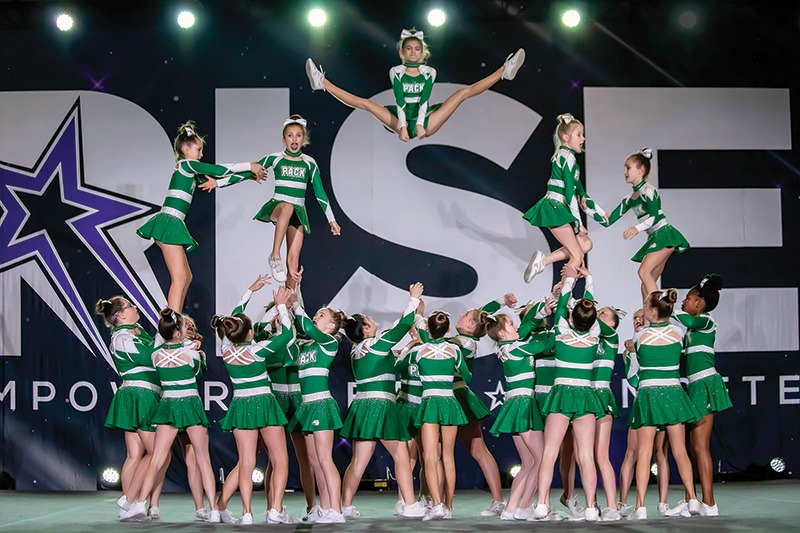
Once confined largely to the sidelines, cheer and dance have evolved into major competition sports—creating significant opportunities for destinations eager to host high-energy events that draw athletes, families, and fans. Just how major? According to Statista, about 3.8 million people in the U.S. participate in cheerleading each year. Meanwhile, the industry in North America is estimated at $790 million, according to Growth Market Report. And participation is showing no sign of slowing down.
Cheer and dance competitions were not nearly as popular in the 1990s as they are today, says Heather Petz, co-owner of Champion Cheer Central, Inc. of Albion, Pa.
“Back then, school cheerleading or cheering for Pee Wee leagues were the only real way into the sport,” Petz says. “Now, there are cheer and dance gyms in every state that offer competitive cheerleading teams that travel all over with the sole purpose of competing.”
Carissa Sawyers, owner of Rise Productions in Monroe, N.C., has spent more than 20 years in the competitive cheer industry and has seen participation levels grow across multiple age divisions and skill levels in recent seasons.
“Programs are expanding their team offerings, and more athletes are entering the sport at younger ages while others are staying involved longer, particularly at the elite and open levels,” Sawyers says.
Rise Productions hosts between seven and nine events each year, with competitions ranging from 60 to more than 120 teams. Its events span markets such as Atlanta, Albany, and Memphis, as well as several communities in between.
“We are intentional about selecting host cities that are strong regional hubs for cheerleading, allowing us to serve both established powerhouse programs and emerging teams,” Sawyers says.
Destinations are seeing the results of that growth. Erie, Pa., for example, offers a snapshot of the sport’s rising popularity. During the 2024-25 cheer season, the Erie Sports Commission hosted five cheer and dance events that collectively welcomed more than 430 teams from Pennsylvania, New York, West Virginia, Michigan, Ohio, and Canada, according to Sydney Dietz, events and marketing manager for the Erie Sports Commission.
“Erie has experienced significant growth in cheer and dance participants in the last couple of years,” Dietz says. “Since the 2021-22 cheer season, participants have increased by 22.5 percent, and spectators have increased by 29.2 percent.”
Since the 2021-22 season, the estimated economic impact on the Erie area has increased 64 percent. “Cheer and dance play a key role in Erie’s sports tourism landscape, with 47 competitions taking place since the Erie Sports Commission’s inception in 2013,” Dietz says.
During the 2024-25 cheer season, events hosted by the Erie Sports Commission attracted more than 5,500 participants and generated an estimated $4.1 million in economic impact.
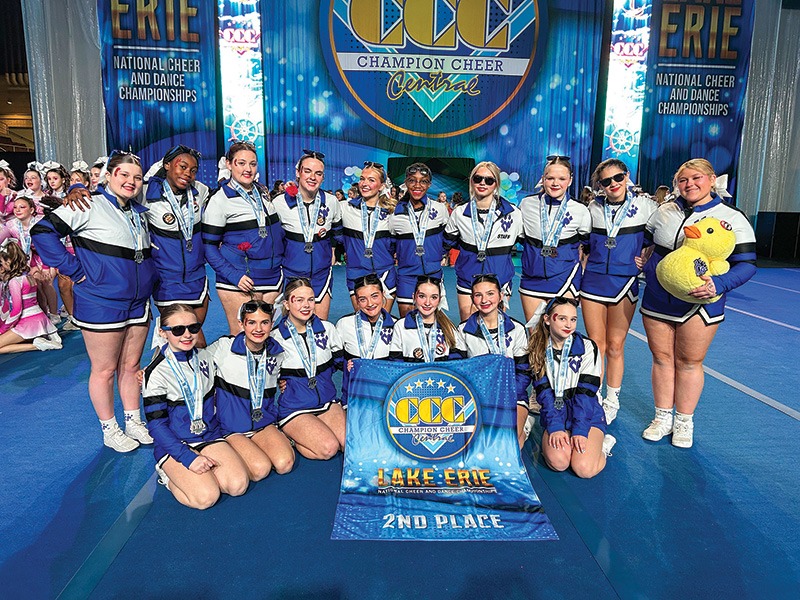
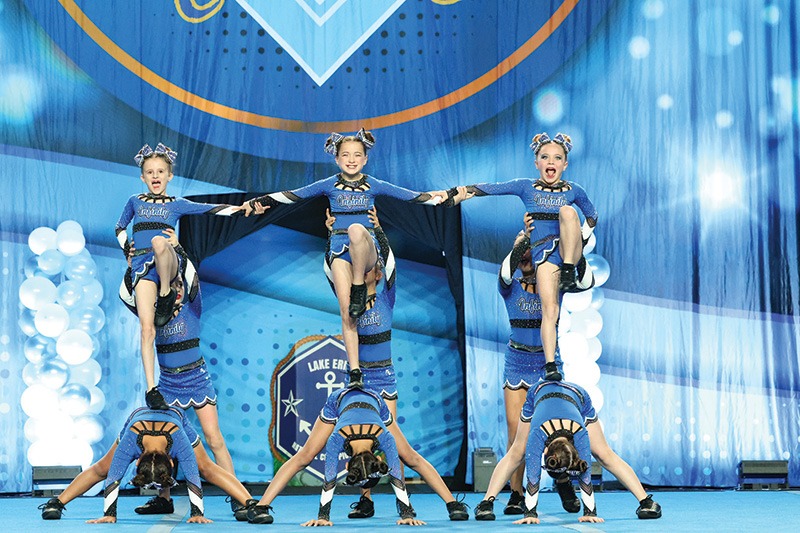
The 2025 Lake Erie National Cheer & Dance Championships, hosted by Champion Cheer Central at the Erie Insurance Arena, welcomed 2,989 participants—a 51.1 percent increase over 2024—making it the largest event in the history of Champion Cheer Central, which has been around since 1984.
Destination Dayton also saw a boost in 2025, hosting 20 cheer and dance events that generated an estimated $1 million to $1.5 million in economic impact.
“Cheer and dance competitions are an increasingly important part of Dayton’s youth and amateur sports portfolio,” says John Oney, president and CEO of Destination Dayton.
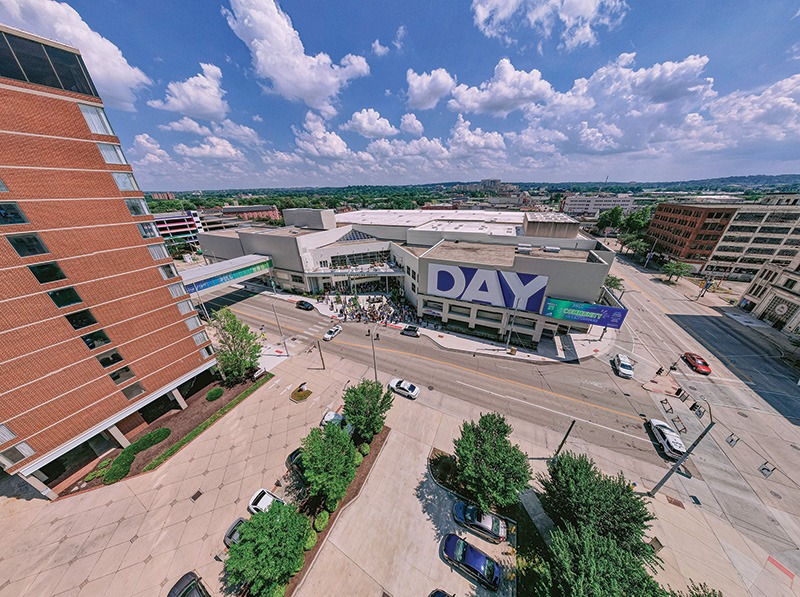
The recent $45 million renovation of the Dayton Convention Center has positioned Dayton and Montgomery County to offer a strong package to these dynamic competitions, he says.
Building a partnership
Behind the growth of cheer and dance competitions are strong partnerships between event organizers and host destinations. Allison Krause, senior sales manager for Destination Dayton, says the region has seen momentum as events become more interactive and experience-driven for participants.
Dayton supports that growth by hosting regional competitions for organizations with extensive national calendars while also welcoming returning events.
“Organizers appreciate that we can offer a strong mix of venues, hotel options, and a highly collaborative approach,” Krause says. “We work closely with them from the initial planning stages through event execution to make sure both athletes and families have a great experience.”
That partnership is vital for a successful event, Sawyers says.
“Cheer events are weekend-long commitments, so the destination has to support not just competition day, but the full stay,” she says. “The people we work with are often the deciding factor. We value strong relationships with venue teams and city partners who are responsive, solution-oriented, and genuinely excited about hosting.”
“Staff who are friendly, flexible, and invested in helping the event run smoothly make every moment feel effortless,” Sawyers says. “When the venue team and event planners work together, it’s not just a competition—it’s an experience everyone remembers.”
The goal is to maintain the right balance. It’s about creating events
that feel substantial and energetic, but never overwhelming for athletes, coaches, or spectators, Sawyers says. “Our focus is always on delivering a well-run experience where every team feels seen, valued, and part of something meaningful.”
Choosing a location
When selecting a host site, organizers evaluate far more than just the competition floor.
In Erie, primary facilities for cheer and dance events include the Erie Insurance Arena and the Bayfront Convention Center. Those venues host events such as Lights! Camera! Action!, Winter Beach Blast, Lake Erie National Cheer & Dance Championships, and Imagine Dance Challenge, Dietz says.
The Hagerty Family Events Center also hosts dance competitions such as Vybe Queenz, which took place for the first time in November 2025.
For event producers such as Rise Productions, the venue itself is only part of the equation. Facility size and layout matter, Sawyers says. A venue must comfortably accommodate multiple performance areas, warm-up space, spectator seating, vendor activations, and smooth traffic flow for athletes and families.
“Athletes need quick access to water during warm-ups and right up to the performance floor, and families appreciate healthy food options in concessions,” she says. “Teams will often spread out to get ready—doing hair, makeup, or stretching—so having shared crowd control expectations and open areas is key.”
Key considerations include:
- Open floor space for mats
- Warm-up and staging areas
- Adequate ceiling height for advanced skills
- Efficient load-in access
- Spectator seating capacity
- Overall athlete safety
Beyond the venue itself, organizers also evaluate hotel inventory, proximity to restaurants, ease of travel, parking availability, and the overall family experience. In Dayton, Oney says the combination of flexible venues, affordability, and accessibility makes
the city an attractive destination.
“More than 65 percent of the U.S. population is within a day’s drive, along with a strong local culture of cheer and dance that creates an enthusiastic and supportive environment for these events,” Oney says.
The renovated Dayton Convention Center is “a game changer” in attracting and hosting cheer and dance competitions, he says. The center offers 63,000 square feet of uninterrupted event space, a full-stage 675-seat theater, and modernized amenities.
Ron Eifert, director of sales for Destination Dayton, also points to additional venues that can host competitions, including the University of Dayton Arena, Dayton Masonic Center, and Flyght Academy.
“That diversity allows us to match the right space to the right event,” Eifert says.
Destinations with family-friendly attractions can also enhance the appeal of cheer competitions. Destination Dayton promotes its vibrant downtown, arts and cultural attractions, and the Wright Brothers National Museum at Carillon Historical Park. Erie, meanwhile, draws visiting families with beaches, an indoor water park, ski resorts, and other attractions. The city is within a 90-minute drive of several major metropolitan areas and offers affordable accommodations for groups ranging from 50 to 500 people.
The sport’s appeal
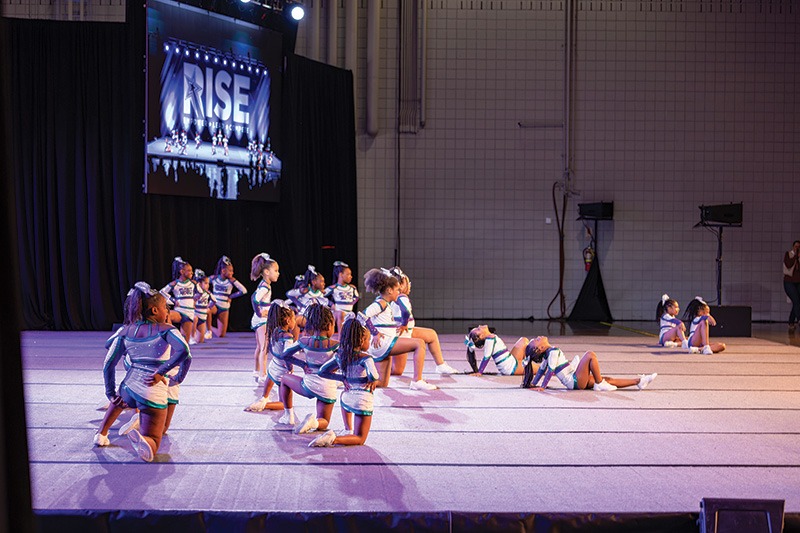
Driving the increased participation rates are high-energy competitions that showcase athleticism, teamwork, and creativity. “Cheer and dance competitions are electrifying events with stunts, choreographed moves, tumbling and jumps, all set to music and scored on difficulty, technique, and synchronization,” Petz says.
The high production value of modern competitions has also elevated the spectator experience.
“Events feel more like major sporting showcases rather than just local tournaments,” Sawyers said. “Families are traveling more intentionally to support athletes.”
From an organizational standpoint, Rise Productions continues to see strong registration numbers and growing engagement from both returning and new programs. “The sport continues to gain recognition as a legitimate, high-performance athletic discipline,” Sawyers says. “That momentum is reflected not only in athlete participation but also in fan enthusiasm and brand partnerships.”
In addition, Petz said the sport gives all athletes a chance to shine, with divisions for athletes of all ages and skill levels, from novice to advanced. And there’s no bench. “Cheerleading is truly the only sport where every teammate needs to participate and work together to make a 2.5-minute routine happen,” she says. “Stunts and pyramids cannot happen unless every athlete on the team is doing their part.” Another factor behind cheer’s growth is its inclusiveness, Petz says.
“We welcome all walks of life. This gives a safe space for all children to feel welcome,” Petz continues. “No matter your ability level or your orientation, you can be a cheerleader.”