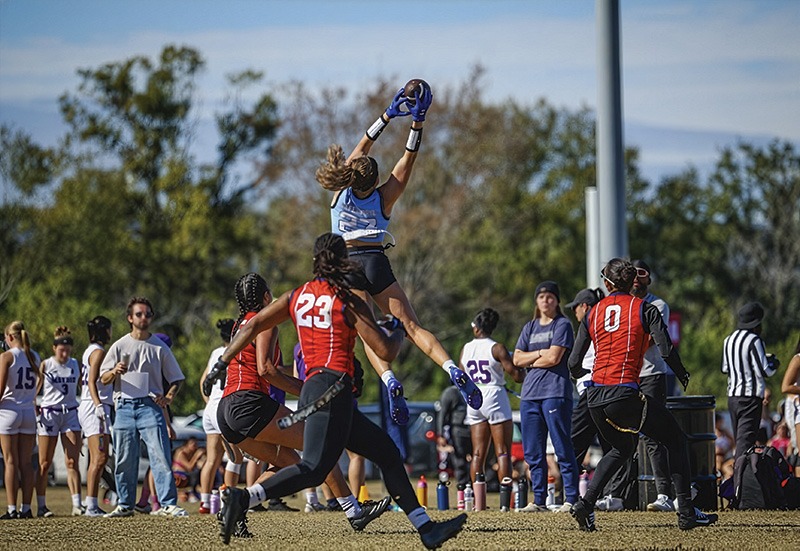
Wherever you land on the artificial turf debate, there’s no question it has had a major impact on the way sports are played and facilities are managed. Not only does artificial turf make it possible to create recreational playing surfaces in places where grass doesn’t normally grow, but in some ways, it literally changed sport dynamics—the way balls bounce and roll, for example. First developed by the Monsanto company in the early 1960s as a durable surface for inner-city playgrounds, artificial turf’s first real connection to sports came about because of a design error at the then-new Astrodome in Houston. When the stadium opened in 1965, it had natural grass, and clear Lucite panels in the roof to let the sun in. However, during the Houston Astros’ inaugural season, players complained they couldn’t see the ball in the glare from the sun, so the panels were painted over. That helped with the glare, but the grass died, so in 1966, the stadium installed the turf, originally called ChemGrass, but what soon became known as Astroturf. It didn’t take long for it to catch on, and by the mid-1970s, it had found its way into virtually every major sport. Not that the first generation of Astroturf didn’t have detractors. Just ask anyone who may still have rug-burn scars from falling on it. Indeed, most of the criticism around artificial turf centers around athlete safety. That’s especially so in the NFL, where it’s been blamed for ending or altering the careers of numerous players, such as Wendell Davis and Aaron Rodgers.
Of course, artificial turf has come a long way since the early days when it was little more than rough nylon carpet laid over a thin layer of foam atop concrete or asphalt. Today, it’s made with hi-tech polymers and infilled with rubber pellets, sand, or other environmentally friendly materials, giving it the feel and cushioning of natural grass. Ultimately, it has transformed athletics by enabling year-round play and dramatically reducing field maintenance. More than six decades after its invention, artificial turf remains one of the most influential innovations in sports.