Considering the potentially blistering speed of a hockey puck—some NHL players can hit slapshots between 90 and 100 mph—it’s no surprise that goalie masks are now the most protective they’ve ever been. Hockey pucks are made from a dense, hard compound of vulcanized rubber and weigh around six ounces. Meanwhile, the human face has 14 bones, none of which would fare well if hit by a six-ounce puck travelling at 100 mph. Indeed, what’s surprising is that there was ever a time in hockey history when goalies didn’t wear masks.
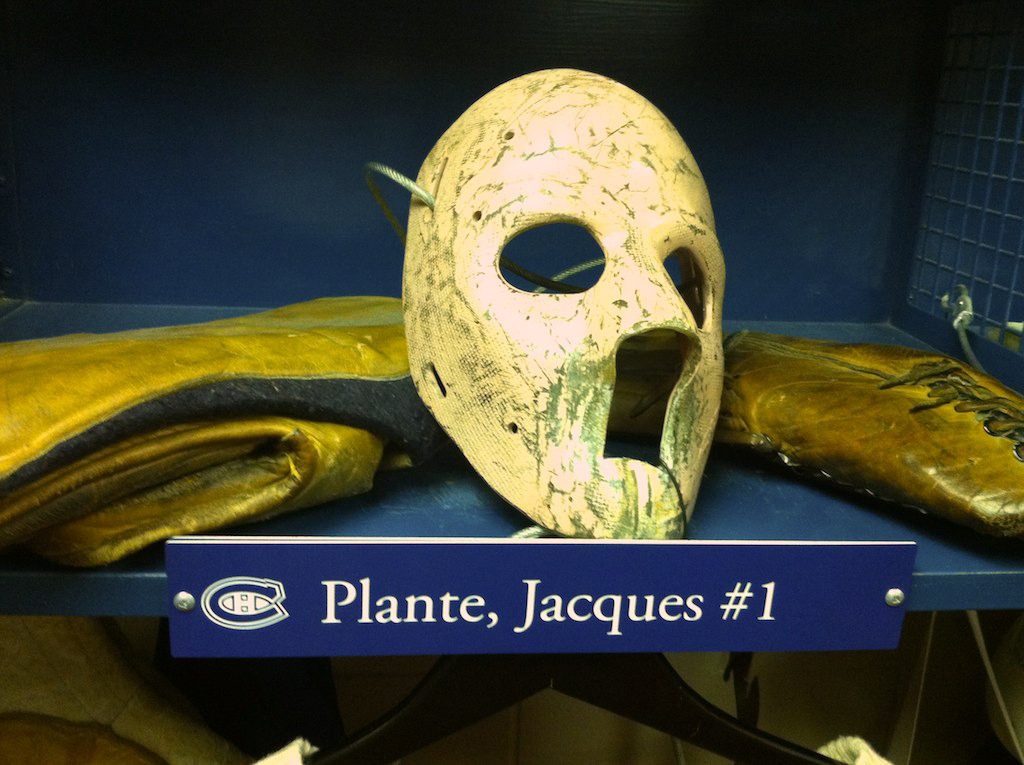
However, in the early days of hockey, goalies were actively discouraged by their coaches from wearing face masks because they were perceived as cowardly and thought to hinder vision and performance. Of course, a few pioneers went against the grain over the years, including Elizabeth Graham, a goaltender for Queen’s University who wore a metal fencing mask during a game in 1927 to protect her teeth. Then, in 1930, NHL goalie Clint Benedict of the Montreal Maroons briefly wore a leather nose-guard mask to protect a broken nose, but stopped wearing it because it obstructed his vision. Indeed, it wasn’t until 1959, when Montreal Canadiens legend Jacques Plante was hit in the face during a game against the New York Rangers, that goalie masks began to gain popularity. Plante had to leave that game to get stitches and reportedly refused to return unless he could use the face-hugging fiberglass mask he had been using in practices (see photo above). The coach reluctantly agreed, Plante started wearing the mask regularly, and the Canadiens went on an 18-game unbeaten streak. Facial protection soon became standard equipment in the NHL, and by the early 1970s, most NHL goalies wore masks—the last goaltender to play without one was Andy Brown in 1974. Helmets and masks are now mandatory at all levels of organized hockey.
Since those early days, the goalie mask has evolved considerably, from Plante’s rudimentary fiberglass mask to the modern combo mask, which combines a fiberglass shell and a wire metal cage that not only provides superior personal protection but has become an outlet for creative expression. This design, refined over time with materials such as Kevlar and carbon fiber, has become the standard bearer of the modern professional goalie mask.