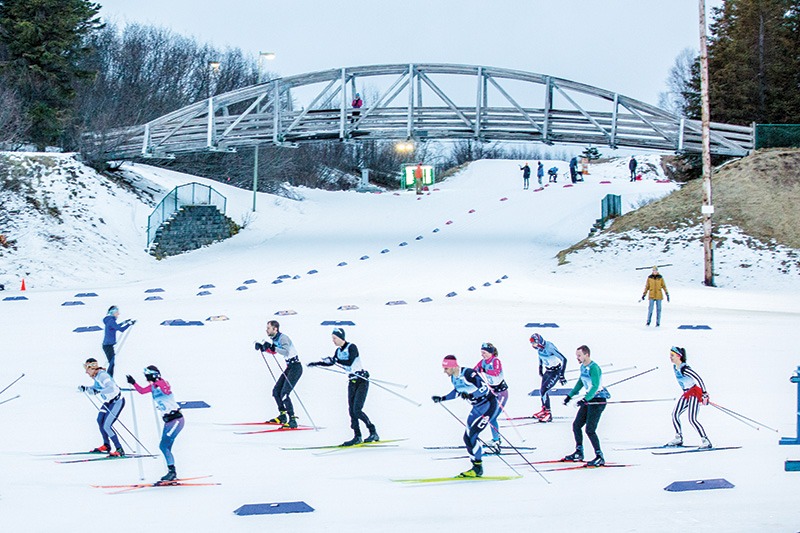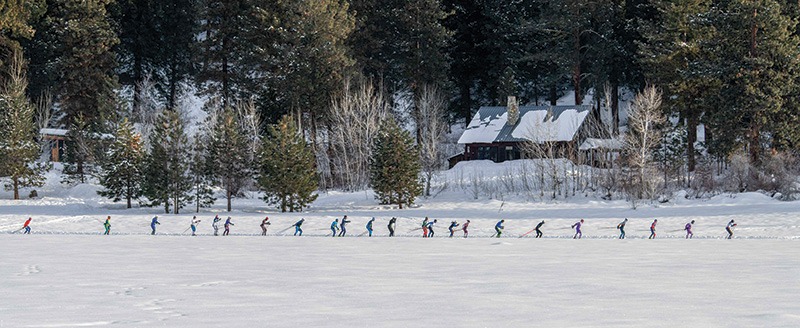
Rooted in centuries-old tradition, Nordic skiing has evolved from a vital means of winter travel into a dynamic and endurance-driven competitive sport. Its origins trace back to the snowbound landscapes of Scandinavia, where skis were essential tools for hunters, soldiers, and everyday citizens navigating harsh terrain. As communities began to test their skills against one another, the foundations of modern Nordic competition were born, establishing a legacy of athleticism and outdoor adventure that continues to shape the sport’s identity.
Nordic skiing encompasses several disciplines—most prominently cross-country skiing, ski jumping, and Nordic combined—each unified by the free-heel binding that sets it apart from alpine skiing. Of the three disciplines, cross-country remains the most popular, drawing recreational participants and competitive athletes alike with its blend of accessibility, fitness appeal, and winter scenery.
Across the United States, Nordic skiing is steadily gaining traction, and as interest in the sport continues to climb, so does the demand for high-quality events that showcase the full spectrum of what these disciplines have to offer. Communities across the country are investing in races and festivals that not only challenge athletes but also highlight the distinct landscapes and cultures that make each destination unique. To get a clearer picture of Nordic skiing’s momentum, we’re taking a closer look at three standout events that embody the sport’s growth and spirit: the iconic American Birkebeiner in Wisconsin, the community-powered Tour of Anchorage in Alaska, and the scenic Ski to the Sun in Washington. Each offers its own compelling blend of competition, experience, and regional flavor, illustrating just how diverse and dynamic Nordic events in the U.S. have become.
The American Birkebeiner
The American Birkebeiner Ski Race—simply “the Birkie” to the thousands who return year after year—is a testament to how vision, community, and heritage can transform a local idea into one of the nation’s premier Nordic events. Founded in 1973 by entrepreneur and World War II veteran Tony Wise, the Birkie began as part of his mission to turn northern Wisconsin into a true year-round destination. Wise initially built a small downhill resort, but as airfare made western skiing more accessible, he saw a new opportunity in the area’s rugged hills and pristine Northwoods terrain. Drawing on connections he’d made in Europe during the war, Wise launched the American Birkebeiner trail and the first race from Hayward to Cable with just 35 skiers.
“Five decades later, the course runs in the opposite direction and welcomes roughly 12,000 participants each year,” shares Shawn Connelly, marketing and communications director for the American Birkebeiner Ski Foundation. “Our 50th anniversary race had just shy of 14,000 participants.”
The race itself is a 50K challenge in either classic or skate style, starting at the rebuilt American Birkebeiner Trailhead in Cable. The American Birkebeiner Ski Foundation restored the historic site in 2023, transforming it into a modern gathering space complete with a coffee shop, bike and ski services, museum, and community rooms. From there, racers traverse rolling forested terrain, pass enthusiastic spectators at key access points, and glide uninterrupted thanks to bridges built specifically to carry skiers over major roadways. The final stretch delivers one of the most iconic finishes in American endurance sport: a crossing of frozen Lake Hayward followed by the “International Bridge”—a nod to the race’s participants from more than 30 countries.
What distinguishes the Birkie, Connelly explains, is both its deep historical roots and the community that sustains it. “It’s not just 50 years of racing history—it’s a story that goes back to 1206,” he says. The event, like many Nordic races worldwide, honors the legendary Birkebeiner warriors who skied Prince Haakon to safety during Norway’s civil war. That heritage is kept alive annually when the race selects a trio of athletes to ski the entire 50K in traditional Viking-style gear—fur, wooden skis, and birch-inspired armor—carrying a baby doll that is swapped for a real infant at the finish line on Hayward’s snow-covered Main Street. Add in the culture of recognition—racers proudly display stickers noting “Year 1,” “Year 20,” or even “Year 50” on their bibs—and it’s easy to see how the Birkie has become a community unto itself. “People congratulate each other, celebrate milestones—it’s this living history,” Connelly notes.
For organizers looking to grow or elevate their own events, Connelly offers a simple but powerful lesson: start with your community. “Find out what your community needs and address that need,” he advises. The Birkie works not just because of its size or reputation, but because it reflects the values, volunteers, and year-round support of northern Wisconsin.
Ski to the Sun
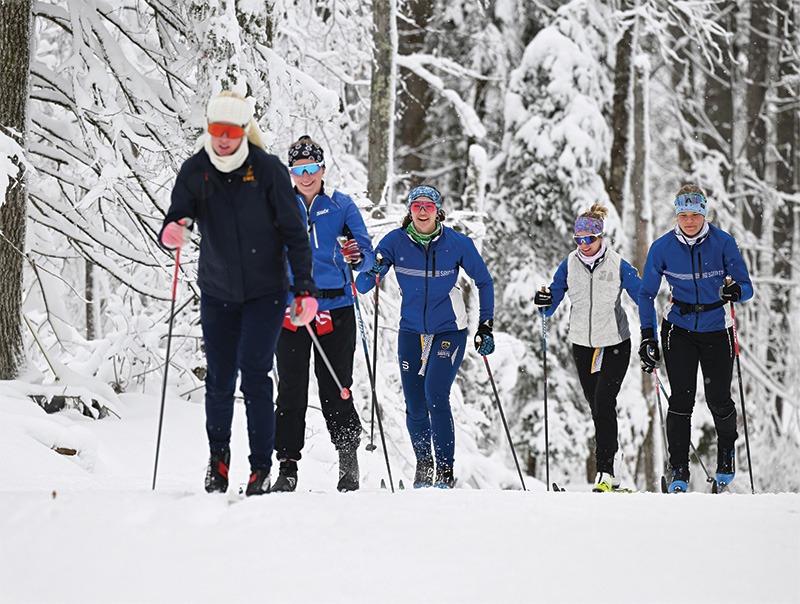
Now in its eighth year, Washington’s Ski to the Sun is one of the most inviting and innovative Nordic events in the country—
a race designed as much for community connection as for competition. The event is hosted by Methow Trails, which manages the largest cross-country ski area in North America. But as event director Adrienne Schaefer explains, Ski to the Sun didn’t begin as a large-scale race. “Before this, we had a two-day event called The Pursuit that typically brought in 125 to 150 people,” she says. “And we already had the Sunflower Race [marathon, half-marathon and relay] in the summer, which sells out every year and has almost a cult following. One day, we just had this epiphany—why don’t we do a winter version of our summer race?”
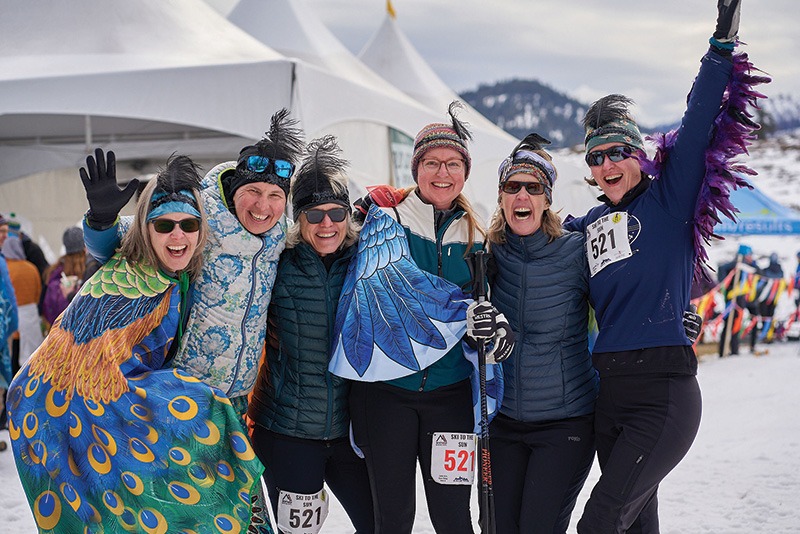
That spark became Ski to the Sun, created in partnership with local nonprofit Methow Valley Nordic and supported by a growing list of community sponsors. The goal from day one wasn’t just to launch another race—it was to broaden the sport’s reach. “We wanted to make it more inclusive and attractive to folks who may have never thought about a ski race before,” Schaefer says. “The goal was to take down some barriers and intimidation.” The result is a February event offering both a full marathon and a two-to-six-person relay, opening the door for elite racers, families, para-Nordic athletes, and groups of friends to share the trail together.
The course itself is a major part of the draw. Skiers follow a scenic river corridor along one of the most iconic stretches of the Methow trail system, linking two towns before climbing toward the finish at Sun Mountain Lodge. That final ascent delivers a sweeping view of the entire valley, a scenic backdrop for the post-race celebration that awaits at the lodge.
For event organizers looking to replicate the formula, Schaefer’s advice is to stay adaptable and keep your lens wide. “Broaden your scope,” she says. “Don’t get pigeonholed into ‘this is what we’ve always done.’ Thinking outside the box has helped us tremendously.” She also emphasizes the importance of building and maintaining strong relationships—a necessity for an organization that works with 175 landowners, multiple nonprofits, and a robust network of local businesses. “There are so many people involved in an event,” she notes. “Creating a positive, collaborative culture with sponsors, business supporters, and landowners is essential. If something isn’t working, address it. Create platforms for open communication and be willing to fix things together.”
Tour of Anchorage
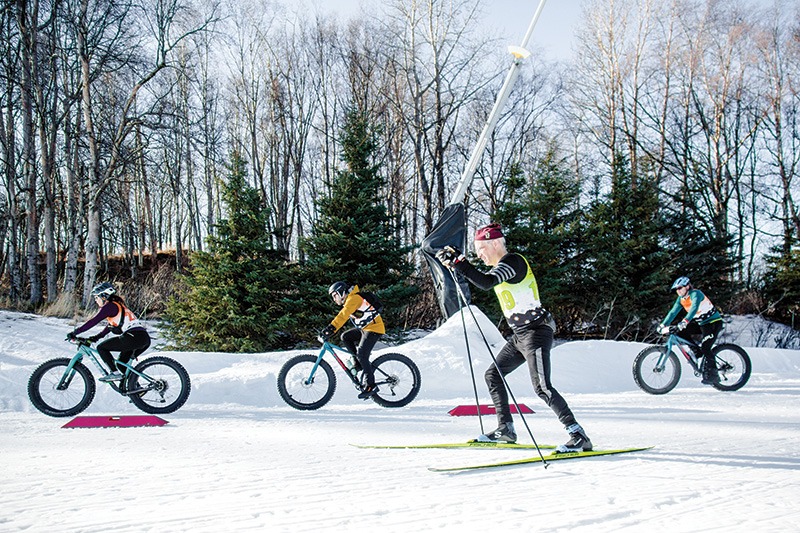
The Tour of Anchorage is one of the most uniquely urban–yet fully wilderness–Nordic events in the United States. Each March, skiers and cyclists traverse the city from end to end without ever removing their gear or crossing a road—a distinction few metropolitan areas can match. “We’re one of the only places in the U.S. where you can ski from one side of a city to the other without taking your skis off,” says race director Ida Gullett. “Our extensive trail system was built right into the city as it developed, and that makes the Tour truly special.”
The event has grown steadily, now drawing between 1,000 and 1,200 participants annually. In 2019, organizers added fat tire biking as an official discipline, opening the door for athletes eager to ride trails that are normally reserved for skis in the winter. The addition has broadened participation and created a one-of-a-kind experience for cyclists. The race offers multiple distances, but for those seeking a serious challenge, the “50-50 Double” pushes limits: athletes ski the entire 50K course and then return to the starting area to bike the same distance—a full 100K of human-powered endurance across Anchorage’s signature terrain.
While the athletic challenge is a major draw, organizers place equal emphasis on the event’s welcoming, community-forward atmosphere. “It all comes down to getting community participation,” Gullett explains. “We’re reaching out past just our Anchorage community—it’s really a statewide event, and we pull in people from out of state as well.” That broad appeal is reflected at the finish-line celebration, an après-style gathering at the chalet where skiers, bikers, families, and spectators come together for food, conversation, and shared stories from the trail. “We’re focused on fun,” she says. “Sure, some people race it seriously, but we also want that social aspect—meeting friends, making new ones, and connecting with the whole winter-sports community.” It’s valuable advice for any event planner who wants to blend competition with community engagement.