From ice-fishing tournaments to sled dog races, winter sports events don’t happen despite the cold, they happen because of the cold. Anyone who plans winter sports events knows how much the weather can affect their success. To find out what it takes to run a successful cold-weather sports event, we spoke to two planners who thrive in sub-zero conditions:
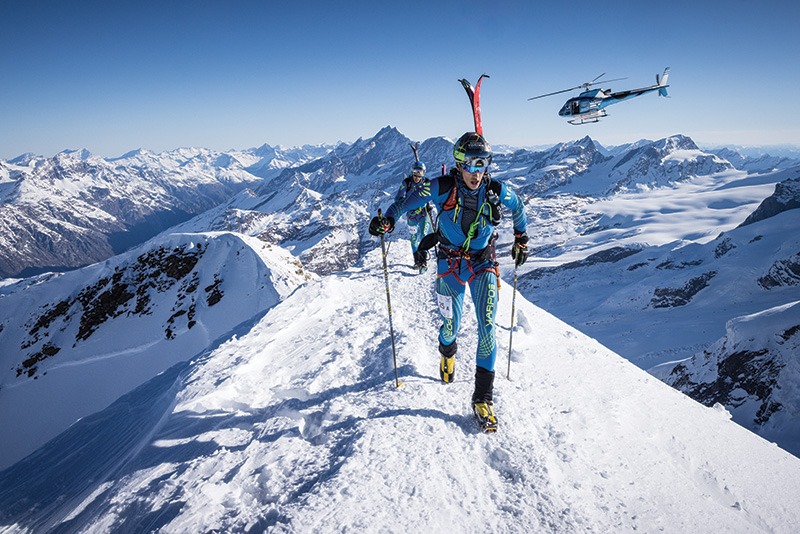
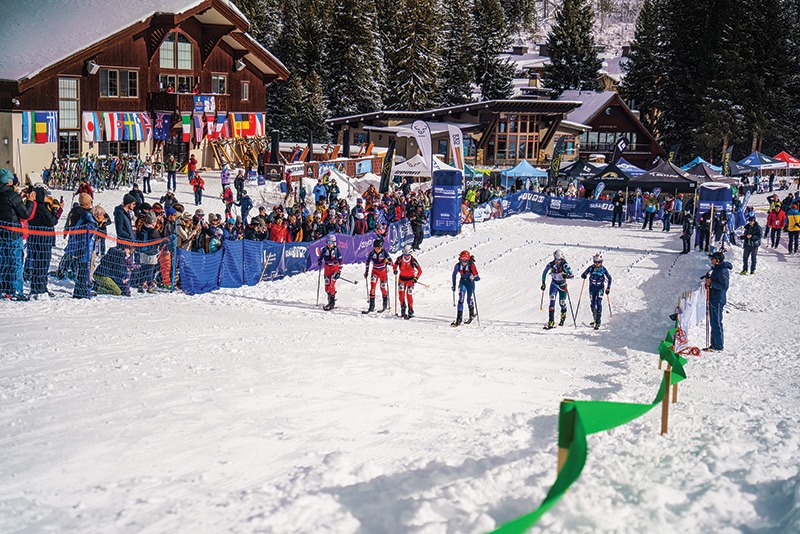
Ric Federeau, chair of the International 500 Snowmobile Race in Sault Ste. Marie, Michigan, and Jerimy Arnold, president of USA Skimo, the United States Ski Mountaineering Association. Ski mountaineering is a winter sport that combines uphill ski touring and mountaineering with downhill skiing. It’s having a bit of a moment right now because it’s making its debut at the 2026 Winter Games in Italy in February.
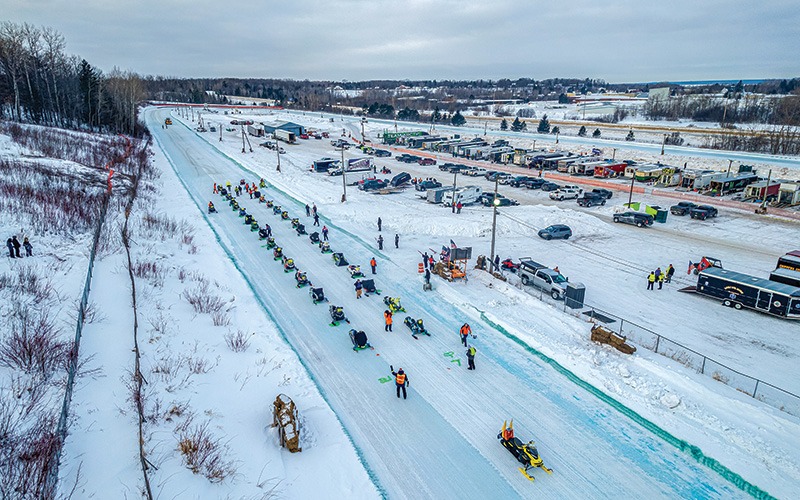
The I-500 is an annual 500-mile endurance race held on a mile-long ice oval built with millions of gallons of water, often in below-zero temperatures. Ski mountaineering events, meanwhile, require long days outdoors for athletes, officials, and volunteers operating in alpine winter conditions. Together, their experiences provide a practical playbook for planners tasked with executing events in cold weather conditions.
1. Treat cold as an asset, not an obstacle
“Cold is our friend,” Federeau says. “We put down two million gallons of water to make a mile-long oval ice track, so we’ve got to have extreme cold.”
For the I-500, winter isn’t a variable—it’s the foundation of the event. “When people hear snowmobile racing, they think snow,” he says. “But we’re racing on ice. Everything we do depends on cold.”
That mindset, he explains, changes how planning begins. “We start building the track December 1. We’re already planning months ahead because the weather dictates everything.”
Arnold echoes that approach from a different perspective. “The most important part is preparation,” he says. “The right clothing, the right equipment, and the right frame of mind to know that the body can endure much more than we think it can.”
2. Build flexibility into your schedule
Weather unpredictability is one of the biggest risks of cold-weather events. “The worst nightmare for us is to have to call a race early when people paid money,” Federeau says.
To manage that risk, the I-500 plans for delays. “If weather comes in where drivers can’t see or conditions aren’t safe, we’ll delay the race for two hours at a time and see if conditions change.”
That flexibility is essential, he says, because even well-built infrastructure can be at the mercy of the elements. “Weather conditions dictate the longevity of the race day. That’s just reality.”
3. Rotate jobs
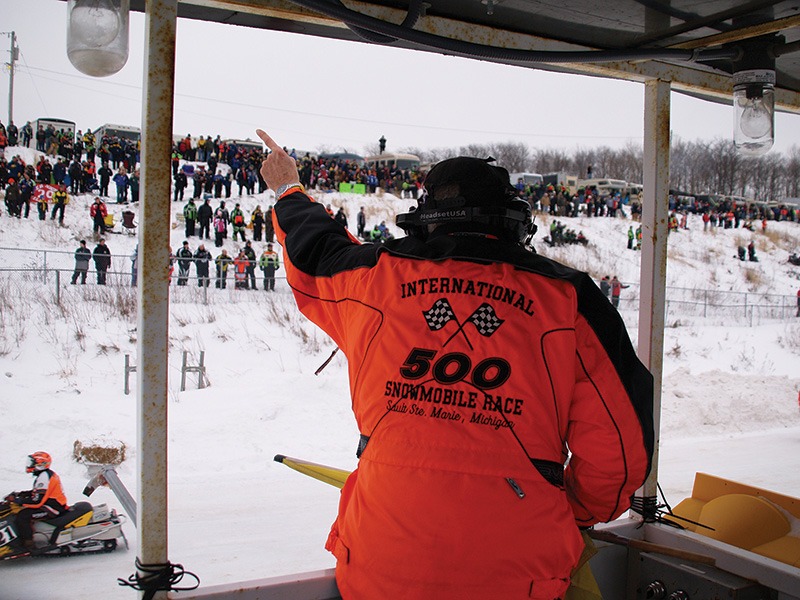
Cold exposure isn’t just uncomfortable, it’s unsafe without proper management, so don’t ask anyone to endure the cold too long. “We work in shifts,” Federeau says. “Guys working the corners might be out there in 20-below-zero temperatures.”
To manage that, the event uses rotation breaks. “Every 100 laps, another crew comes in. You go eat, you get warm, and then you come back out.” He adds, “We have heated mess halls and trailers. Everybody’s covered.”
Arnold notes that similar strategies apply to ski mountaineering events. “There’s certainly the ability to rotate people, get them into a warm place, or get them off their feet,” he says.
4. Take care of your volunteers
The I-500 is run entirely by volunteers—more than 300 of them. “Without these people, we’ve got nothing,” Federeau says. “It’s the backbone of the event.”
To retain volunteers in extreme conditions, the event focuses on care. “Everybody has all their food and beverages provided,” he says. “At the end, we throw a big party. Everybody gets gifts.”
That attention matters, especially in winter. “Volunteering isn’t what it used to be,” Federeau says. “So, we make it a point to take care of our volunteers and make them want to come back.”
5. Layering is a strategy, not a style choice
According to an old Nordic proverb, there’s no such thing as bad weather, only bad clothing. That means proper gear lets you enjoy any conditions, as being uncomfortable outside usually stems from dressing incorrectly, not the weather itself. When it comes to cold-weather apparel, both organizers emphasize adaptability. “It’s like layering, right?” Arnold says. “Having the right clothing and not dressing so warm that you sweat—that’s a recipe for disaster.”
He explains that staff often alternate between movement and stillness. “When you’re out moving around, you need layers that breathe. When you’re standing around, it’s about getting those warm layers on.” Federeau agrees. “Everybody comes more than prepared,” he says. “You can always layer down. It’s easy to do.”
6. Choose materials based on conditions
Arnold prefers natural materials close to the skin. “I have a preference for wool base layers,” he says. For outer layers, conditions dictate material. “If it’s not snowing, down usually has the best warmth-to-weight,” he says. “But synthetics retain more heat when they’re wet.”
Federeau recommends getting the best gear you can afford. “You’ve got to go quality,” he says. “If you want to discourage somebody from snowmobiling, dress them improperly. They won’t forget it.”
7. Cold feet end events early
Few things derail morale faster than cold feet. “Your feet are like your head,” Federeau says. “You want quality footwear that handles sub-zero temperatures.” He emphasizes removable liners. “Our people carry a couple of sets of liners,” he says. “You’re going to sweat. You want to be able to remove liners and dry them.”
Arnold points to other practical solutions. “Some people use chemical foot warmers,” he says. “Others wear overboots or stand on insulating mats to isolate their boots from the snow.”
8. Give spectators a place to warm up
Keeping spectators engaged means giving them options. “We have large, heated pavilions,” Federeau says. “There are TVs, food vendors, and places to sit and get warm.”
This allows fans to stay longer. “You come in, you warm up, you eat, you watch the race, then you go back out.” Arnold says proximity to warmth matters. “Being near the lodge gives flexibility,” he says. “Hot chocolate and coffee definitely help.”
9. Protect equipment from the cold
Cold can affect electronics just as much as it affects people. “I always keep phones and radios inside my jacket,” Arnold says. “In the warmest place possible.”
At the recent ski mountaineering World Cup event in Salt Lake City, timing crews used heated tents, he says. “They had propane heaters to keep computers at operating temperatures.”
Federeau says that the I-500 is on the same level as a major motorsport when it comes to equipment and racing infrastructure, with the added challenge of keeping it operational in freezing temperatures. “Every aspect you’d see at a NASCAR race, we have,” he says. “Timing, technical crews, everything.”
10. Plan emergency services at a higher level
Cold-weather events demand robust emergency planning. “It’s not uncommon for us to have eight or nine ambulance crews on site,” Federeau says. The I-500 also plans for overflow. “We’ve worked it out, so if hospitals get overloaded, we can go across the river. That all has to be planned.” He adds, “You have to treat it like any major event. You can’t cut corners because
it’s winter.”
Planning for the cold pays off
For both organizers, winter success comes down to preparation. “It’s being prepared for the conditions you’re going to encounter,” Arnold says. And if you plan properly, you can create an environment where both participants and spectators can thrive. “People crave this,” Federeau says. “You think about racing in 10-below temperatures, and the banks are crowded with people.” With the right planning, cold doesn’t limit events—it defines them.