As participation expands and access improves, organizers, leagues, and community programs are redefining what’s possible for girls’ and women’s hockey nationwide.
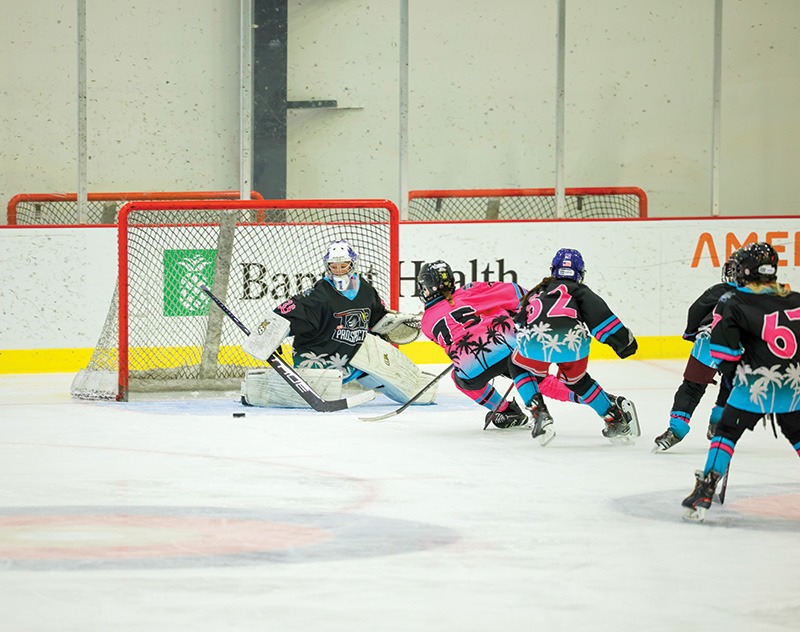
Back in 1992, Manon Rhéaume became the first—and to date, only—woman to play in an NHL game when she pulled on the goalie pads for the Tampa Bay Lightning in a preseason tilt. Her breakthrough was a singular moment, but it also cracked open a door that an entire generation of girls and women would eventually push wide open.
More than 30 years later, the sport looks dramatically different. Women’s involvement and interest in hockey have blossomed, especially in the last 15 years. Registrations for girls’ and women’s hockey increased 65 percent since 2010, according to USA Hockey. On the global stage, female registration climbed from approximately 154,000 in 2007 to nearly 230,000 in 2025—proof that women’s hockey is not just growing, but thriving.
The launch of the Professional Women’s Hockey League (PWHL) in 2024 accelerated that momentum. As the first unified professional women’s league in North America, it drew significant attention immediately. Over the 72-game regular season, the league welcomed 392,259 fans, establishing a robust baseline for league-wide interest and underscoring that today’s female youth players have clearer pathways and more visible role models than ever before.
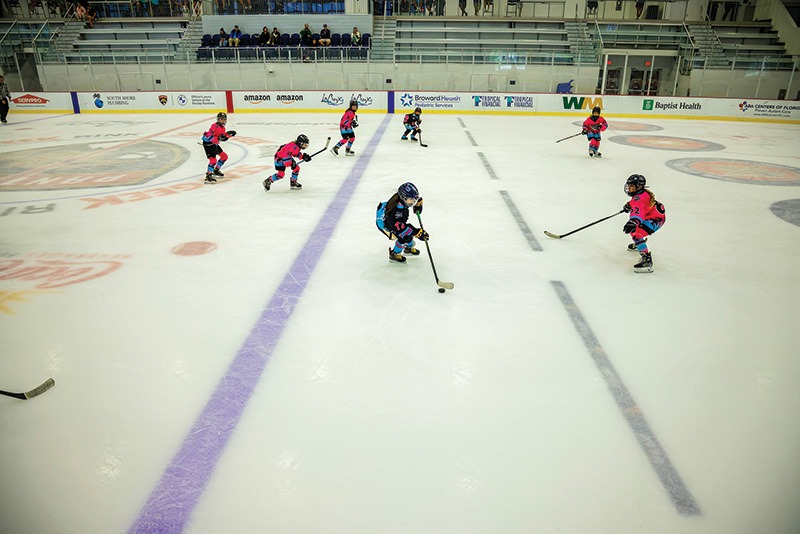
Participation surges
Participation numbers in girls’ and women’s hockey continue to climb each season, and that growth is accelerating. According to Premier Ice Prospects (PIP), one of the largest organizers of girls’ hockey events in North America, the sport is nearing a major milestone.
“The participation numbers in general are increasing across the U.S. with just under a record-high 100,000 participants,” says Kathy Pippy, vice president of girl’s hockey operations at Premier Ice Prospects. “We should top that this year. Non-traditional hockey markets in the South and across the Midwest into the West are experiencing the largest growth percentage-wise.”
States like Minnesota and Massachusetts remain strongholds, she said, but the sharpest upward curves are emerging in unexpected places. “This growth is truly on the Tier 2 side of things, but you still need appropriate competition at each event,” Pippy says. “While growth continues, there are still only so many Tier 1 teams available.”
As participation rises, so does visibility. Families, communities, and destinations are discovering the value of a sport once viewed through a narrower lens, and that shift is influencing everything from facility usage to event demand.
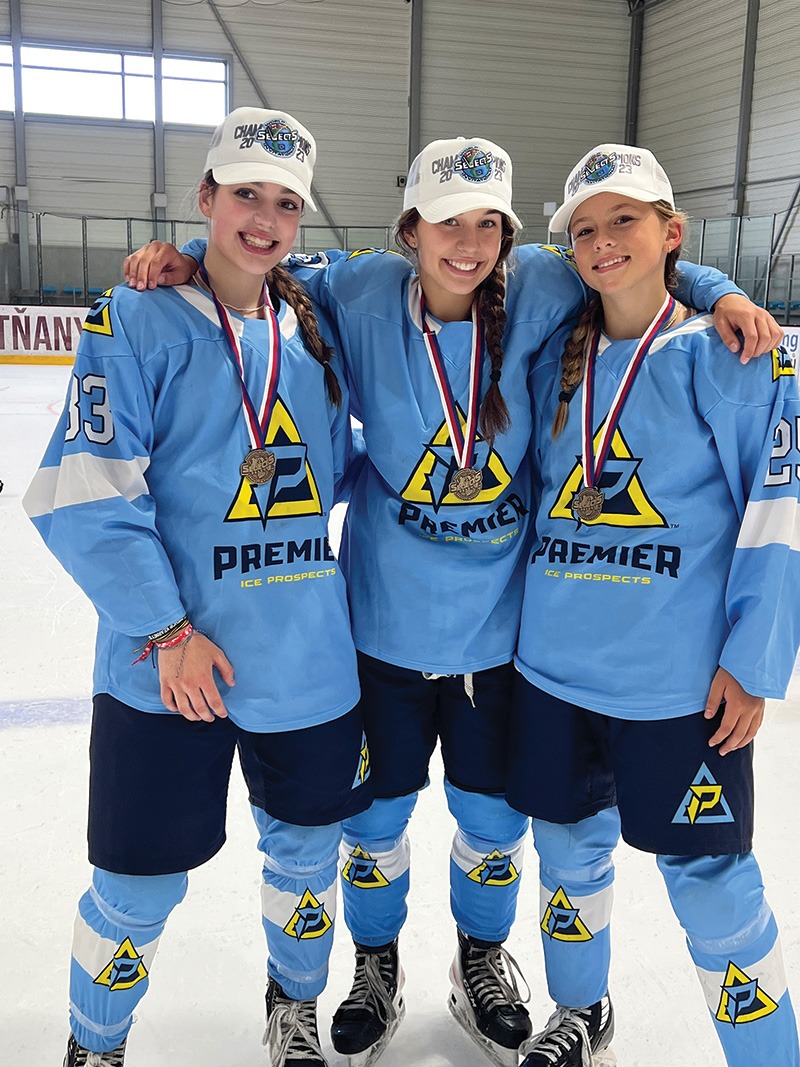
Creating pathways
At Premier Ice Prospects, developing female hockey talent means more than filling tournament brackets, it means designing environments where girls can grow both as players and as people.
“Competing against equal-level players is developmentally positive, which also keeps the athlete engaged and motivated to continue working to that next level,” Pippy says.
PIP separates its programming into distinct seasons with different purposes. Winter centers on team-based tournaments across age levels, while spring and summer emphasize skill development through invite-only showcases, camps, and clinics. “On the individual player development side, we have created some phenomenal aspirational events that young girls want to be a part of,” Pippy says. “That accomplishment—being invited—is important for development, not just on the ice, but goal setting and learning fundamental concepts of hard work and commitment.”
That model is translating into real outcomes. “The key metric I subscribe to is the old adage, ‘Proof is in the pudding,’ as we are seeing an extremely high number of players that participate in our elite events committing to NCAA Division I,” Pippy says.
Recently, PIP added scouted showcase events in eight North American cities and expanded partnerships such as OS Prospects, along with the acquisition of Snipe City Hockey in Canada, broadening opportunities for athletes from Seattle to Boston to Halifax.
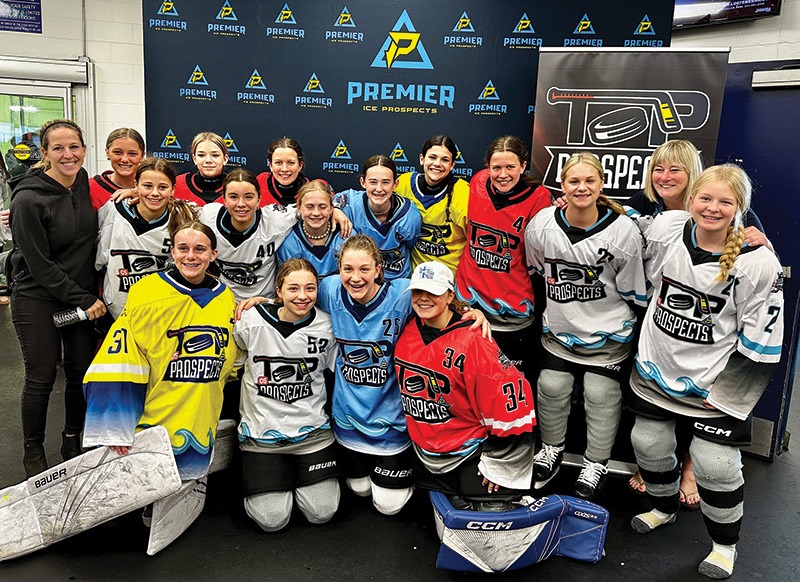
Breaking barriers
Yet even as opportunities expand, the girls’ and women’s hockey community continues to face barriers familiar across youth sports, with some issues amplified by history, geography or identity. “The biggest challenge over the years has been ice availability for girls’ and women’s events,” Pippy says. “A large tournament company may hold five or six boys’ tournaments across a season and rent literally hundreds of thousands of dollars worth of ice in one location. Those organizers don’t want to give up even one weekend.”
To move forward, PIP has built partnerships with organizations willing to invest in the female game, including the Pittsburgh Penguins, Nashville Predators, and Florida Panthers.
“We’re grateful for these organizations who recognize the importance of supporting and promoting the female game,” Pippy says.
Events like the Smashville Collegiate Hockey Showcase in Nashville—pairing NCAA women’s games with tournaments for ages 12U to 19U—help create visibility and inspiration for rising players while giving destinations new ideas and opportunities to host high-impact events.
Cost remains another obstacle. Travel, equipment, training, and nutrition can be prohibitive, especially in regions with limited competition.
“If you live in the Southeast or West Coast and want higher-level competition, you’re going to have to travel,” Pippy says. “So cost is always a consideration. Anything we can do to mitigate that, particularly travel expenses, we attempt to do so by offering regional events from Seattle to Halifax to Florida and everywhere in between.”
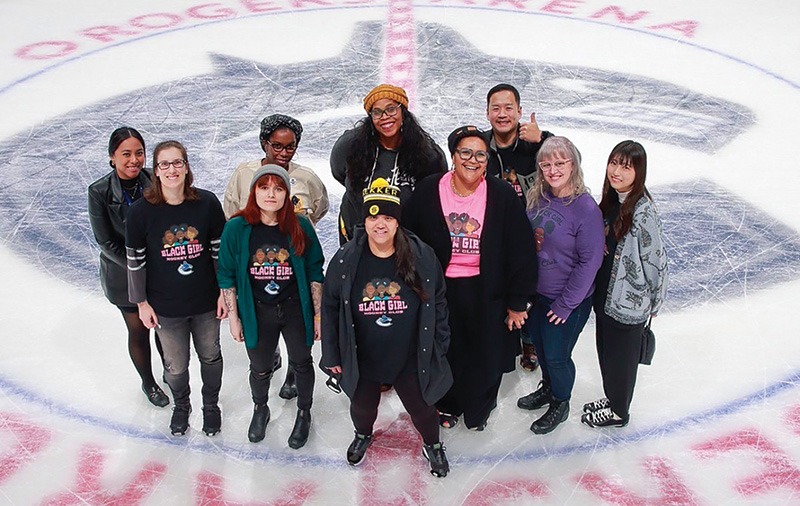
Building access for communities of color
While participation grows overall, not every demographic is benefiting equally. For the Black Girl Hockey Club (BGHC), an organization dedicated to providing access, support, and community for Black women and girls in hockey, the most significant obstacles are structural, cultural, and financial.
“The biggest barriers all seem to stem from various forms of gatekeeping that leaders in hockey appear to be comfortable with,” says Taylor Green, a BGHC board member. “Finding fitting equipment as players’ bodies grow, registration fees, traveling, rink time, nutrition, and training—these things continue to prevent opportunities for development and access.”
Cultural barriers, she notes, can be even more daunting. “It is very difficult to tell Black girls and women that ‘hockey is for everyone’ when patterns of racism and violence against women are enabled to fester without consequence,” Green says. “We must combat these forms of gatekeeping concurrently and not in silos.”
To help, the BGHC offers scholarships, mentorship programs, inclusive summer camps, and education initiatives such as the Get Uncomfortable Advocacy Campaign. “Our pledge demands three concrete actions,” Green says. “Encourage: have the audacity to make space. Educate: there is no excuse for not knowing barriers. And Employ: budgets are moral documents.”
One of the BGHC’s most celebrated initiatives is its annual summer camp, bringing together more than 100 young Black girls and women with Black professional players as mentors.
“Our hair is personal and political,” Green says. “Sharing how to protect textured hair under a helmet may sound inconsequential, but it provides insight into the cultural competency needed to create welcoming environments.”
Leagues as launch pads
Strong infrastructure is essential, and competitive leagues are a key piece of turning interest into advancement.
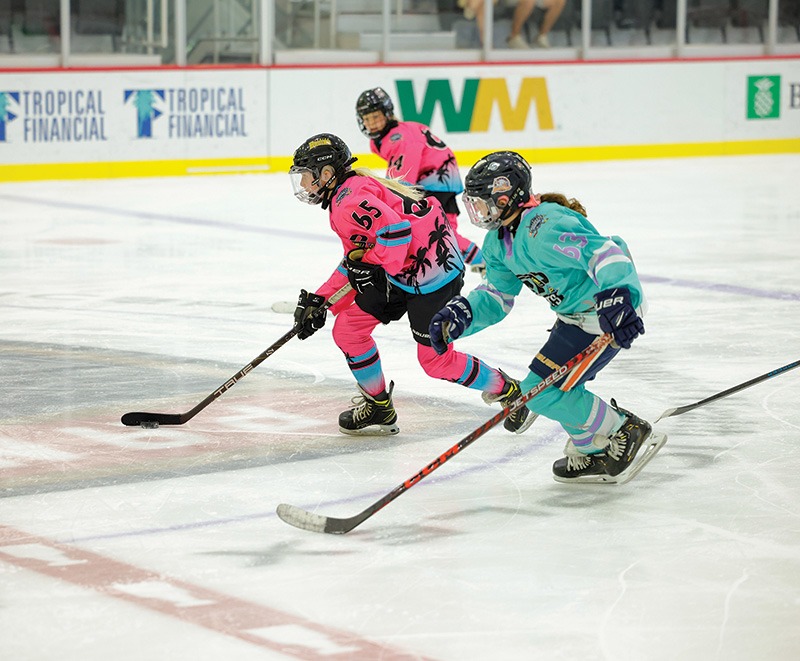
The New England Girls Hockey League (NEGHL), considered the largest and most competitive girls-only league in
the United States, plays a major role in that development pipeline.
“The quality of play in girls’ and women’s hockey has taken a big leap forward every five years for the past 20 years,” says Scott Fusco, commissioner of the NEGHL. “The current skill level is higher than it has ever been. Our players are exposed to the top teams and tournaments, which leads to exposure to prep schools and colleges.”
Maintaining competition integrity anchors the league’s philosophy and helps it continue to thrive. “The most important aspect to consider when hosting tournaments is the level of competition,” Fusco says. “Having an event with all competitive games makes for a satisfying outcome for all teams.”
Beyond wins and losses, the league measures success by where its athletes go next, and female players are finding more opportunities each year. “Having our players be successful at the D1 and D3 college level shows how many players are developed by NEGHL programs,” he says. “We usually have around 40-plus players in the Women’s Beanpot [college hockey tournament in Boston] every year.”
A future fueled by possibility
With the launch of the Professional Women’s Hockey League last year, the top of the developmental pyramid is sharper, and more competitive, than ever. “In the next five years, there will only be so many spots at the top,” Pippy says. “But the base of the triangle will continue to get wider and wider, offering more opportunities for more female athletes.”
That widening doesn’t just matter for elite aspirations; it matters for communities, event organizers, and destinations building more inclusive and sustainable hockey ecosystems.
“Change at the grassroots is where we feel the direct impact the most,” Green says. “Community partnerships, local outreach, and youth-focused programs can fill in the gap and lead the way.”
The future of girls’ and women’s hockey is no longer speculative—it’s unfolding in real time. From southern rinks to northeastern prep schools, from beginner learn-to-skate classes to NCAA commitments, the sport is expanding wider, faster, and stronger than ever.
“Our programs provide excellent ice availability, development, and exposure opportunities,” Fusco says. “I don’t think our players see many barriers to their hockey dreams.”