This exciting racquet sport, fresh to the U.S. scene, is rapidly capturing the hearts of players and planners alike.
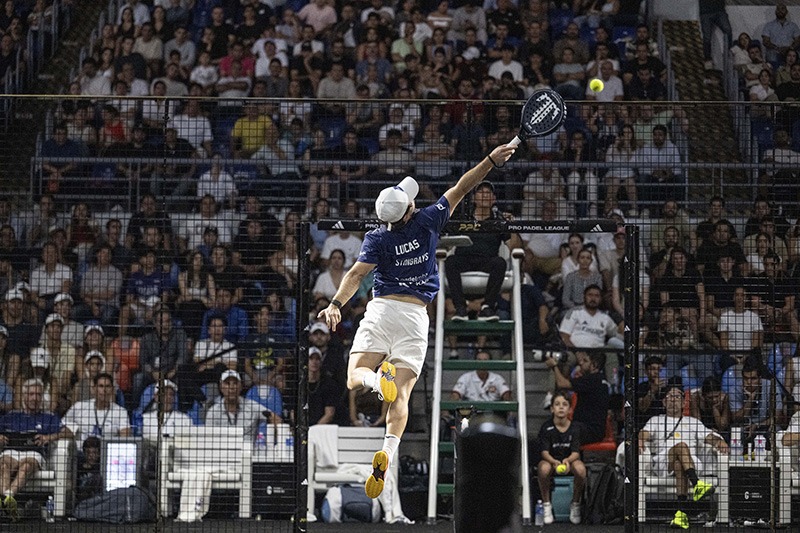
Once considered a niche import from Europe and Latin America, padel is now carving out a meaningful presence in the American sports-event ecosystem. Participation is increasing, infrastructure is expanding, and organizers are starting to view the sport not as a novelty, but as a legitimate event and a viable business opportunity.
So, what is padel? Pronounced with the accent on the first syllable, padel is a rapidly growing racquet sport that combines elements of tennis and squash. It is played on a smaller, enclosed court surrounded by glass and mesh walls, which keep the ball in play and fosters long, dynamic rallies. Usually played in doubles, padel uses a sturdy, perforated paddle and a depressurized tennis ball. The game features underhand serves and emphasizes strategy, shot placement and teamwork over sheer power. Players can use the glass back walls to bounce the ball back, similar to squash, making the game lively and engaging.
“The amount of clubs has exploded in the U.S. in the past couple of years,” says Scott Colebourne, executive director of the United States Padel Association. According to The State of Padel in the U.S. Report 2025, produced by Paddle Growth Analytics, the sport is gaining measurable traction in the U.S. In fact, the report finds that there are 112,872 active padel players nationwide and 688 padel courts at 180 facilities across 31 states, illustrating that participation is expanding beyond traditional coastal hubs.
The study also shows a diverse participation base, with nearly 40,000 core players who play 12 or more times per year, and more than 150 USPA-sanctioned tournaments held in 2025, signaling rising competitive engagement. While padel remains far smaller than tennis or pickleball, its growth curve has been steep enough to draw interest from facility developers, league operators and destinations looking to diversify their event offerings.
Past and present
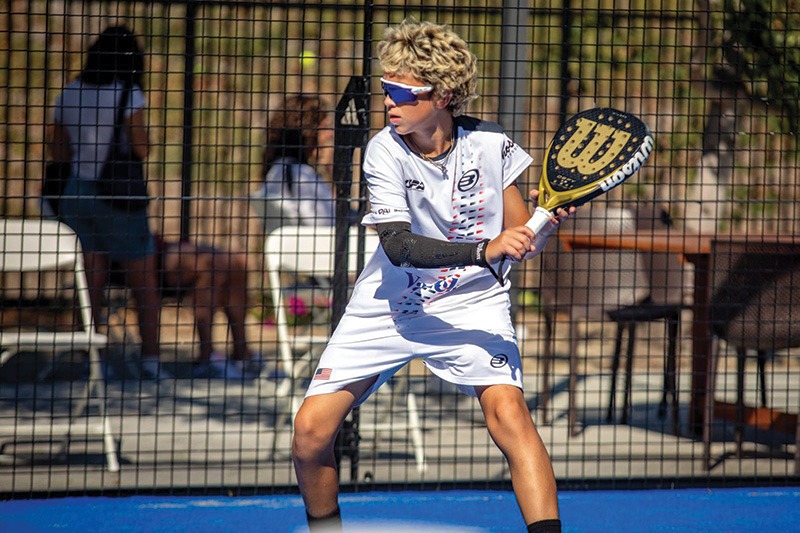
Padel was invented in 1968 in Acapulco, Mexico, before spreading rapidly through Spain, Argentina, and other parts of Europe and Latin America. In Spain, it has grown into one of the country’s most popular participation sports, supported by thousands of courts and a deeply embedded club culture.
The United States, by contrast, is still early in its adoption cycle, and that timing may be its greatest advantage. “Unlike Spain or Argentina, where the market is mature and saturated, the U.S. is in an early-phase growth curve,” Colebourne says. “That creates both opportunity and challenge. We have a chance to build infrastructure, standards, and competition pathways correctly from the start.”
According to the USPA, court construction has accelerated sharply in recent years, driven by increased investor interest and demand from players who were introduced to the sport during the COVID-era fitness boom. Unlike some pandemic-driven trends, padel’s momentum has not slowed.
“We’re seeing growth across every measurable indicator,” Colebourne says. “Membership continues to grow month over month, and tournament participation has increased significantly, with many events filling quickly and expanding draws.”
The Pro Padel League, which fields 10 professional franchise teams across major markets in the United States (Arkansas, Miami, Houston, Las Vegas, Los Angeles, New York, and San Diego) as well as in Canada and Mexico, has established a platform that inspires participation and serves as aspiration for the best prospects to reach their full potential.
“The PPL will continue to play a significant role in furthering the growth of padel by hosting world-class competitions, engaging fans with unique content and experiences and supporting grassroots participation,” says Brian Flinn, COO of the league. “For 2026, we plan to increase the number of events hosted in team markets. We will work closely with our teams, sports commissions, tourism boards and venues to deliver world-class experiences for players, fans and partners.”
Additionally, the PPL is planning a series of fan engagement events, including open play, clinics, pro-ams and exhibition matches, alongside pop culture events in unique locations. “These events will offer more access to the PPL, our teams and our players, and will enable us to produce a wide range of content, from live programming to influencer integrations and social media, reaching audiences around the world,” Finn said.
Why padel is clicking
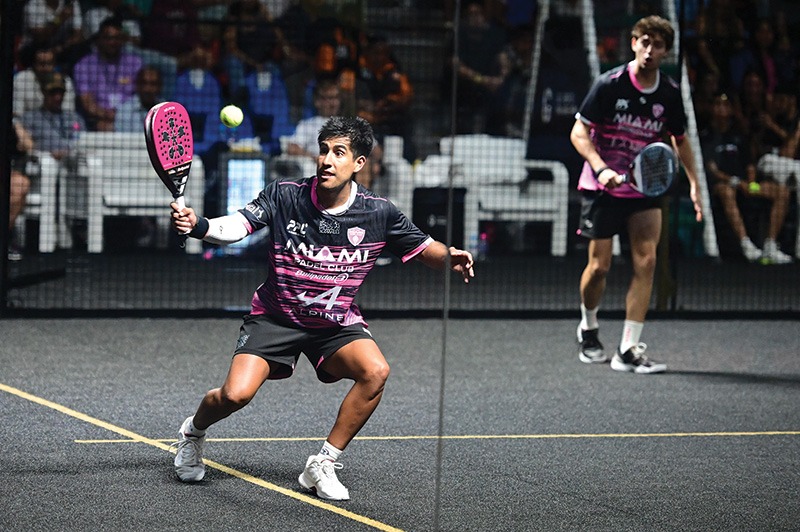
Much of padel’s appeal lies in how it differs from other racquet sports. Played exclusively as doubles on an enclosed court, the game incorporates glass walls that keep rallies alive and introduce a strategic, three-dimensional element.
“Padel is played in three dimensions,” Colebourne says. “The ball can bounce off the glass walls and stay in play, which makes it very different from tennis or pickleball.” The sport’s learning curve is also relatively forgiving. New players can rally quickly, and maintaining competitive balance across skill levels
is easier.
“The ability level between players doesn’t have to be super close for it to be a great game,” Colebourne says. “Someone who has been playing a long time can play with someone newer and still have a lot of fun.” That accessibility, combined with the sport’s inherently social nature, has helped fuel participation, particularly among adult players.
Jaco Blanco, a former number-one-ranked player on the USPA circuit and a top 20 world-ranked player, now serves as a coach for the U.S. national team and believes the U.S. is at the beginning of a very exciting padel journey.
“Having been involved in padel for over 30 years, I’ve seen the sport grow from a very niche activity into a global phenomenon,” he says. “Over the last three years living in the U.S., and now serving as a national team selector, it’s been especially interesting to witness how quickly padel is resonating here.”
He believes padel is gaining popularity in the U.S. for several key reasons, among them its extreme accessibility, which allows people to enjoy it from their very first session, regardless of age or background. This aspect fits perfectly with the American mindset of fun, social, and inclusive sports.
“Second, the U.S. already has a strong culture of racquet sports like tennis and pickleball, so padel feels familiar yet fresh and offers something new, more dynamic and more social,” Blanco says. “Additionally, the growth of high-quality clubs, international exposure and professional events is helping legitimize the sport and attract both players and investors. Once people try padel, they usually get hooked—the learning curve is fast, the rallies are long, and the social component is very strong.”
From niche hobby to organized competition
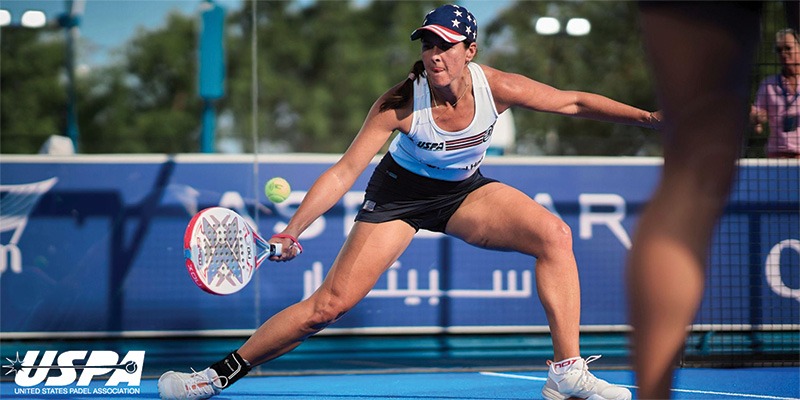
As padel participation has grown, so has the need for a structured approach. What began as loosely organized club play is increasingly supported by national rankings, sanctioned tournaments and league-based competition.
At the amateur level, the National Padel League has emerged as a key connector between clubs, players and the broader padel ecosystem. “The National Padel League was born in 2021, when the industry wasn’t nearly as evolved as it is today,” says Luis Fernando Ramirez Aristeguieta, CEO of the league. “The mission now is to solidify the ecosystem of padel in the United States and connect the community.”
Operating in partnership with the USPA, the NPL runs a team-based league structure that mirrors successful models in tennis and other sports. Teams compete at the city level before advancing to regional and national competitions. The response has exceeded expectations. “We were projecting around 800 players, and we doubled that,” Ramirez Aristeguieta says. “We’re at about 1,700 players right now, across 36 cities and more than 50 clubs.”
For organizers, league play offers a different value proposition than standalone tournaments as it’s rooted in retention and repeat engagement. “When players feel part of a team, they stick longer,” Ramirez Aristeguieta says. “They train more, they spend more time at the club, and they invest emotionally in the sport.”
Tournament tips
As more clubs and destinations experiment with padel events, organizers are discovering that success depends on mastering fundamentals rather than overcomplicating formats. “Players expect consistent standards for rules, officiating, and scheduling,” Colebourne says. “Clear communication before and during the event is essential.”
Facilities with three or four courts tend to handle tournament flow most efficiently, though two-court venues can still host successful entry-level competitions. “Adequate staffing, particularly for officiating and scoring, is one of the most critical factors,” Colebourne says. “That’s one of the biggest things we’ve learned.”
Beyond logistics, padel tournaments thrive when organizers lean into the sport’s social culture. Many successful events incorporate pop-up villages with vendors, music, and post-match gatherings that encourage players to stay on site.
“Padel players are incredibly social, both online and offline,” Colebourne says. “They love when a tournament feels like more than just matches.”
Tournament gift bags, professional photography, and sponsor activations have also become common tools for enhancing the player experience while creating revenue opportunities for organizers.
Padel partnerships
For sports commissions and CVBs, padel remains an emerging asset, but one with growing appeal. While events are generally smaller than traditional tournaments, they attract a highly engaged adult demographic that travels, spends, and returns.
The USPA works with destinations by providing tournament sanctioning, connecting organizers with endorsed court builders and assisting with event formats and sponsorship opportunities.
“A city is padel-ready when it has adequate court availability, a committed host club, and support from the destination or sports commission,” Colebourne says.
Most padel events today are still driven by clubs, but Colebourne encourages organizers to involve tourism partners early. “If clubs have good relationships with their cities or tourism boards, they should start those conversations now,” he says.
While participation remains the primary growth driver in the U.S., professional competition helps legitimize the sport and raise awareness among new audiences. “Some players prefer individual tournaments, others prefer team competition,” Colebourne says. “Both formats are important for the sport’s growth.” Professional events have also introduced new venue concepts, international talent, and broadcast experimentation, developments that filter down to the amateur and grassroots levels.
The road ahead
Despite its momentum, padel’s biggest challenge in the U.S. remains infrastructure. Courts are expensive to build, zoning approvals can be slow, and projects often take years to complete. “Demand to play padel is really high,” Colebourne says. “But courts are still relatively inaccessible in many markets.” That reality shapes how events are planned. Flexible scheduling, efficient use of court time, and collaboration between clubs and leagues have become essential tools for organizers.
“We had to adapt,” Ramirez Aristeguieta says. “Flex scheduling at the city level allows participation even when infrastructure is still catching up.” Looking ahead, padel’s leaders see youth development, expanded infrastructure, and broader media exposure as critical to sustaining growth. “Long term, our biggest goal is becoming an Olympic sport in 2032,” Colebourne says. “This is still early days, but the foundation is being built.” Time will tell if padel grows to the point where it becomes a real challenger to tennis, pickleball, and squash as the true king of the court