Looking to help out a local bowling alley affected by the pandemic, and to showcase the potential of storytelling through the use of a first-person view drone, a pair of filmmakers in Minneapolis collaborated on a short movie back in 2021 that turned out to be a masterstroke of venue marketing. Directed by Andrew Jaska and filmed by Jay Christensen, “Right Up Our Alley” is a 90-second video shot in one continuous take by an FPV drone flying through Bryant Lake Bowl (See it at sportseventsmediagroup.com/RUOA). The video blew up online, catching the attention of film industry heavyweights such as James Gunn (Guardians of the Galaxy) and Lee Unkrich (Coco), as well as The New York Times, partly because of the tightly choreographed action and impressive drone work, and partly because the now 90-year-old bowling alley itself was so unique.
The drone captured action on the lanes and in the attached bar and theatre, and got amazing behind-the-scenes footage of the pinsetter machinery. Funny dialogue was added in post-production, including some sly references to The Big Lebowski. “Mark it eight, dude.” In the five years since it was made, the video has been viewed 2,569,988 times, giving the alley a massive boost in visibility, which, presumably, has translated into increased business.
Of course, at the end of the day, whether it’s to book more tournaments or events, or sell more tickets, that’s what every venue wants to do: generate more business. But not every venue can rely on a viral video to do that. Nowadays, at least in part, most venues depend on social media to get their names out there and engage with fans or customers. Indeed, there are probably very few venues without a social media presence and strategy in 2026. That said, there are good, bad, and better ways to go about it. Done right, social media will not only attract more business but also help build community. To find out what works and what doesn’t, we spoke to a couple of social media pros and compiled these proven tips.
Know your audience
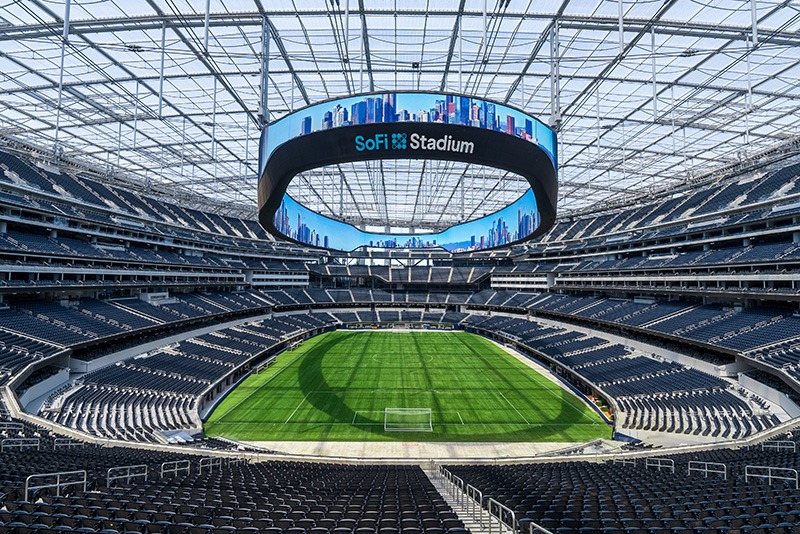
From building an editorial calendar for a magazine to creating the deck for an advertising campaign, there’s a reason this advice is a central tenet of marketing. It’s hard to overstate how important it is to understand your social media audience because it determines what, where, when, and how often you post. To be able to connect with your followers, you must put yourself in their shoes, or, rather, get inside their heads, so you know what kinds of posts will resonate. Like an editor who acts as a surrogate reader, if you can identify with the fans who follow your social media channels, it’s easier to produce and post content they find relatable or entertaining. And in many cases, that changes depending on the platform, says Daisy Guzman, social media specialist with Hollywood Park in Los Angeles, which includes SoFi Stadium and YouTube Theater. “We definitely get our most responses from Instagram and TikTok,” she says, noting that she’ll often test out material on TikTok, and if it performs well, post it on Instagram, too.
X (formerly Twitter) and Facebook are also still popular with the SoFi audience, especially among certain demographics, Guzman says. For example, while K-Pop fans are active across all platforms, they are especially active on X. Meanwhile, for events that attract older audiences, engagement is higher on Facebook.
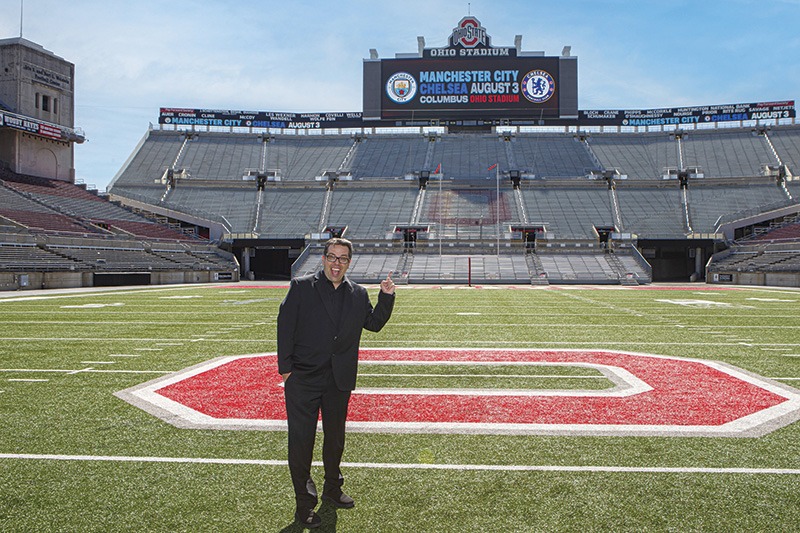
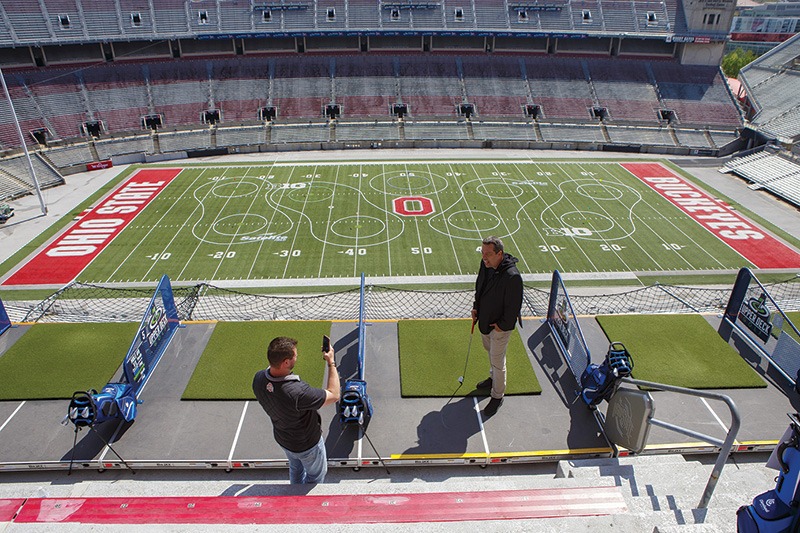
Tailoring content to different platforms and audiences is also part of the social media strategy for Columbus Arena Sports & Entertainment’s four venues, including Schottenstein Center, Nationwide Arena, Ohio Stadium, and Mershon Auditorium, says Dave Redelberger, the director of communications & interactive marketing. “What I try to do is imagine the average attendee at the event, see what they look like, and that’s where I’m putting my energy and focus,” he says. Each platform attracts a different demographic, he adds, noting that sports fans are particularly active on X. Meanwhile, he rejects the increasingly popular notion (in some circles) that the days of Facebook are over. “Everybody likes to say Facebook is dead, but we still get a lot of activity from Facebook,” Redelberger says. “There’s a lot of people with discretionary dollars who still spend a lot of time on Facebook.”
Build a brand personality
To nurture a connection with your audience and show that your venue is more than just a building, it’s important to engage with them regularly and be as real and authentic as possible. That means checking and responding to DMs, monitoring threads, and responding when appropriate. It doesn’t mean feeding the trolls, as it were, but by reading and addressing comments, you’ll know what content is resonating, and make people feel heard. And while everything you post should align with your company’s values, you’ll get more engagement if you avoid faceless corporate speak and post with personality. People are getting tired of overproduced, slick promotional material, especially since the emergence of AI. So, you can set yourself apart by speaking directly to your social media followers in a conversational, more human way.
For Columbus Arena Sports & Entertainment (CASE), that meant creating an actual persona, Dave the Arena Dude, who’s the human face of the venues. Portrayed by Redelberger, Dave the Arena Dude is the sometimes-larger-than-life brand ambassador for the CASE venues. He interviews fans, talks to athletes or performers, and takes followers behind the scenes at sound checks and more. A longtime radio guy before he got into the venue business, Redelberger says the “day-of” content he produces is not only good for online engagement, it’s great for future business, too, because it plays on people’s fear of missing out, or FOMO. “The content you create on the day-of may or may not impact sales to that event, because how many people are going to drop what they’re doing and come out to the event that day?” Redelberger asks. “But they see the event, it gets that wow factor, and they think, oh, I’m going to go next time, to the next big event.”
Be creative
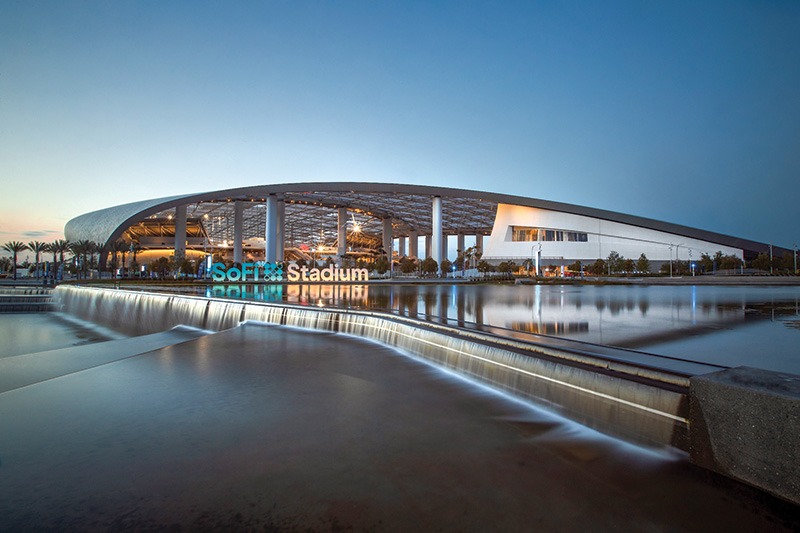
To get people’s attention and encourage engagement, your posts need to be as original and eye-catching as possible. Ideally, you want to offer people something they’re not seeing or getting elsewhere. And the more you can give people a feeling that they’re seeing something exclusive or original, the better. Point-of-view (POV) and behind-the-scenes videos perform particularly well for SoFi Stadium, Guzman says. The stadium’s Instagram page has a whole series of videos called “Inside SoFi Stadium” that garner 10s and 100s of thousands of views. For example, in a recent video, a maintenance worker donned Meta Glasses before descending from the stadium’s ceiling to clean the 70,000-square-foot Infinity Screen. At press time, it had generated 49.4K likes and 834 comments. Your venue won’t have the largest videoboard in sports to show off, but there’s likely something you can show followers that will not only capture their attention but also showcase your venue’s amenities in a positive light. Overall, take some risks, Redelberger says. “Don’t be afraid to fail,” he says. “Everybody’s saying, ‘oh, this may or may not work,’ so stuff never gets off the ground. But, you know, give it a shot. Get out there, try something. Some of the best content is just the dumb stuff that we’ve come up with at the weird hours of the day.”
Track performance
As with a traditional PR or advertising campaign, it’s important to measure results so you can use the data you collect to inform future decisions. Both Guzman and Redelberger use Sprout Social, which can manage, analyze, and optimize social media strategies. Sprout can also advise on the best times of the day or week to post.
“We usually create event reports, which include the lifetime of an event,” Guzman says. “So, let’s say from the announcement of Bruno Mars. Everything we post from the on-sale, to promoting his shows, to know-before-you-go posts, to fan engagement pieces, to the recap of the show, and then end-of-show, it’ll include everything. It’s really informative to us.”
And while your venue is likely more apt to be announcing a local volleyball or basketball tournament rather than a massive pop concert, you can still benefit from gathering data to know how your posts are performing. That way, you can fine-tune your strategy and bring in more business.