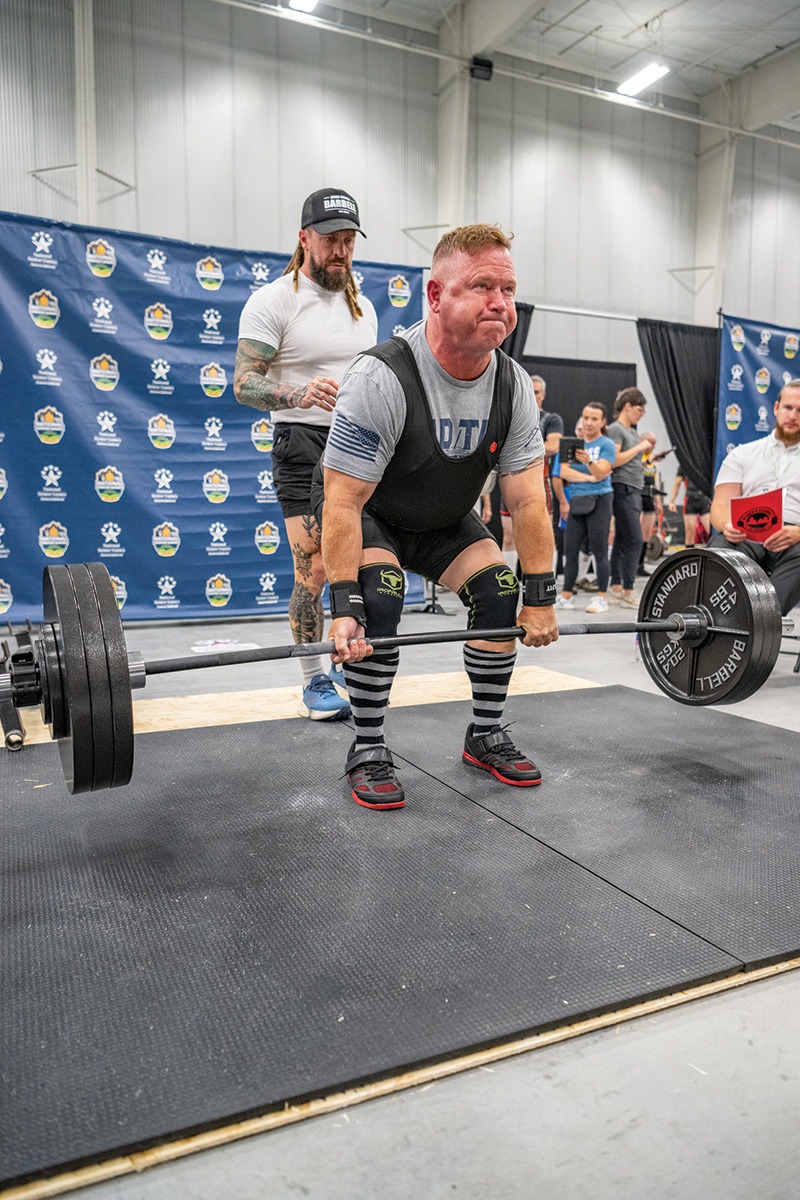
The athletes competing in the National Senior Games are often remarkable long before they ever step onto a track, court, or field. For instance, some are recovering from devastating injuries while others are discovering sports later in life after careers, family obligations or health setbacks delayed any chances for athletic feats. Still, many are simply looking for community, purpose, and a reason to stay active.
Together, their stories have become one of the most powerful tools used by the National Senior Games Association to inspire participation and challenge assumptions about aging.
Hosted every two years, the National Senior Games brings together thousands of athletes ages 50 and older to compete in more than 25 sports, making it one of the largest multisport events in the world for older adults. While the competition itself remains the centerpiece, storytelling has become an increasingly important part of the organization’s communications strategy.
Through its long-running “Athlete of the Month” series and expanding digital and video storytelling efforts, the National Senior Games Association highlights competitors whose experiences go far beyond medals and podium finishes. The stories often focus on resilience, recovery, reinvention, and lifelong curiosity, themes the organization believes can motivate others to become active no matter their age.
“Storytelling is really core to our communications strategy,” says Mary Johns, director of communications for the National Senior Games Association. “The athletes are what make the National Senior Games community so special, and they absolutely deserve to be celebrated.”
The hope is that those who see and read these stories see themselves in the athletes featured. “There is no better way to encourage people to get active than hearing the stories of people who are living proof of how sports and movement can transform lives,” Johns says.
The profiles are intentionally diverse. Some feature elite competitors breaking records in their 80s and 90s, while others spotlight athletes who discovered sports after retirement or overcame serious personal challenges. The common thread is showing that active aging can look different for everyone.
“We can talk all day about the facts and statistics around healthy aging,” Johns says. “But reading a story about someone who overcame depression through running or someone who discovered sports later in life, that’s what people connect with emotionally.”
The athlete stories also help combat stereotypes surrounding aging. “These stories are counter-narratives to the ageism we unfortunately see in society,” Johns says. “They show that life doesn’t just dry up as you get older.”
Social media engagement, athlete nominations, and participant feedback all suggest the storytelling initiative is resonating. Johns notes athletes frequently tell the organization they were inspired to try a sport or enter the Games after reading about someone else’s experience. The stories also reinforce one of the organization’s biggest messages: it is never too late to begin. Here are four competitors whose backgrounds are wildly different but whose experiences reflect the same spirit of perseverance and lifelong growth.
Willie Spruill
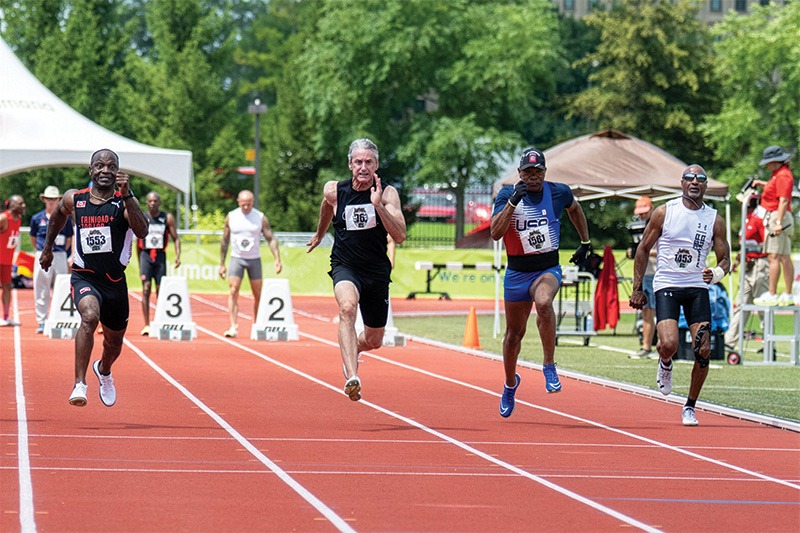
At one point, Willie Spruill could barely walk. The 67-year-old North Carolina athlete spent years dealing with chronic pain caused by injuries sustained during his Army service as a paratrooper. His health struggles eventually became overwhelming. He dealt with debilitating physical pain, migraines, depression, and reduced mobility. By 2017, he needed a cane to walk and says he had reached an emotional breaking point.
Sports had always been central to Spruill’s identity. Growing up, he played baseball and football before joining the Army because he couldn’t afford college tuition. Later, while serving in the military, he unexpectedly discovered track and field after an injury ended his baseball career.
“I fell in love with it,” Spruill says of running. Years later, after his health deteriorated, he says he felt lost physically and emotionally.
Everything changed during a visit to a medical facility at Fort Bragg when he spotted information about the North Carolina Senior Games. Curious, he decided to start walking on a track again. Within weeks, he
was running.
“It was so exciting that I was able to run again,” Spruill says. He entered the Senior Games shortly afterward and won all three of his events. The experience reignited not only his competitive drive, but also his sense of purpose.
Today, Spruill competes in masters track and field events nearly every weekend, traveling across the country and internationally to race. More important than the medals, however, has been the sense of belonging he found through the Senior Games community.
“We learn from each other, and it becomes a new family,” Spruill says. “Being active and in sports and track and field has really blessed me.”
Leurene Hildenbrand
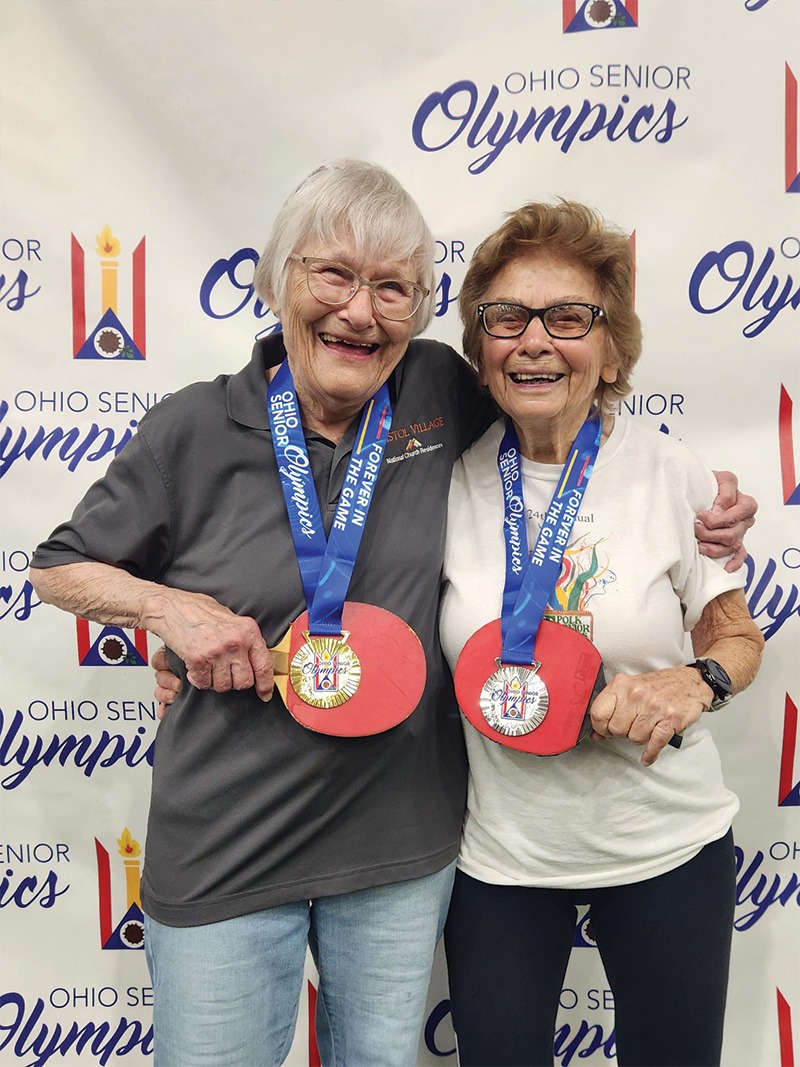
Most athletes eventually settle into the sports they know best, but Leurene Hildenbrand prefers to keep learning. The Hall of Fame Senior Olympian and retired research scientist grew up fascinated by machinery, engineering, and problem-solving while helping her father repair equipment on the family farm. That curiosity eventually led her into scientific research during a time when very few women worked in
those fields.
“When I was hired in the research department of Goodyear in the ’50s, there were 500 scientists employed, and I was the fifth woman,” Hildenbrand says. “You had to be better than the men to be equal.”
Her competitive side eventually expanded into sports after she and her husband became involved in table tennis. Once she discovered the Senior Games movement, Hildenbrand quickly embraced the opportunity to try new events and challenge herself physically in retirement.
Today, she has participated in more than 17 sports. That includes cycling, a sport she took up later in life after spending two years researching bike technology and training nearly every day before winning a silver medal in competition.
“I have always loved learning new things, and I have always loved a challenge,” Hildenbrand says. She believes many older adults underestimate their own capabilities and hopes her story encourages others to explore new experiences. “If you never take the opportunity, you will never know what you can do,” she says. “You will never know how much enjoyment learning new experiences can be.” Hildenbrand notes the Senior Games have given her far more than the opportunity to compete. “It has provided me with unexpected enjoyment, good health, many wonderful learning experiences, and lasting friendships,” she says.
Ann Hegstrom
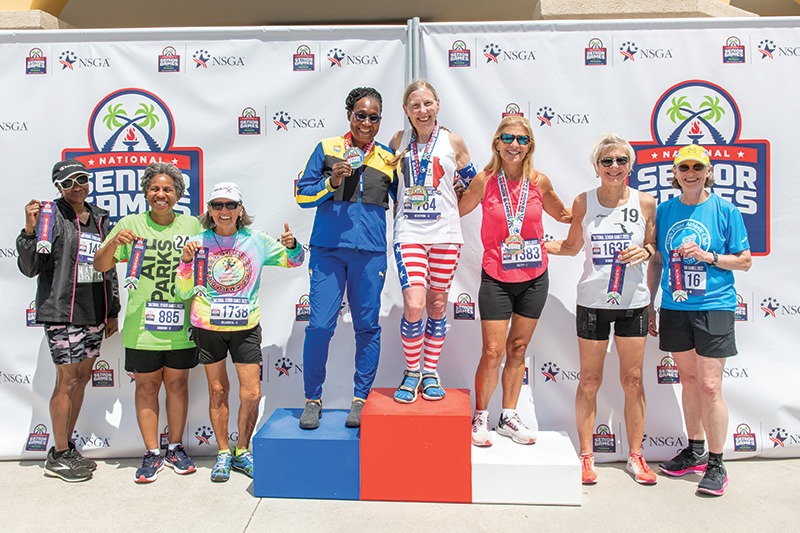
Ann Hegstrom does not measure success strictly through medals. The longtime Iowa runner says simply being able to continue moving is reward enough.
Hegstrom first discovered running in middle school track before stepping away from the sport for many years while building a career as a nurse and later working at the Iowa Braille School.
At age 45, she began casually participating in charity 5K races alongside her late husband Gary, who competed using a power wheelchair. After his passing, Hegstrom dedicated her physical activity to his memory and gradually became more competitive in her 50s.
She says part of that motivation came from wanting to show her students that people should not be afraid to try something new later in life.
Eventually, she discovered both the Iowa Senior Games and the National Senior Games.
“It’s the most inspirational thing you can possibly do,” Hegstrom says of attending her first National Senior Games.
Her story includes additional challenges. Shortly before her first National Senior Games appearance in 2019, Hegstrom was diagnosed with breast cancer but still chose to compete.
Today, she still walks between eight and 10 miles every day and continues participating in races and track events, and not just for exercise. “There’s this whole social aspect of it that I enjoy,” Hegstrom says. She has also become known for colorful outfits and twin braids that fellow athletes remember years later. “If you can’t win, you have to look good,” she says.
Despite injuries and surgeries over the years, Hegstrom remains grateful for one thing above all else. “It’s the fact that I can still run,” she says.
Dr. Rajeev Trehan
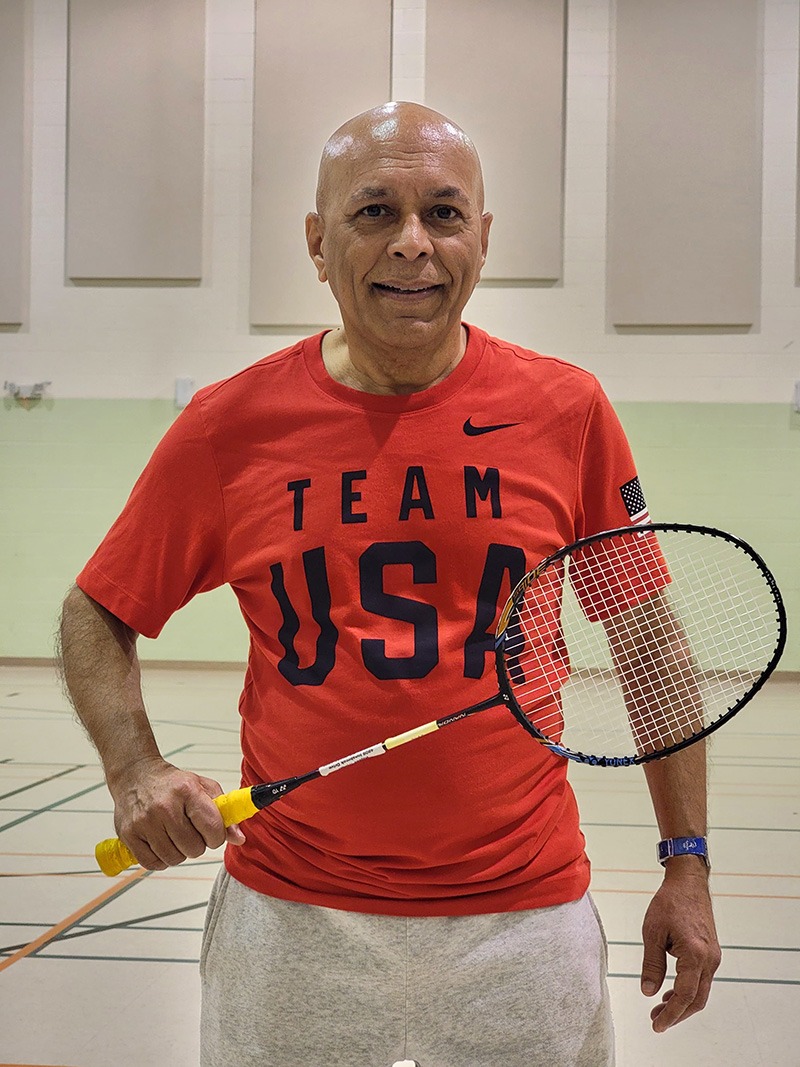
Badminton has shaped Dr. Rajeev Trehan’s life for nearly six decades. The 70-year-old physician and lifelong athlete grew up in India playing racket sports every afternoon after school before eventually immigrating to the United States and building a distinguished career in internal medicine, neurology, and psychiatry.
Today, Trehan still plays badminton four times a week while also serving as a national classifier for para badminton and as a medical leader for USA Badminton. His involvement with the sport has included work at multiple Olympic Games as both an official and a physician.
Although badminton remains relatively niche in the United States, Trehan believes it may be one of the most physically and mentally demanding racket sports in the world.
“Badminton is the only racket sport that does not have a ball,” Trehan says. “The fastest object of any racket sport is the shuttlecock.” His medical background has only deepened his appreciation for the sport’s complexity. “This is a whole body and mind kind of activity,” Trehan says. “I don’t know that there could be anything better.” Trehan began competing in the National Senior Games shortly after turning 50 and has participated in nearly every Games since 2007.
Even after decades in medicine and international badminton leadership, he says his love for the sport still comes back to the same simple joy he felt as a child. Says Trehan: “While I’m doing all of these things professionally and with organized badminton, I’m basically just a player who loves the sport.”