Temporary courts, portable equipment, and careful logistics allow communities and convention centers to accommodate a growing range of tournaments and Championships.
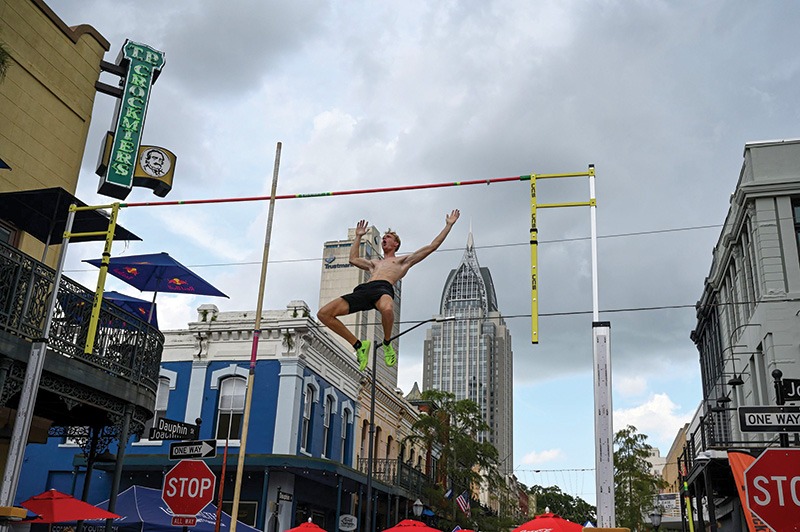
When it comes to unusual settings for athletic competitions, Dauphin Street in downtown Mobile, Ala., raises the bar. Most days, the popular corridor is filled with shoppers, diners, and people seeking live music in bars and nightclubs. But for the past 15 years, organizers have transformed several blocks into the Dauphin Street Vault Championship, a USA Track & Field-sanctioned World Athletics Challenger competition that attracts hundreds of athletes.
As facility availability tightens and competition for events grows or they just want to try something out of the ordinary, organizers are rethinking where sports can be played. Streets, parking lots, public parks, and convention centers can become tournament sites when planners address the sport-specific needs of athletes, officials, and spectators.
Transforming urban spaces into sports venues
For the Dauphin Street Vault Championship, held each July, organizers need room for four competition pits, two runways and landing areas, along with warm-up space, parking, and room for more than 2,000 spectators. Once city officials approve street closures, the asphalt is converted into a sanctioned track-and-field venue for more than 250 vaulters from across the country.
The event also requires practical guest services. Portable restrooms are stationed at the northeast corner of Cathedral Square, across from a competition pit, and water jugs are placed throughout the site. Athletes warm up in Cathedral Square or at a competition pit, while several downtown hotels accommodate overnight guests.
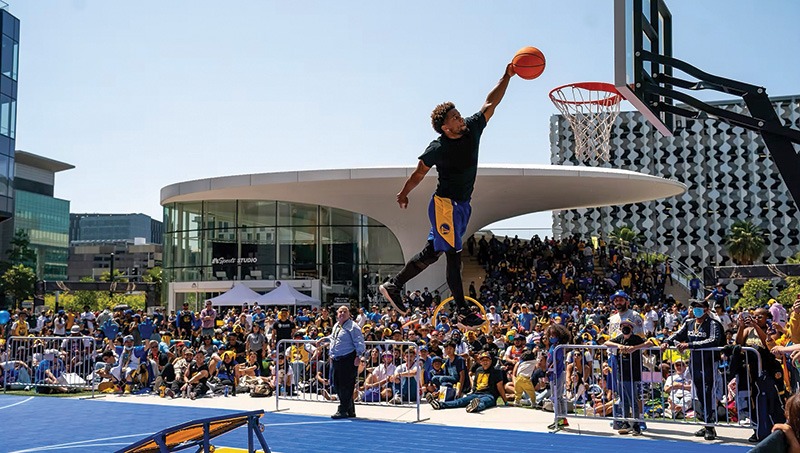
Hoop It Up 3×3 basketball events offer another example of adapting public spaces. The events use temporary half-courts in urban locations, including the northwest parking lot of Oak View Mall in Omaha, Neb., and Plaza Park, a downtown green space in San Jose, Calif.
Founded in 1989 by Terry Murphy, Hoop It Up hosts basketball events for participants of all ages and abilities, often in partnership with NBA teams. The Milwaukee Bucks, for example, have hosted tournaments with more than 100 teams on 12 courts at the Plaza at Deer District and along part of Juneau Avenue.
In addition to space for 10 to 12 half-courts, Hoop It Up events require portable hoops, court line markings, game balls, and scorekeeping stations. Organizers must also obtain street-closure permits, comply with music-related sound ordinances, and arrange on-site security and medical or first-aid staff.
Now owned by NBA star Kevin Garnett, Hoop It Up uses temporary courts to turn concrete spaces into sports arenas. The approach taps into streetball culture, makes the game accessible, and creates a festival-like, family-friendly atmosphere.
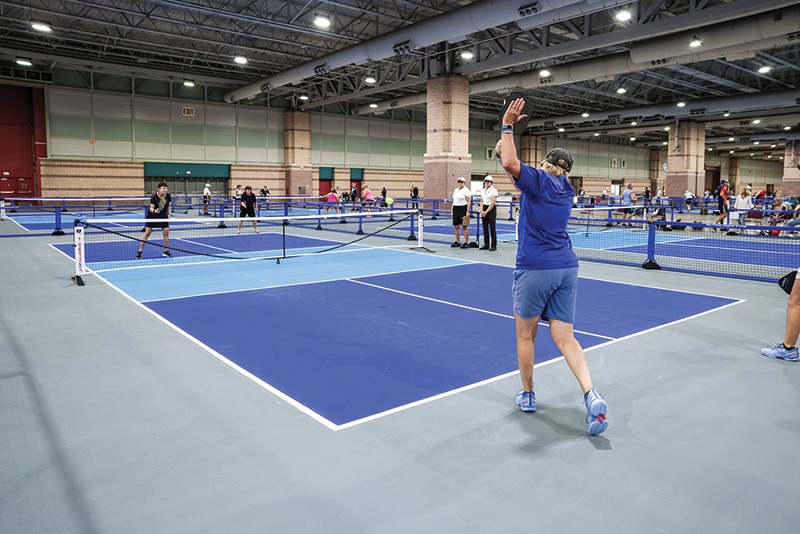
Convention centers can be blank canvases
Convention centers offer a different kind of flexibility: the ability to build a purpose-designed competition environment inside a single climate-controlled facility.
The Atlantic City Convention Center (ACCC) is one of the East Coast’s most versatile indoor event facilities and an ideal venue for sports such as pickleball, says Daniel Gallagher, executive director of the Atlantic City Sports Commission. For the USA Pickleball Indoor National Championships, the exhibit hall was outfitted with dozens of temporary courts, spectator seating, championship courts, vendor space, athlete lounges, and broadcast areas.
“The flexibility of the facility allows us to create an experience that feels purpose-built for the sport while providing athletes and spectators with a comfortable, climate-controlled environment,” Gallagher says.
National championships can bring several thousand athletes, plus coaches, officials, families, and spectators, to a destination over multiple days. That can generate tens of thousands of hotel room nights and a significant economic impact.
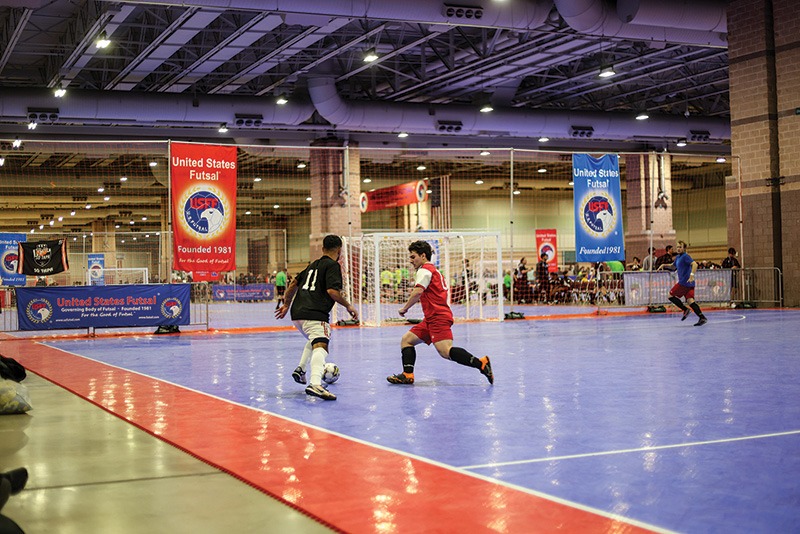
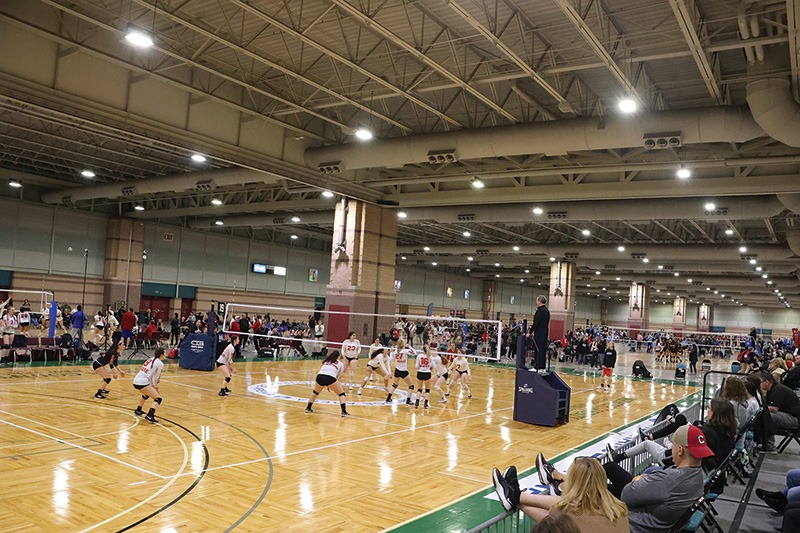
Beyond pickleball, the ACCC has hosted volleyball, basketball, wrestling, cheerleading, dance, gymnastics, fencing, esports, futsal and martial arts, among other indoor championships. Its exhibit halls have 30-foot ceilings for sports that need additional vertical clearance, while carefully designed court layouts help maintain safety zones and spectator flow.
Temporary fencing, pipe-and-drape, branded graphics, and portable seating can define individual competition areas. Sound management is equally important when multiple courts operate at once, Gallagher says, so the operations team works with organizers on public-address systems, acoustics, scheduling and traffic flow.
The ACCC also features 90,000 square feet of Sport Court flooring—enough for 18 basketball courts, 27 volleyball courts or 12 futsal fields, along with related hoops and nets.
“That significantly cuts the cost for our rights holders because they do not have to rent and ship them,” Gallagher says.
One hall, many sports
The Arthur R. Outlaw Mobile Convention Center offers a similar model. Its 100,000-square-foot exhibit hall, located on the waterfront in downtown Mobile, Ala. has hosted a wide variety of indoor sporting events, says Marlene Rathle, marketing and events director for the Mobile Sports Authority Inc. “Each event has unique logistical requirements that must be carefully considered during the planning process,” Rathle says.
For the 2025 Alabama High School Athletic Association Super Regional Cheer Competition, the facility needed a 54-x-42-foot competition floor, or nine strips, plus a designated warm-up area, 18- to 20-foot ceilings, spectator seating, space for judges and scoring operations, and professional sound support. The 2026 USA Gymnastics Trampoline & Tumbling Region 5 Championships, which drew 650 athletes and 130 coaches, required at least 20 feet of ceiling height, 50,000 to 60,000 square feet of floor space, seating, audiovisual equipment, an awards area and space for judges and scoring personnel.
Court sports require another set of coordinated services. The 2026 Ballin’ on the Bay Showcase Basketball Tournament brought more than 120 boys’ and girls’ teams to Mobile and needed floor space for 10 portable courts, basketball goals, timing and scorekeeping equipment, spectator seating, security, and crowd management. Similar planning supports the Gulf Coast Showdown Basketball Tournament and the Primetime Gulf Coast National AAU Basketball Tournament.
Meanwhile, the USA Volleyball Gulf Coast Regional Championships attracted more than 200 teams and 1,800 to 2,000 athletes. To meet USA Volleyball requirements, the facility provided space for up to 14 portable courts, coordinated the installation and dismantling, and provided volleyball nets, scorekeeping equipment, and seating at each court. The Port City Volley Jolly Christmas Volleyball Tournament has similar needs, Rathle says.
A competitive advantage
The lesson for sports planners is to look beyond traditional venues. Convention centers can function as blank canvases, Gallagher says, allowing organizers to build championship-quality competition spaces in one location rather than relying on multiple gymnasiums across a region.
That creativity can help solve facility shortages while centralizing athletes, vendors, spectators and sponsors under one roof. For organizers, Gallagher says, the result can be better logistics, stronger branding opportunities, and a more memorable event. Paired with Atlantic City’s walkable hotels, restaurants, entertainment, and beaches, a tournament can become a destination experience. Wherever you’re holding your event, if you can combine that kind of athlete and family satisfaction with economic impact, that’s a win for everyone involved.
What it takes
Whether an event is held on a street, in a plaza, or in an exhibit hall, planners should account for the following elements to adapt a space for sports.
Competition footprint: Playing surfaces, safety zones, vertical clearance and warm-up areas.
Event infrastructure: Temporary courts or pits, equipment, scoring and timing, sound and audiovisual support.
Spectator experience: Seating, traffic flow, restrooms, hydration, parking, and accessibility.
Permits and safety: Street closures, local ordinances, security, medical support, and crowd management.
Identity and operations: Signage, branding, vendor space, athlete areas, load-in and teardown schedules.