At a time when sponsorship decks are growing longer, and sponsor expectations are more complex, one Texas event offers a reminder that innovation doesn’t always require massive scale—it requires clarity of purpose.
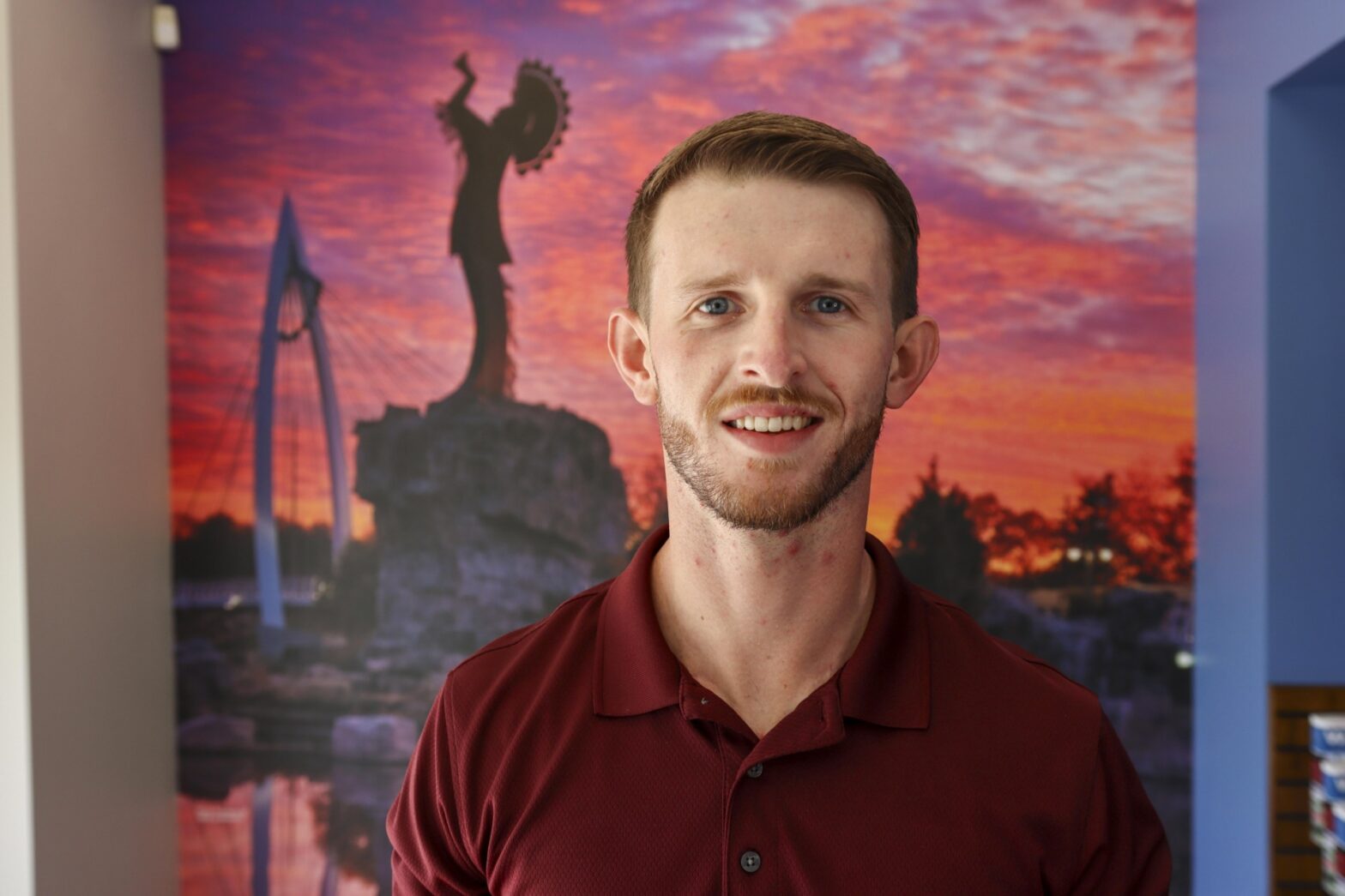
As the 20th annual 24 Hours in the Canyon approaches, Ryan Parnell, director of operations and special programs for Harrington Cancer and Health Foundation, continues to refine a model that has quietly evolved alongside the broader industry. The 24-hour road and mountain bike fundraiser, staged at Palo Duro Canyon State Park, supports a nonprofit cancer survivorship program that provides free wellness services from diagnosis through post-treatment.
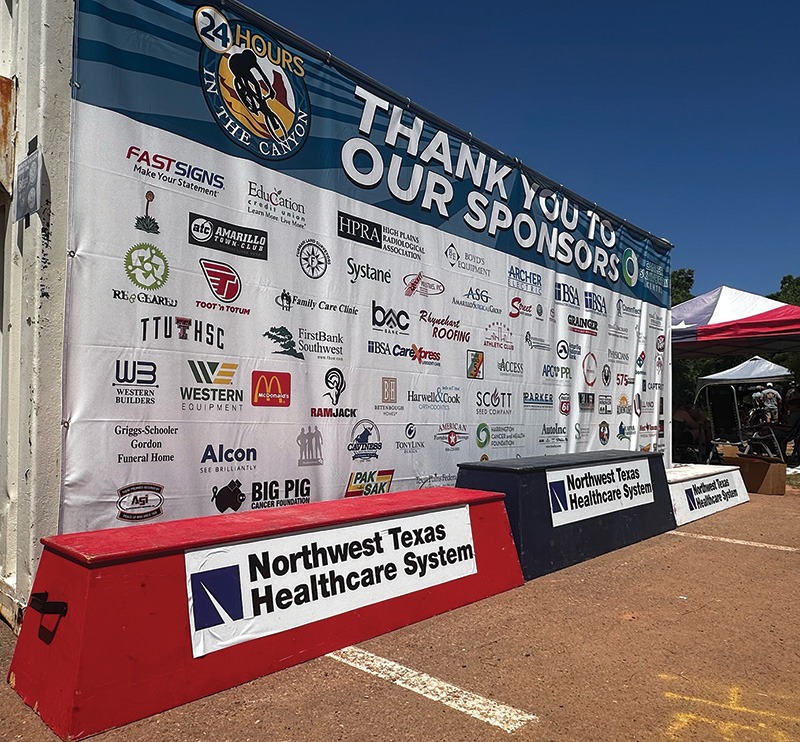
Parnell doesn’t sell gold, silver, or bronze tiers. He sells ownership. “Most everything is an exclusive level sponsorship,” he explains. “Goodie bags, rest stops, timing stations, charging stations, kids’ races, race divisions, dinners, breakfasts—each is paired with a single sponsor, and their logo is on that. That way they don’t get lost in the shuffle.”
He prices those opportunities based on exposure and cost, aiming not only to cover expenses but to drive meaningful dollars back to the mission. If a sponsor backs the mountain bike race, its logo appears on every race bib in that category. A rest stop sponsor has a greater level of visibility. The structure is intentional and transparent—
a model that mirrors what industry leaders describe as the evolution from transactional sponsorship to strategic partnership.
“A lot of times when you say sponsorship, people’s minds go immediately to signage, and that’s a very visible example of what sponsorship is all about,” says Jim Andrews, founder and CEO of A-Mark Partnership Strategies. “But there is so much more that sponsorships can do for a brand.”
Parnell’s approach does exactly that, even if informally. When a kid’s race sponsor asked to get employees involved, Parnell didn’t just allow it; he integrated them into the experience. The company filled more than a dozen volunteer roles who distributed awards after the race and added branded presence beyond standard signage. “Having their employees involved so they could see the benefit made a big difference,” Parnell says.
That kind of experiential activation reflects what Bettina Cornwell, Philip H. Knight chair and head of the Department of Marketing at the University of Oregon, calls the move from “sponsorship as advertising” to “sponsorship as authentic engagement.” Brands can’t just rely on putting their logos everywhere. They receive more value from sponsorships when they’re a part of the event, creating memorable moments for attendees.
“Traditional sponsoring, in serving like advertising, is being replaced by experiential engagement,” Cornwell says. “Sponsorship contexts everywhere are crowded and create clutter in the minds of audiences. Brands wanting value from their partnerships must activate in compelling ways to break through the clutter.”

Deliverables vs. objectives
One of the most significant gaps in sponsorship today, Cornwell notes, is perspective. “Event organizers tend to focus on deliverables promised, whereas brands focus on goals and objectives obtained,” she says.
Sponsors increasingly define success in broader terms—sales and conversions, but also awareness lift, perception change, and what Cornwell describes as “return on purpose.” Simply counting exposures or relying on advertising value equivalence, she adds, is overrated. “These are still just measures of impressions,” she notes, “not progress toward a goal.”
Parnell instinctively bridges that divide by reinforcing impact. After each event, he sends handwritten thank-you notes to sponsors detailing participation numbers and funds raised, clearly tying their investment to tangible outcomes for cancer survivors. He recaps what the event accomplished and what the foundation delivered, keeping the focus on mission, not just mechanics.
Industry-wide, sponsors are pressing for that level of understanding. “They want somebody who gets it,” says Andrews, “not someone just there to make a sell, get a check, and do the bare minimum.”
When brands say they want a “partnership,” Andrews explains, they expect a collaborative relationship that allows for flexibility, especially when they are making significant investments. If business objectives change mid-year, they want properties that are willing to adapt to meet their new goals. “They require flexibility,” he says. “There is a higher level of demand of, ‘We need you to work with us.’”
Parnell has noticed that sponsors are becoming more cautious even at simpler, community events. Brands are now taking a closer look at what they receive from a partnership and asking more questions before committing, reflecting a more cautious approach to sponsorship spending.
“In years past it was yes, yes, done,” he says. “I’ve seen recently now, ‘Remind me again what all I get? How does it work?’”

Signage’s evolving role
Despite the emphasis on engagement and outcomes, traditional branding inventory remains foundational. “As long as I’ve been in the sports business, I have heard talk of the demise of signage,” says Jeffrey Ajluni of Fusion Sports. “And yet it does very well.”
Ajluni notes that most sponsorships still revolve around three pillars: a branding component as an anchor, hospitality, and customized activation. Even entry-level deals often include some mix of those assets, scaled by budget.
What has changed is how those elements are packaged and positioned. Rather than selling signage as a standalone item, properties increasingly position it within a holistic relationship to keep sponsors attached to the broader partnership. “Teams want sponsors to have an attachment to a whole relationship versus one piece of inventory,” Ajluni says.
Parnell’s exclusive model accomplishes that in a different way. By assigning a sponsor to a specific race, meal, or functional area, he creates clarity and visibility while encouraging deeper involvement. Sponsors know exactly what they own, and participants know who is supporting their experience. It may not be built around sophisticated digital dashboards, but the philosophy aligns with the broader market: reduce clutter, increase ownership, and connect the sponsor directly to the audience.
A practical blueprint
Across the vast array of sponsorship models and activation strategies now shaping the industry, several key strategies stand out: clarity of objectives, authentic engagement, measurable impact, and true partnership rather
than a transactional exchange.
It begins with perspective. The conversation should begin with the sponsor’s objectives, not the event’s inventory. Too many proposals still open with a rundown of assets and audience demographics, Andrew notes. The more effective approach flips that narrative, demonstrating an understanding of how a brand goes to market, the pressures it faces internally and externally, and how an event platform can help solve those challenges.
From there, structure becomes strategy. Clear ownership—whether through exclusive presenting elements, defined categories, or tightly bundled assets—cuts through clutter and reinforces value. As Parnell’s model illustrates, when sponsors understand exactly what they control and how it connects to the attendee experience, accountability sharpens on both sides.
Engagement must also move beyond logo saturation. In crowded environments, experiential touchpoints, employee involvement, and mission-aligned storytelling create differentiation that signage alone cannot. Branding still plays an essential role, but increasingly as the anchor within a broader, integrated relationship that may include hospitality, digital extensions, and customized activation.
Communication, however, is what sustains the relationship. Consistent reporting, transparent metrics, and proactive recaps reinforce impact and build trust in an era when sponsors are scrutinizing every dollar. When organizers clearly connect sponsorship dollars to business results or community impact, renewals become conversations about growth rather than justification.
And perhaps most fundamentally, ask. Parnell offers the simplest—and often most overlooked—advice: “If you don’t ask, you don’t get,” he says. And never assume the person you’re asking will say no.