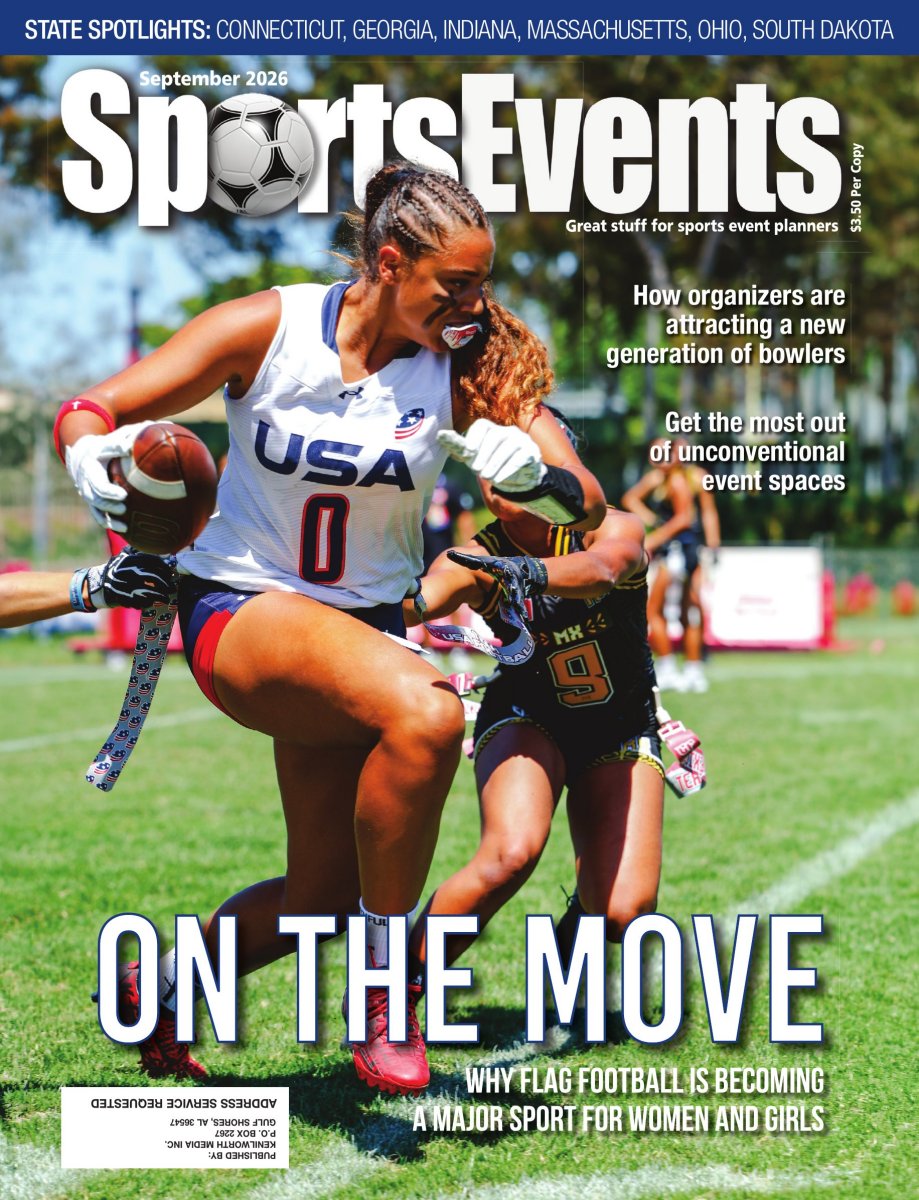
Female participation is reshaping one of America’s fastest-growing sports
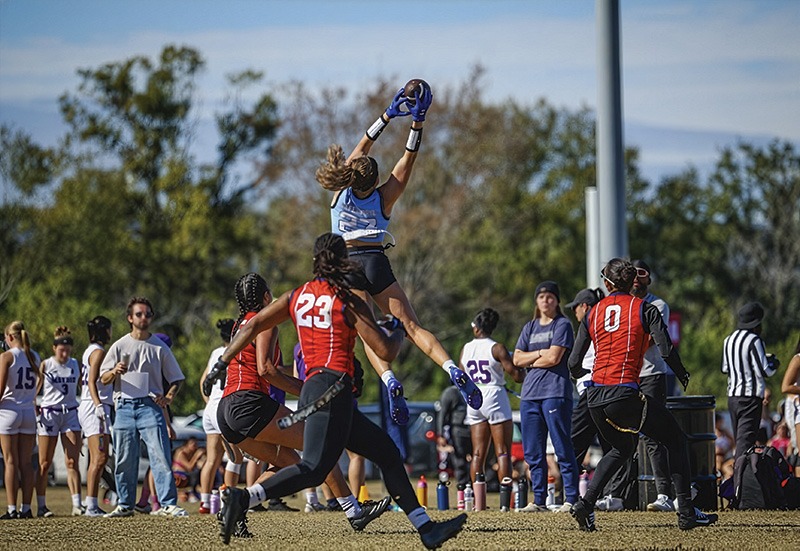
Girls’ flag football has quickly evolved from an emerging sport into one of the most promising growth opportunities in the youth sports industry. For sports commissions, facility operators, and event organizers, its rapid rise is creating new opportunities to attract tournaments, generate overnight visitation, and establish long-term partnerships around a sport whose competitive calendar continues to expand.
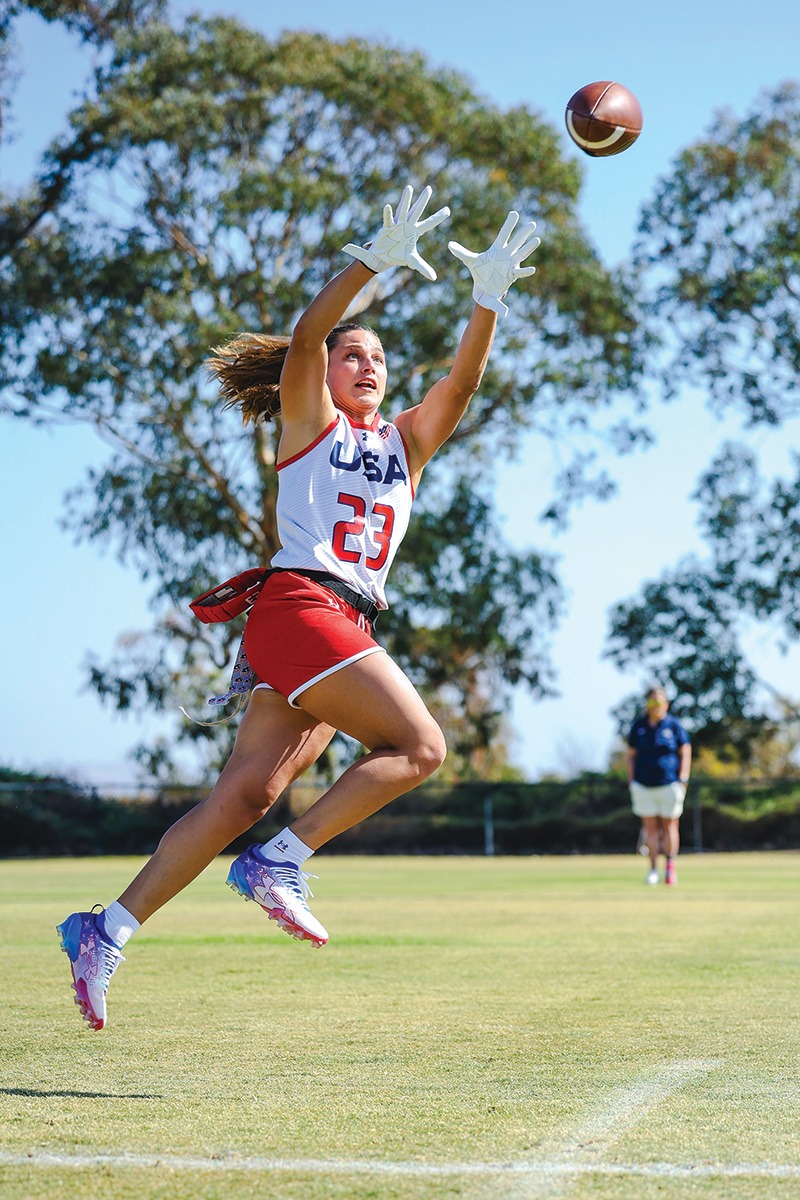
The momentum is being driven by more than participation alone. As more states sanction girls’ flag football at the high school level and new collegiate opportunities emerge, athletes now have a clearly defined pathway that stretches from youth leagues to college competition—and, ultimately, the Olympic Games when flag football debuts at the 2028 Summer Games in Los Angeles. That growing pipeline is fueling demand for more leagues, more showcases, more championships, and more destinations equipped to host them.
“The passion for it has always been there,” says Vanita Krouch, the most decorated woman in U.S. National Flag Football Team history. “There just wasn’t a pipeline.”
Today, that pipeline is firmly in place. According to USA Football, from 2015 to 2024, girls ages six to 12 playing flag grew 283 percent, crossing 144,500 participants. Girls ages six to 17 grew 57 percent over that same span, with more than 267,200 playing in 2024. And at the high school level, the National Federation of State High School Associations (NFHS) reported 68,847 girls playing in 2024-25 alone—and participation continues to accelerate. As more athletes enter the sport, organizations are expanding tournament offerings while destinations invest in facilities and partnerships to capitalize on the growing demand for competition.
As participation continues to climb, organizations are building a deeper event calendar while destinations position themselves to capitalize on the sport’s long-term growth.
Building the pipeline
The rapid growth of girls’ flag football hasn’t happened by chance. Behind the rising participation numbers is an expanding network of organizations creating opportunities for female athletes at every stage—from introductory leagues and local tournaments to elite showcases, national championships, and international competition.
As the sport’s national governing body, USA Football has helped drive much of that growth by supporting state sanctioning efforts, launching girls’ flag grants and creating athlete development programs that connect youth players with U.S. National Team opportunities. The organization has also helped strengthen the collegiate pathway by supporting the addition of women’s flag football to the NCAA’s Emerging Sports for Women program and expanding development initiatives such as Talent ID Camps, Select Bowl, and Stars & States, giving athletes multiple avenues to progress from local competition to international play. As participation continues to accelerate, CEO Scott Hallenbeck has described the sport’s inclusion in the Olympics as “rocket fuel” for continued growth.
Tournament operators are seeing that momentum firsthand. “We’ve been in girls’ flag for more than 15 years,” says Mike Reimel, director of flag football and growth at Flag Football Life. “Now that there’s a college pathway, we’re seeing a lot more girls playing. The sport was always there, but now it’s on a global stage.” What began six years ago with six tournaments has grown into a calendar of nearly 30 events annually. About a dozen are dedicated exclusively to girls, anchored by the organization’s We Run the World Tour and its We Run the World Nationals. The event has become the country’s largest all-girls flag football tournament, growing from roughly 40 teams in its inaugural year to more than 200 teams this year. Flag Football Life now serves approximately 30,000 athletes through its leagues and tournaments, including about 12,000 girls.
“The younger girls now have female athletes to look up to,” Reimel says. “It’s turning fast where it won’t be just male-dominated.”
Multigenerational appeal
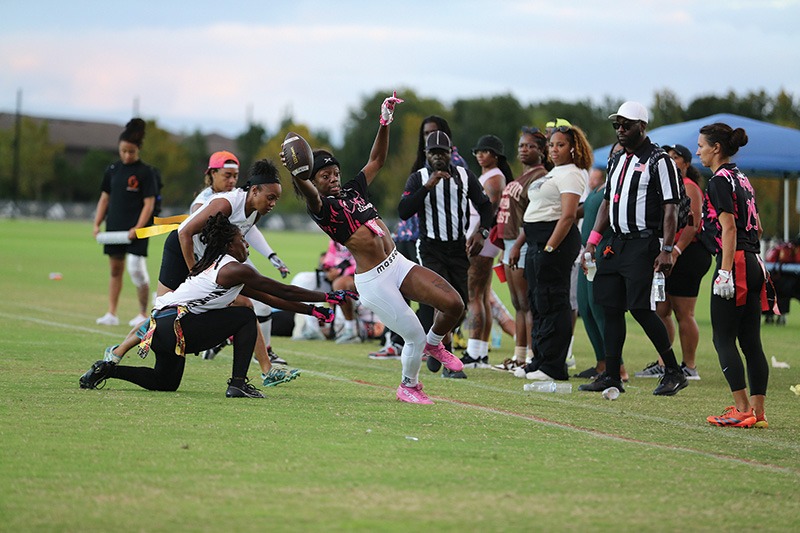
That same evolution is evident at the adult level. The United Flag Football League, which hosts tournaments nearly every weekend across the country, has watched girls’ and women’s participation transform over the past two decades. What began with inviting a handful of Florida high school teams to offseason tournaments has evolved into one of the nation’s largest women’s competitive circuits, while the organization’s annual National Championships over Martin Luther King Jr. weekend in Polk County, Florida, now draws more than 500 teams competing across 27 fields.
“Back in 2008 we would’ve never thought this would take off,” says Norm McLean, owner of the United Flag Football League. “Now look at us.”
The organization continues exploring new opportunities, including a future national championship for high school and collegiate teams, while also introducing formats that make the sport more accessible. One example is “Playground,” a variation developed by U.S. National Team standout Vanita Krouch that allows male quarterbacks while female athletes develop the quarterback position, helping more girls gain experience at the sport’s most influential position.
Further expansion
Growth has also created space for events that celebrate far more than competition. Now in its 19th year, the Louise Bethel Invitational anchors the Pink October Games weekend in Greensboro, North Carolina, bringing together women’s and girls’ teams for competition while also raising awareness for breast cancer education and advocacy. “The event started out small with just seven teams, and now we’re almost at 100 teams,” says Mashonda Paschal Gilmore, executive director of the Lewis Bethel Project. “It’s amazing to see women come together, and seeing the growth in the sport makes my heart smile.”
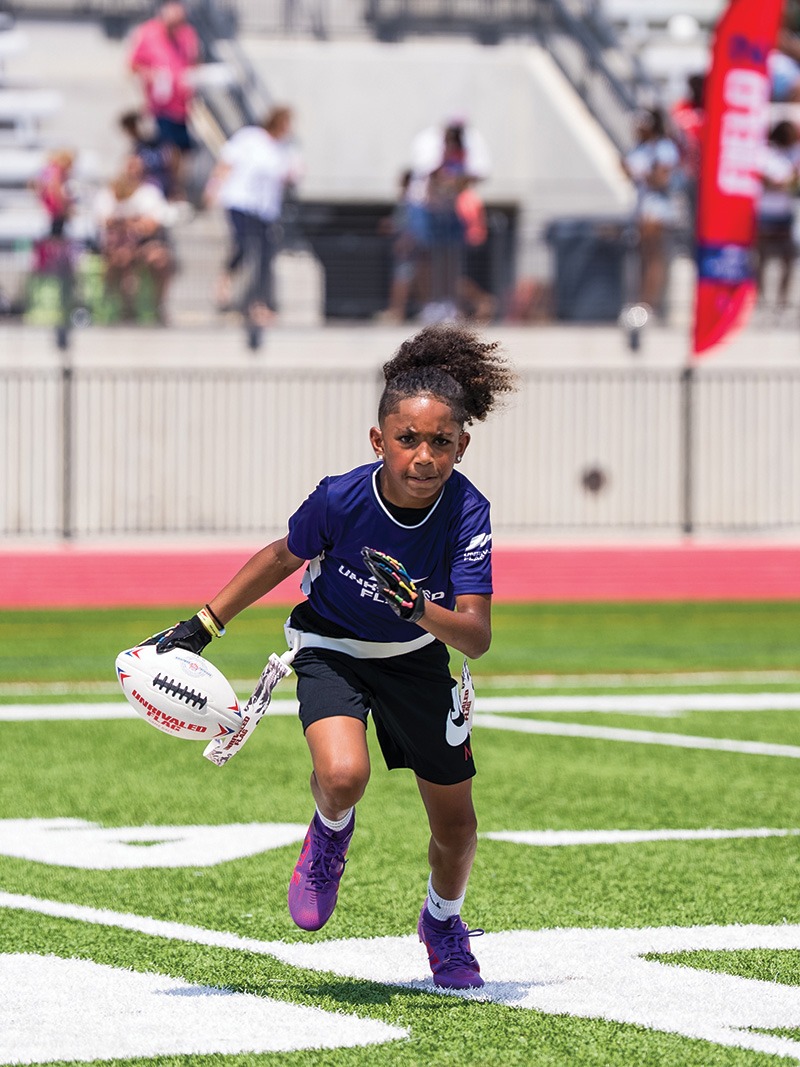
New events continue to emerge as participation grows. Unrivaled Flag Football has expanded its event portfolio with regional tournaments across the country, the Youth Flag Football World Championships and a recent partnership with the AAU Junior Olympic Games, creating additional competitive opportunities for girls at every level. Across its events, girls’ participation has climbed from roughly 10 percent of the field five years ago to approximately one-third of all teams today.
“What we’re seeing now is organizations putting together multiple travel teams—some entirely girls,” says Austin Bradshaw, president of tournament operations for Unrivaled Flag Football. “Five years ago, maybe 10 percent of our teams were girls. Now it’s closer to 30 to 35 percent. The growth is definitely there.”
Destinations taking notice
As organizations expand competitive opportunities, destinations are working just as aggressively to secure them. What was once viewed as an emerging participation sport has become a year-round driver of tournaments, overnight visitation, and repeat business, prompting sports commissions to make girls’ flag football a priority in their event portfolios.
Kissimmee Sports Commission has watched that evolution unfold firsthand through its partnership with Unrivaled Flag Football and the organization’s Youth Flag Football World Championships at ESPN Wide World of Sports. Since arriving in 2023, the event has grown from just over 200 teams to nearly 1,000 in 2026, including 318 girls’ teams and participants representing 37 states and six countries.
For Kissimmee, with events like these, the sport has become much more than just another event on the calendar. “We’re putting flag football right in that top tier for us in terms of number of events, alongside cheer, soccer, wrestling, and lacrosse,” says Tyler Weyant, deputy director of the Kissimmee Sports Commission. “It’s right there in that upper echelon, which is great to see. And it’s great it’s not just the boys now—there’s a whole other level with girls playing the sport.”
The destination currently hosts more than seven flag football events each year and supports major events elsewhere in Florida through strategic partnerships. One example is the Jacksonville Jaguars Girls Preseason Classic, where Kissimmee serves as the presenting sponsor as part of its broader initiative to support women’s sports.
Facility inventory has also positioned the destination to capitalize on the sport’s growth. With venues including ESPN Wide World of Sports, the 10-field Austin Tindall Sports Complex and the eight-field Omni complex, Kissimmee can accommodate events that require dozens of flag fields by converting traditional soccer pitches into multiple competition surfaces.
“This sport is taking off. For those of us with rectangle fields, primarily soccer fields, this is a good way to fill those complexes,” Weyant says. “It adds diversity to our portfolio.”
The destination’s warm winter climate has proven equally valuable. While many northern markets sit idle during January and February, Florida becomes a prime destination for national events, allowing organizers to attract teams from across the country during months when outdoor competition is limited elsewhere.
Just as important, says Weyant, is maintaining close relationships with event operators to understand participation trends and future needs.
“I would’ve never imagined an event we started with at 200 teams would grow to over 900,” he says. “You can’t really predict that. You stay in conversations with the organizers, make sure they have a great experience, and want to come back.”
A similar strategy has positioned Tampa Bay as one of the nation’s premier destinations for flag football.
The Tampa Bay Sports Commission annually supports between 70 and 100 youth and amateur sporting events, but few have experienced the growth of flag football. The destination has hosted the USA Flag (now iFlag) World Championships for five consecutive years, with the 2026 event drawing more than 1,300 teams and approximately 12,000 athletes over Martin Luther King Jr. weekend—a Guinness World Record for the largest flag football tournament ever held.
“Flag football has grown not just in the number of events, but also the size of those events,” says Tony Diaz, director of sales and events for the Tampa Bay Sports Commission.
That growth has been made possible in part by the Tournament Sportsplex of Tampa Bay. Opened in 2019, the 15-field, tournament-only venue can be configured into nearly 50 flag football fields during major events, giving organizers the flexibility to host competitions on a scale few destinations can accommodate.
Pro support
But infrastructure is only part of Tampa Bay’s success. The destination’s efforts have been strengthened by one of the NFL’s most active supporters of girls’ flag football: the Tampa Bay Buccaneers.
“Our entire basis for our flag football outreach, especially with girls, is that we aim to develop female leaders,” says Steve Fidura, vice president of community impact for the Tampa Bay Buccaneers. “Ninety-four percent of women in executive-level positions played sports growing up, but girls drop out of sports at twice the rate boys do. It’s important to us that we create opportunities that keep girls involved in sports, help them build their confidence and realize their full potential.”
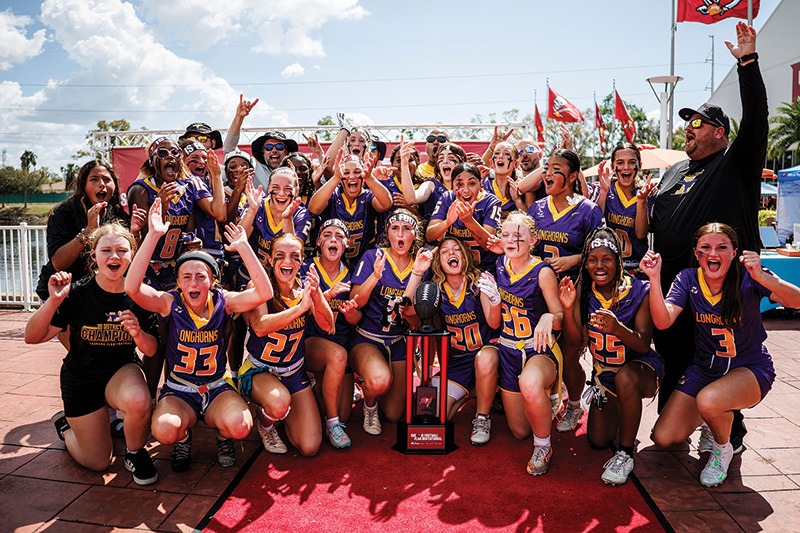
That philosophy has shaped a series of initiatives designed specifically for girls. The Buccaneers’ annual Girls Flag Football Preseason Classic has grown from approximately 30 teams when it launched to a record 126 teams, and more than 3,000 athletes this year. Free to every high school girls flag football team in Florida, the event gives athletes the opportunity to begin their season at the club’s AdventHealth Training Center.
“We aim to create experiences these girls deserve because they’re amazing athletes,” says Zak Zumbiel, senior community impact manager. “These programs let them play on NFL-caliber fields, and we create the kind of moment football players dream about.”
The organization has continued building on that momentum with programs that celebrate girls throughout the season. For example, its Battlegrounds showcase game transforms a regular-season matchup into a “Friday Night Lights” atmosphere complete with marching bands and packed stands, while the She Is Football Weekend combines an invitational tournament with leadership programming and career development opportunities centered on empowering young women through sports. In addition, the She Is Football Scholarship—created before collegiate flag football opportunities became widespread—supports graduating seniors who play football as they continue their education.
“The path doesn’t end at high school anymore,” Fidura says. “Now there’s college, the Olympics, and even professional opportunities on the horizon. Flag football has developed in a way that females can continue playing throughout their careers. That’s what makes this moment so exciting—we’re finally seeing girls grow up with a real future in the game.”