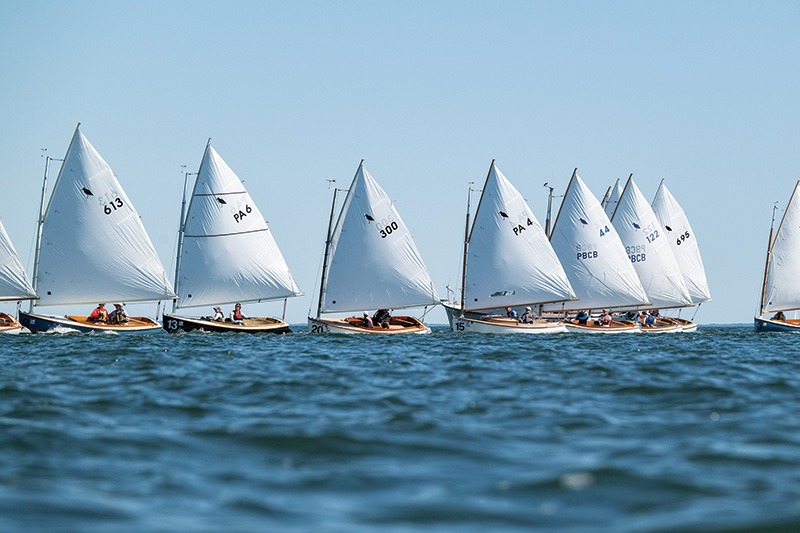
On paper, a sailing regatta can look deceptively simple: a starting line, a fleet of boats, and a finish somewhere beyond the horizon. But unlike the fixed landscape of a stadium or the predictable dimensions of a court, sailing unfolds on a living, shifting stage—where wind, current, and weather constantly reshape the field of play. In fact, there is no static venue at all; organizers are building the racecourse in real time, adjusting for discipline, fleet size, and conditions that can change by the minute.
That reality is what makes a sailing race one of the most operationally demanding events in sport. Behind the scenes, race committees, course setters, safety teams, and weather experts must align with precision, often making split-second decisions that impact fairness, safety, and schedule. As leadership at US Sailing emphasizes, it’s a discipline defined by preparation, flexibility, and constant communication—an operational mindset that allows experienced teams to keep events running smoothly when the variables are anything but.
To see how those principles play out on the water and in the planning stages, we turned to leaders across the sport, including Diana Emmanuelli, competition manager at US Sailing, and veteran rules expert Dave Perry, who served as rules advisor for the last five Olympic Games for US Sailing. From grassroots regattas to world-class championships, their combined perspective offers a clear view of the eight key principles organizers rely on to keep racing consistent, competitive, and on schedule in an environment that’s far from predictable.
#1 Build a leadership core
Every regatta starts with people. Emmanuelli points to a strong leadership team as the foundation: an event chair to oversee the full operation, a principal race officer to run on-water competition, and a chief judge or umpire to manage rules and disputes. Each role operates independently, but success depends on how well they function together. “You’re really putting together a puzzle from a bird’s-eye view,” she explains. “Each person has a specific responsibility, but it only works if the team is aligned.”
#2 Plan early—then plan again
While smaller regattas may come together in a year, major events like the Olympics, SailGP, or world championships are years in the making. Even at the grassroots level, Emmanuelli stresses that six months is pushing it. A longer runway allows organizers to revisit plans, refine resources, and strengthen coordination with every meeting. The goal isn’t just to plan—it’s to pressure-test those plans before the first boat hits
the water.
“For most regattas, it’s a year of planning—no less than six months,” she explains. “And honestly, six months is pushing it. We always recommend at least a year, so you can have the same conversations multiple times, go back, adjust, and look at your resources again. Every meeting, the event gets stronger.”
#3 Embrace technology but invest in experience
Technology continues to evolve in sailing, but Emmanuelli is clear that experience remains the most important asset on the water. “Technology is great, but the most important thing is an experienced team,” she says. “People who can see issues before they become a problem—before the train wreck happens.”
She adds that tools like racing rules apps and emerging start-line systems can support decision-making, but they don’t replace judgment. “It’s helpful technology, but it still comes down to people who know how to run races.”
Still, while experience remains the foundation, technology is increasingly reshaping how races are managed on the water. From GPS-enabled tools to automated systems, organizers now have more precision—and flexibility—than ever before.
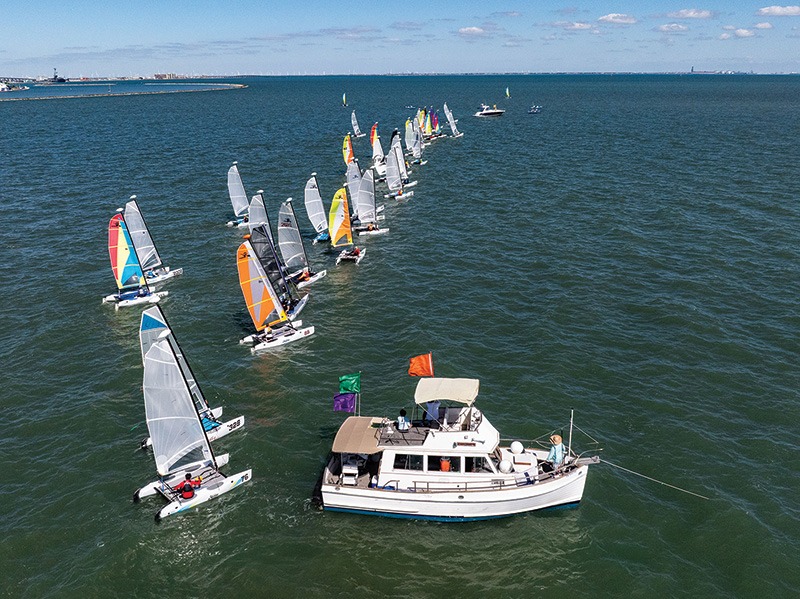
“Now we’re seeing things like robotic marks,” says Dave Perry. “You can give it a latitude and longitude, and it will drive itself there and hold position. You’re not dealing with anchors drifting or having to reset marks constantly.”
That same evolution is happening at the starting line—one of the most complex elements of any race. Traditionally defined as an imaginary line between a boat and a buoy, it has long relied on visual judgment and experience. Today, digital tools are beginning to change that.
“There are systems now where sailors can see exactly where the line is on their phone and how far they are from it,” Perry explains. “If they’re over early, they know immediately.”
For organizers, those tools don’t replace decision-making—but they do provide another layer of accuracy in an environment where precision is constantly challenged by changing conditions.
#4 Diversify your weather watching
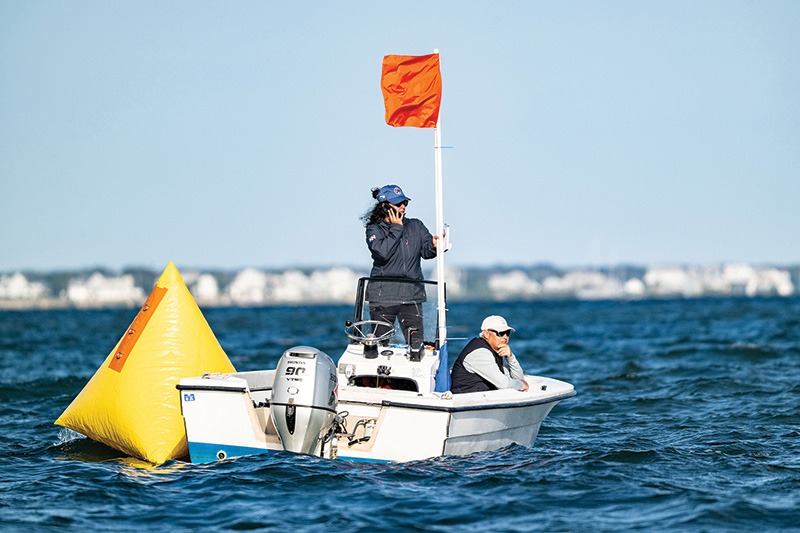
Weather remains the single biggest variable in race management—and the least controllable. Emmanuelli emphasizes the importance of local knowledge paired with professional forecasting. “My first advice is always: find a local you can trust,” she says. “Someone who understands the patterns in that specific area is a huge asset.”
From there, teams layer in forecasting tools and real-time data. “We use apps like SailFlow, and buoy data is incredibly helpful. You can see what’s happening across a whole bay and start to understand if something is shifting. But at the end of the day, sometimes it’s still unpredictable.”
#5 Communicate clearly and constantly
If there is one non-negotiable requirement across every level of sailing, Emmanuelli says, it is communication. From safety calls to schedule changes, clarity determines whether an event stays on track or unravels.
“Communication is the most important thing,” she says. “Not just to the sailors, but within the entire team managing the event. If communication breaks down, everything becomes harder.”
Even difficult decisions can be accepted if they are clearly explained. “You might abandon a race or change the schedule, and people won’t be happy—but if you communicate clearly, everyone stays on the same page.”
#6 Put safety at the center
Every event begins with a safety plan—and Emmanuelli is firm that it should be simple, clear, and accessible. She recommends a streamlined structure with defined roles and communication flow.
“We usually recommend a one- or two-page safety plan, broken down by levels—what happens at level one, two, and three,” she explains. “And you need clear contacts so everyone knows exactly who to call.”
That includes everything from emergency response to on-water procedures. “You don’t want everyone calling everyone. You need a designated safety officer to make sure information gets where it needs to go.”
Even beyond formal safety plans, much of the infrastructure is intentionally invisible. As Perry notes, race officials are building layers of contingency long before the first start. “Any time you go out on the water, it’s inherently dangerous,” he says. “You have to think through everything—who’s picking up sailors, how you’re getting boats in, what happens if conditions change quickly. There are trained safety crews, first aid, AEDs on the water. It’s all there, even if you never see it.”
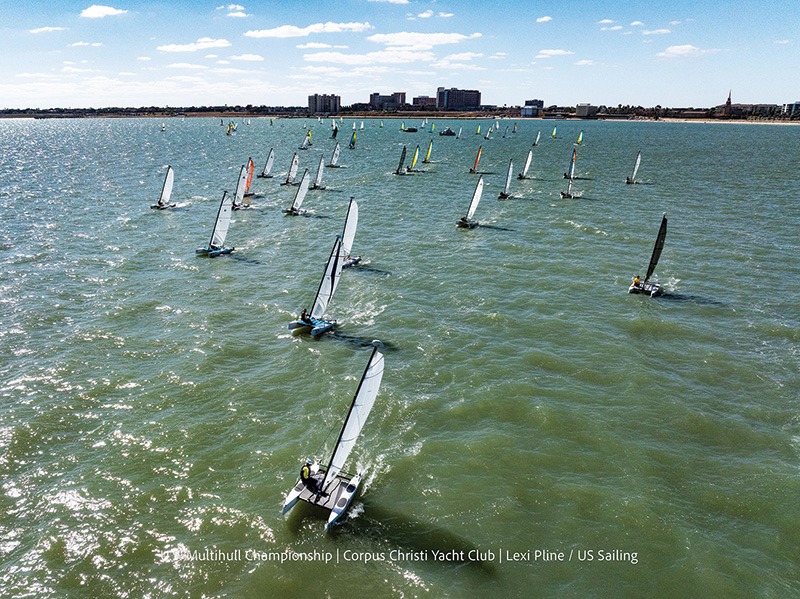
That behind-the-scenes preparation becomes even more critical given the scale of a racecourse, where fleets can be spread over miles and response times aren’t immediate.
#7 Scale staffing to the event
Staffing varies significantly depending on the level of competition, fleet size, and discipline. Larger events require a layered team structure both on and off the water.
“On shore, you’re probably looking at a core leadership team of 10 to 15 people, plus 30 or so volunteers,” Emmanuelli says. “On the water, you might have 10 to 15 race officials, plus additional volunteers, and then judges and umpires depending on the event.”
#8 Stay flexible—and keep it fun
Even with extensive planning, flexibility is essential. Conditions shift, resources change, and organizers must be willing to adapt without losing sight of the experience.
“We try to over-plan, but there has to be flexibility,” Emmanuelli says. “You need the ability to adjust and compromise when needed.”
Equally important is maintaining the spirit of the sport. “We want it to be fun—for the sailors and for the team. That’s really important. Sailing is for everyone, and the experience should reflect that.”