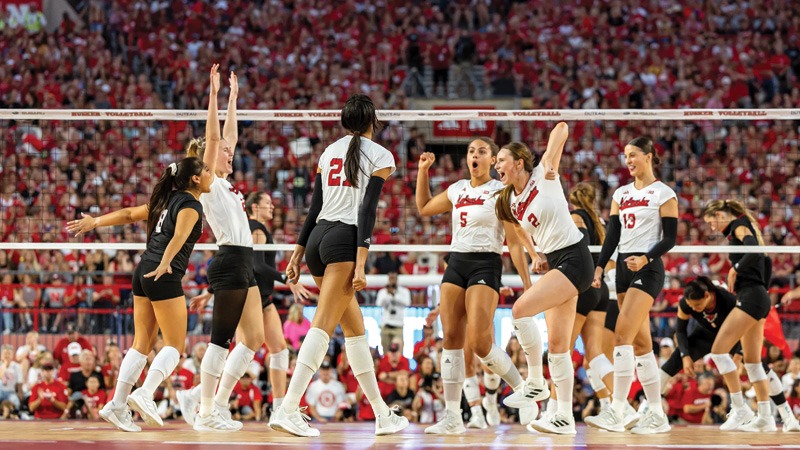
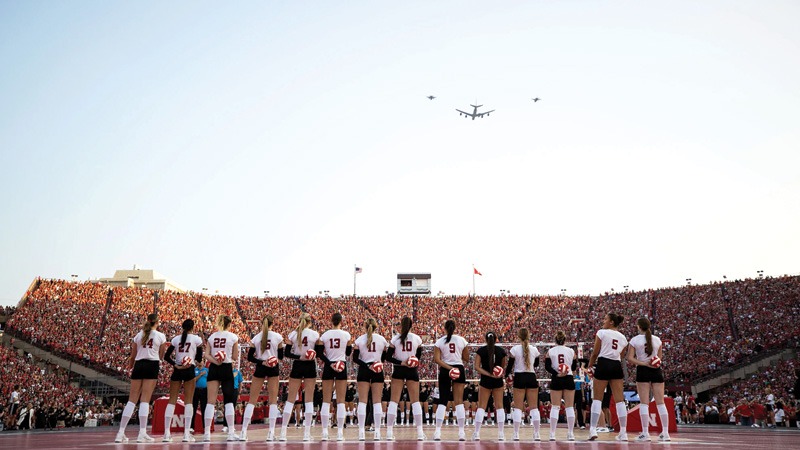
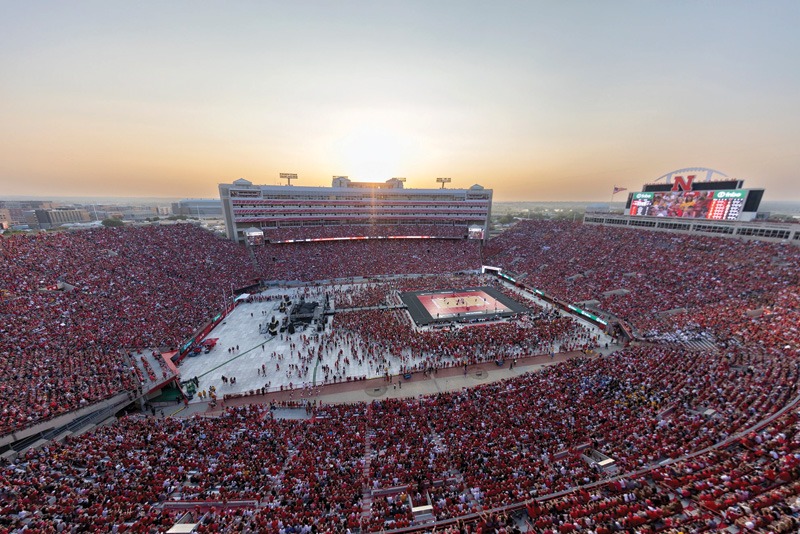
In August 2023, the University of Nebraska welcomed 92,003 fans to Memorial Stadium for Volleyball Day in Nebraska, an event that not only set the world attendance record for a women’s sporting event, but also challenged long-held assumptions about where volleyball could be played, how many fans it could attract, and whether it could become the centerpiece of a major outdoor event.
Three years later, organizers across the country are beginning to answer those questions for themselves. High schools are experimenting with outdoor showcases. College conferences are taking marquee matchups into iconic baseball stadiums. Event producers are building made-for-television tournaments inside NFL venues, complete with million-dollar prize pools.
Rather than remaining a one-time celebration, Volleyball Day in Nebraska has become a reference point for a new generation of events designed to attract not only traditional volleyball fans, but entire communities.
“We’ve already seen significant ripples,” says Jaime Gordon, CEO of the American Volleyball Coaches Association. “We’ve got high schools that are running their own outdoor games and events and big promotions and getting crowds and fan bases excited about it. We see it at the smallest grassroots level, but it also got the attention of corporate America. We’re seeing it in large-scale collegiate events as well.”
For event organizers, the lesson is not simply that a volleyball match can be moved outdoors. It is that a well-planned event can turn a familiar competition into a larger community experience—provided organizers are prepared for the operational challenges of a non-traditional venue.
From record-setter to roadmap
One of the clearest examples of Volleyball Day’s influence came last fall in Omaha.
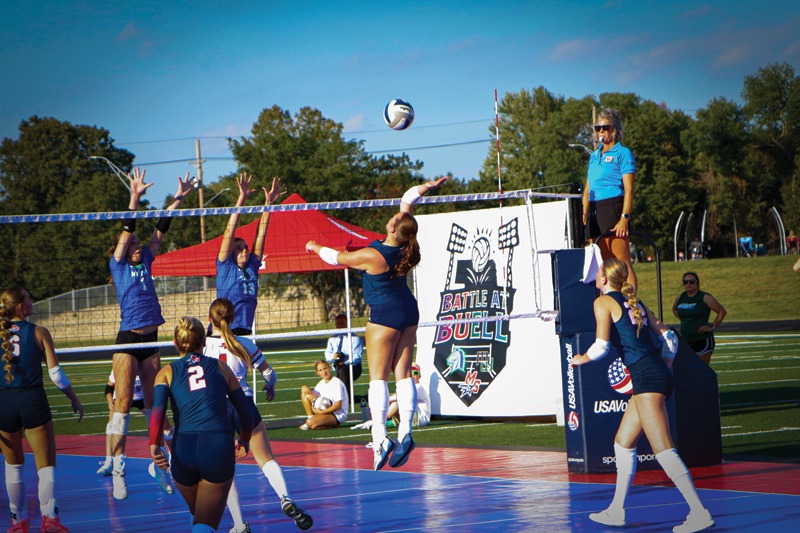
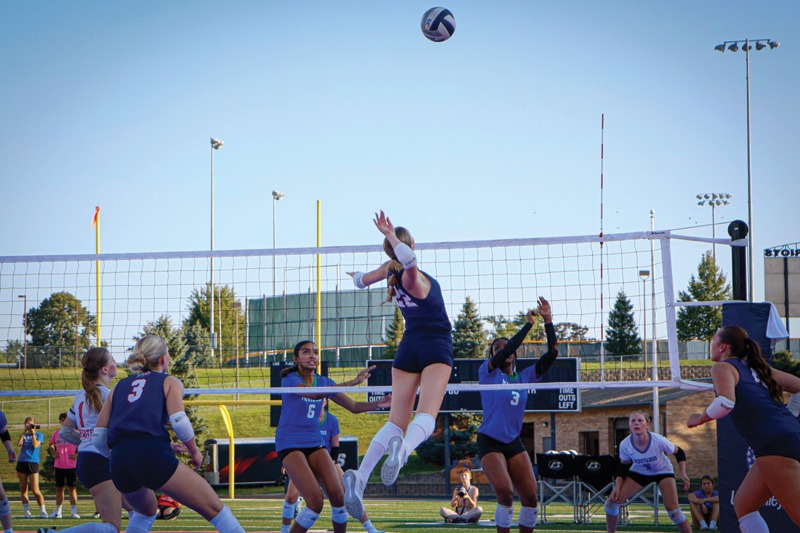
Inspired by the Nebraska event, the Millard Public Schools district transformed Buell Stadium into an outdoor volleyball venue for the inaugural Battle at Buell, a preseason triangular featuring Millard North, Millard South, and Millard West. Nearly 4,000 fans attended what became Nebraska’s first outdoor high school volleyball showcase.
Steve Throne, athletic director at Millard South High School, notes the event began with a simple conversation among coaches. “The idea actually came together because the University of Nebraska obviously had huge success with Volleyball Day in Nebraska and broke all kinds of records,” Throne says. “The coaches at Millard West and Millard North started talking about it and asking, ‘How do we do that here?’ We have a shared football stadium called Buell Stadium, so they thought, instead of us all going and playing somewhere else to open the season, why don’t we all play each other? That’s what ended up happening. Those two coaches really started the brain trust of it, and then our district athletic director brought it to the athletic directors and asked, ‘Can we make it happen?’”
While attendance certainly mattered, Throne notes the driving force was creating an experience unlike anything the student athletes had experienced before.
“It was a community event and a chance to celebrate the female athletes in our programs and give them an opportunity to play in front of the largest crowd they’ll probably ever play in front of,” he says. “Really, it all came back to the kids and our coaches. How do we showcase the great volleyball student-athletes we have? The best part of that whole night was just the smiles on their faces and getting the opportunity to play outside and then play in front of such a large crowd. We had student sections, and it was just awesome.”
Creating that experience, however, required far more work than simply placing a volleyball net on a football field. “The biggest challenge was the flooring,” Throne says. “The court comes in two big crates, and then it’s all these individual pieces that have to be put together like a puzzle. We had football players from Millard South and Millard North come on the morning of the event to unload everything and assemble the court. After the matches were over, Millard West’s football team tore it all down and packed it back into the crates. That was probably the biggest task.”
For planners considering a similar event, the logistics surrounding the court may be as important as the competition itself. Organizers must coordinate delivery access, equipment unloading, labor, assembly time and teardown, while also determining how the playing surface will perform in outdoor conditions.
The district also relied on a true community effort. Teams divided responsibilities for concessions, line judging and scorer’s table duties. Officials volunteered their time, media outlets helped promote the event, and organizers even hosted a youth volleyball clinic before the first serve to introduce younger players to the experience.
Even with months of planning, one factor remained beyond anyone’s control. “My biggest concern the whole time was the weather,” Throne says. “In Nebraska that time of year, it’s humid. I was worried about the floor being slick. Then you think, ‘What if it rains? What if it’s windy?’ You spend all this time setting the court up, and you just hope Mother Nature cooperates. Fortunately, she did. We couldn’t have asked for better weather.”
Fortunately, the conditions held. But the experience reinforced the need for a detailed weather and safety plan before organizers commit to an outdoor format.
“What really stood out to me was the community,” he says. “We had people there simply to cheer on great volleyball. It wasn’t just about one school. Everyone was cheering for Millard Public Schools volleyball and for the success of all three teams.”
Since hosting the event, Throne says he has heard from schools across the Midwest and beyond seeking advice on how to stage similar showcases. “They’ve called wanting to know what it takes and how you get it done,” he says. “There are so many little things you don’t think about. How are you getting the pallets off the truck? How are you moving them to the field? What’s your weather contingency plan? It opens people’s eyes that it’s not as easy as saying, ‘Let’s go play volleyball on a football field.’ But the Husker event created the buzz, and now everybody’s saying, ‘I want to do that, too.’”
That is precisely why the Millard event may offer the most useful model for other school districts and community organizers. It did not attempt to replicate Nebraska’s scale. Instead, it adapted the core concept—a high-profile outdoor match supported by community programming—to a venue, budget, and audience that fit its own market.
“I think it’s understanding the organic nature of the fan base and of our sport,” Gordon says. “The people involved with Volleyball Day in Nebraska didn’t start off with the intention of filling a football stadium with 92,000 people. The growth happened organically because there’s a significant volleyball community that gets excited about volleyball. That’s why we’re seeing these events do so well.”
Taking the show on the road
As outdoor stadium volleyball gains momentum, organizers are exploring how the format can work in venues with different audiences, operational requirements, and business goals.
That evolution will be on display this fall when the Big Ten Conference and the Southeastern Conference bring premier volleyball matchups to one of baseball’s most recognizable venues.
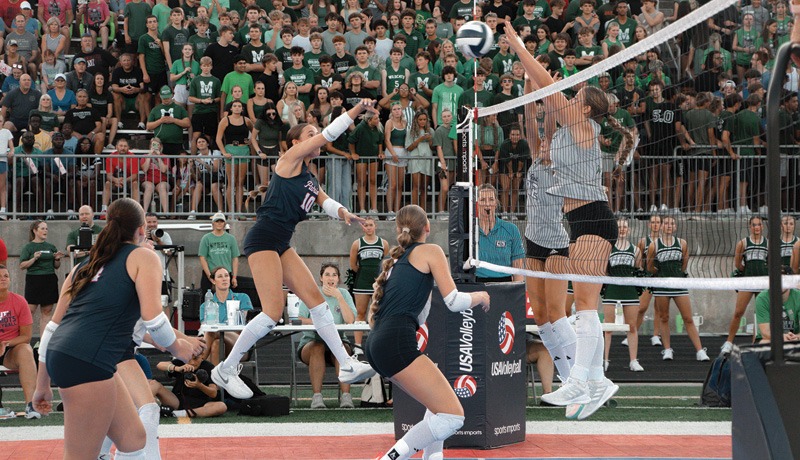
The inaugural Big Ten/SEC Volleyball Challenge will culminate on September 6 with Nebraska taking on Missouri and Penn State facing Kentucky at Chicago’s Wrigley Field. While the event follows a week of conference matchups played on campuses across the country, conference officials see the Wrigley finale as an opportunity to introduce the sport to new audiences and make the event part of a broader Chicago experience.
“It’s just an opportunity to showcase what is an iconic venue in a new way,” says Grace McNamara, senior director of television administration for the Big Ten Conference. “Both matches will be nationally televised on FOX, so we’re excited to build more awareness for the sport.”
The conference’s relationship with Wrigley Field also made the venue a natural choice. “We’ve done football there, we’ve done Frozen Confines [outdoor college hockey tournament] there, so we have a great partnership with Wrigley Field,” McNamara says. “We wanted to build on that momentum that we’ve had with previous events there.”
Still, a baseball stadium presents a distinct set of planning challenges. Katie Egloff, vice president of events and operations for the Big Ten Conference, says one of the biggest considerations has been transitioning the venue from its primary use into a world-class volleyball facility while protecting the athlete and spectator experience.
“It’s the normal operational logistics,” Egloff says. “It’s the timeline of switching from baseball to an ancillary event in a short amount of time. It’s working through the layout and setup to maximize both the student-athlete and fan experience.” McNamara adds weather planning has also become a major focus.
“The biggest hurdle has been figuring out the court and stage layout, but we’re also still working through inclement weather planning,” she says. “Court conditions, wind, potential contingencies for rain—those are all things we’ve spent a lot of time planning.”
While each venue requires its own approach, organizers have learned from previous stadium volleyball events. “We’ve definitely been in close contact with Nebraska,” McNamara says. “The staff that put Volleyball Day in Nebraska together has been super helpful in getting this off the ground. Each venue for these outdoor events is unique, so you take those universal operational lessons and adapt them to your own venue while making sure both the fans and student-athletes have a great experience.”
That fan experience will extend beyond the matches. The conference also sees the event as an opportunity to attract visitors who may not otherwise attend a volleyball match. “We’re planning activations on Gallagher Way, and our community impact team is working on youth clinics and other opportunities around the event,” McNamara says. “We’re trying to expand it beyond the matches themselves. It’s Labor Day weekend, so people can come to Chicago, enjoy the city, and make this event part of their trip.”
The strategy reflects a broader opportunity for destinations and event organizers: A marquee competition can be the centerpiece, but ancillary programming, local partnerships and family-friendly activities can help turn it into a weekend draw. Interest has already exceeded expectations. “The ticket sales have kind of spoken for themselves,” McNamara says. “The on-sale went incredibly fast, and the interest has really been captivating. Student-athletes are excited, the conferences are excited, and we’re seeing unique promotional efforts from the participating schools along with tremendous local and national media coverage.”
A premium-event model
While Wrigley Field builds on the conference-event model, another event scheduled just days earlier is taking the concept in a more entertainment-driven direction.
On Aug. 27, Full Day Productions and GSE Worldwide will debut Spikes Under the Lights at AT&T Stadium. The made-for-television event will feature Nebraska, Penn State, Florida, and SMU competing in a three-hour, best-of-three format for a $1 million prize pool.
Nickole Tara, chief business officer of Words + Pictures and Full Day Productions, says Spikes Under the Lights traces its roots directly to what happened in Lincoln three years earlier.
“Volleyball Day in Nebraska was an absolute watershed moment,” Tara says. “When you see that many fans pack Memorial Stadium, it isn’t just a great sports story. From a business and growth strategy perspective, it was massive proof of concept. It proved that women’s volleyball has a passionate, underserved fan base capable of filling the grandest stages in American sports.”
Rather than simply recreating Nebraska’s event, Tara says organizers wanted to develop a sustainable property that could return year after year.
“We asked ourselves, ‘How do we build an annual, owned-and-operated franchise that elevates this sport even further?’” she says. “The answer was to bring together four elite programs, add a historic $1 million prize pool and create a high-intensity, television-friendly format.”
Choosing AT&T Stadium was equally intentional. “If you want to make a bold statement about the commercial viability of women’s sports, you go to one of the most iconic venues in sports entertainment,” Tara says. “From a revenue and partnership standpoint, a stadium of this scale unlocks opportunities that a traditional arena simply cannot. It gives us flexibility with seating configurations, premium hospitality opportunities and the ability to create experiences for fans and sponsors that just aren’t possible elsewhere.”
That larger footprint also creates a challenge familiar to any organizer using a venue larger than the sport typically requires making sure the event still feels connected to the action.
“The biggest challenge is balancing scale with athletic intimacy,” Tara says. “Volleyball is defined by lightning-fast reflexes and tremendous floor-level energy. If someone is sitting high in a stadium, you can’t let them feel disconnected from the action. That’s why we’ve invested so heavily in lighting, sound, sightlines and creating an immersive in-stadium experience.”
Success, she notes, won’t be measured solely by attendance. “I absolutely believe stadium volleyball is sustainable, but only if it’s treated as a premium entertainment asset, not a novelty,” Tara says. “Success for us goes beyond ticket sales. It’s about broadcast value, building a brand that programs want to be part of every year and creating a blueprint for how live sports, entertainment and athlete-centered storytelling can come together to create a profitable, repeatable event.”
For community, youth and amateur event organizers, the lesson is not that every outdoor volleyball event needs an NFL venue, a national broadcast or a seven-figure prize pool. It is that the competition itself is only one part of the experience. A successful event must consider how participants, families, fans, sponsors, and the surrounding community will engage with it from the moment they arrive.
Three years ago, the question was whether traditional volleyball could draw a crowd outdoors. Events in Nebraska, Omaha, Chicago, and Arlington suggest the answer is yes—but only when organizers address the fundamentals: a safe and playable court, a realistic weather plan, a thoughtful venue layout, reliable staffing, and programming that gives people a reason to make the event part of their day. The scale may vary, but the opportunity is the same. You just have to move beyond simply staging a match and create an experience that brings a volleyball community together.
On the ball
What organizers should consider before taking volleyball outside:
Start with the court and surface. Determine where the court will sit, how it will be assembled, who will unload and install it, and how the surface will perform in heat, humidity, wind, or rain.
Develop a detailed weather plan. Establish decision-makers, monitoring procedures, communications protocols, and contingencies for rain, lightning, wind, extreme heat, and unsafe court conditions.
Map equipment movement early. Confirm truck access, staging areas, pallet and crate movement, field access, setup labor, teardown responsibilities and the time required before and after play.
Design for athletes and spectators. Court placement, lighting, seating, sightlines, sound, and entry flow should support both player safety and a strong fan experience.
Build a staffing plan beyond match operations. In addition to officials and scorekeepers, identify staff or volunteers for setup, concessions, guest services, youth activities, security, media, and cleanup.
Create programming around the competition. Youth clinics, fan zones, student sections, sponsor activations, and local partnerships can help turn a match into a larger community event.
Adapt the concept to the market. A high school stadium, municipal complex, or college football field can support a successful outdoor volleyball event. The goal is not to replicate a record-setting spectacle, but to create an experience that fits the venue, audience, and available resources.