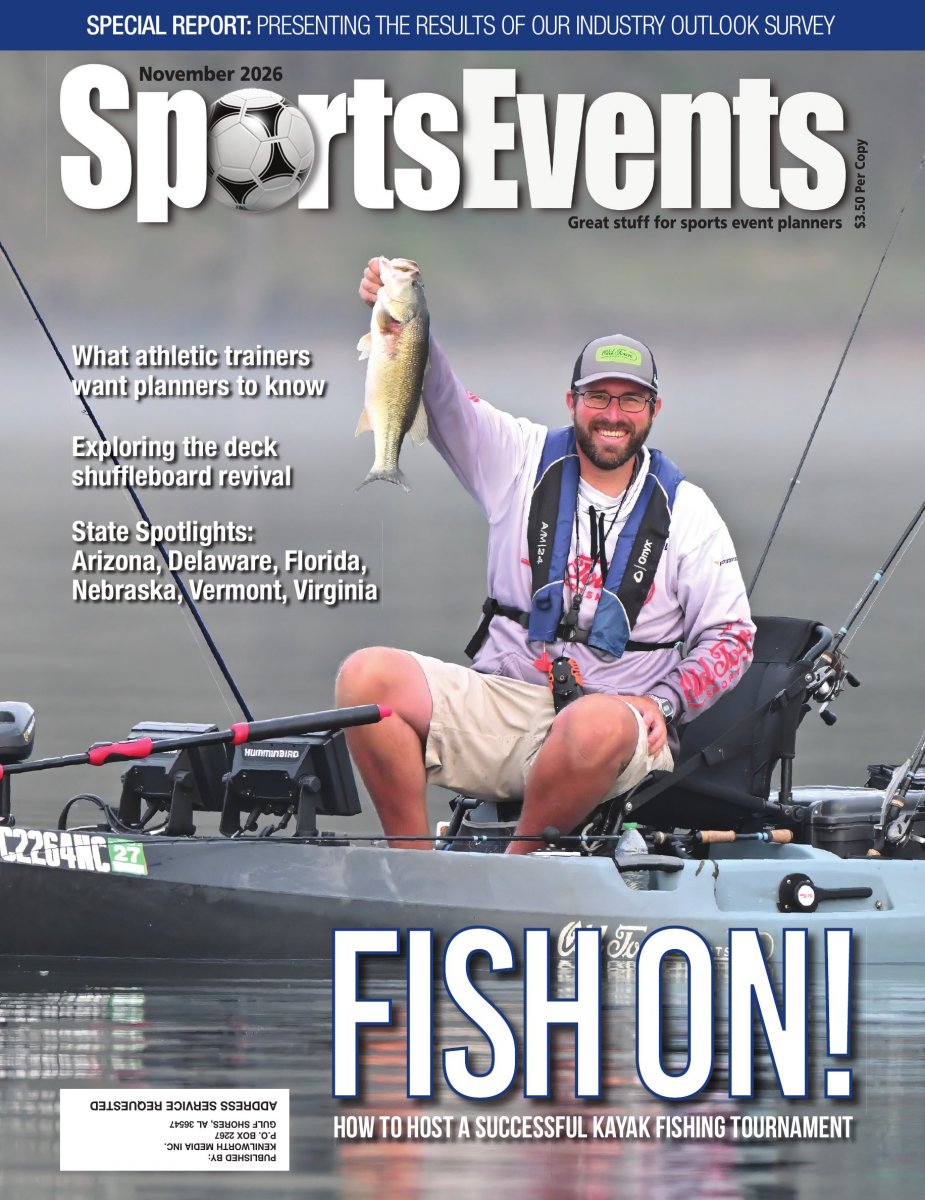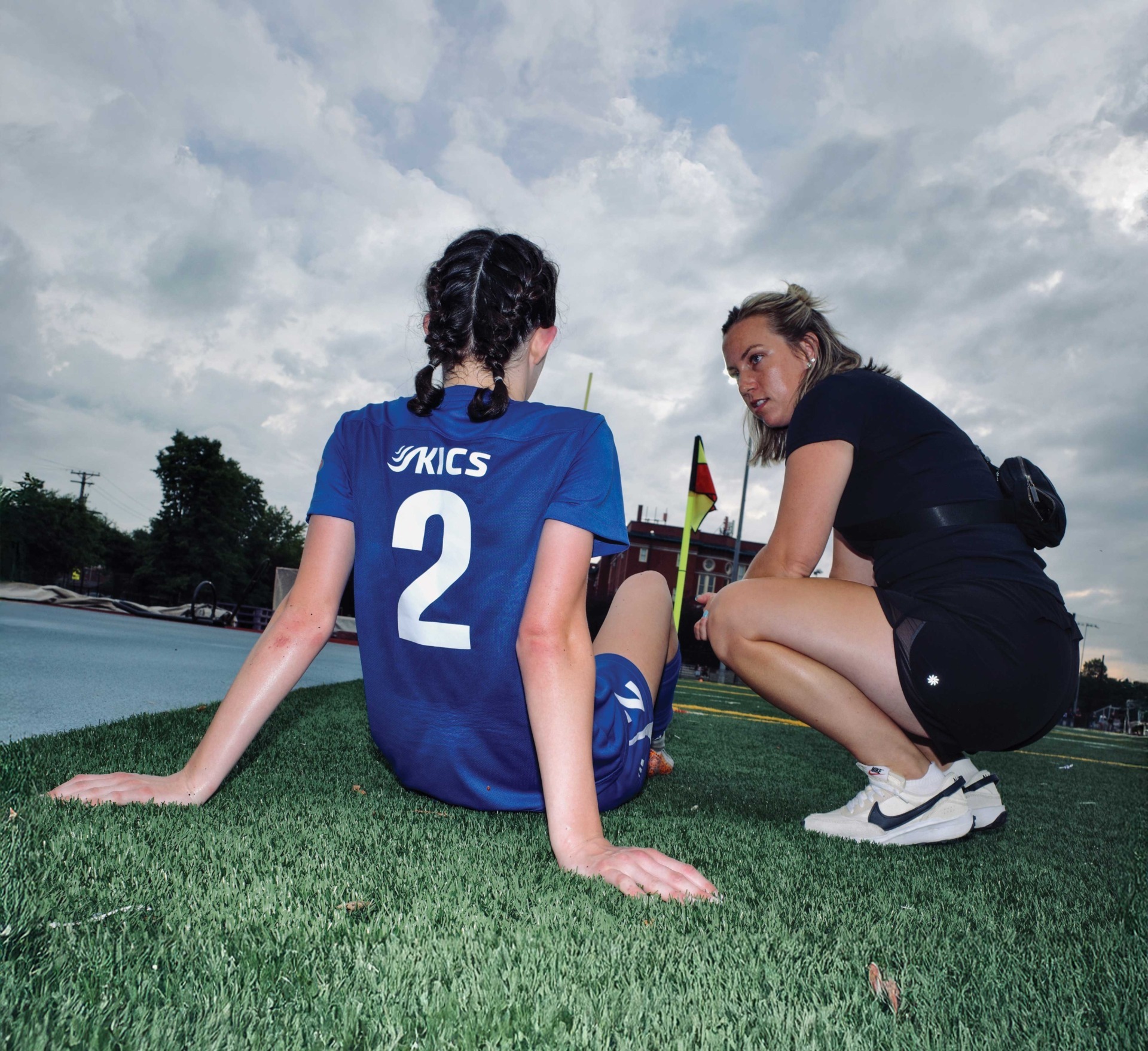
Sports event planners have a lot on their plates, and while they do their best to map every field, schedule every game, and brief every volunteer, if they’re not thinking about athlete care, they are missing an important component of the day or tournament.
In fact, too often those responsible for the care of athletes at these events are simply given little more than an
address and a start time. That information gap can slow routine treatment and complicate the
response to a serious emergency.
Today’s athletic trainers want planners to see medical coverage as part of event operations rather than a service added shortly before competition. After all, their work begins well before an injury occurs. They help identify risks, determine appropriate staffing, inspect venues, establish communication systems, stage lifesaving equipment, and develop an emergency action plan that fits the event taking place that day.
Here are 10 top tips from trainers with experience at sporting events to provide planners a practical starting point for building medical coverage into an event from the beginning.
1. Bring the medical team in at the start
Athletic trainers can help shape decisions that become difficult or expensive to change later, including the event footprint, staffing model, treatment space, equipment needs, and ambulance access.
Erica Marcano, MS, LAT, ATC, CSCS, founder of The Notorious ATC, helps coordinate coverage for large rugby tournaments through the Rugby Research and Injury Prevention Group. Her rugby tournament directors offer a model for that collaboration.
Medical consent forms are included in registration packets, medical questions are given time during coaches’ and captains’ meetings, and the clinicians are notified when schedules or the run of show change.
“Include an athletic trainer as soon as possible in the planning process,” Marcano says. “Our expertise in emergency action planning and appropriate medical coverage structure will complement yours and allow you to focus on the other elements of tournament planning while we help ensure that safety standards are met and hopefully exceeded.”
Pat Helma, a licensed chiropractic physician and assistant professor at University of Western States, brings more than 30 years of clinical experience and a sports chiropractic perspective to field-of-play care and is unequivocal about when clinical planning should begin.
“From inception,” Helma says. “The event medical manager will be able to identify potential risks that participants and spectators may be likely to encounter.”
2. Hire the right healthcare professionals
The credential after a person’s name does not automatically make that person the right clinician for sideline care. Athletic trainers are trained to evaluate sports injuries, make return-to-play decisions, and manage care from the moment an athlete is hurt through the next step in treatment.
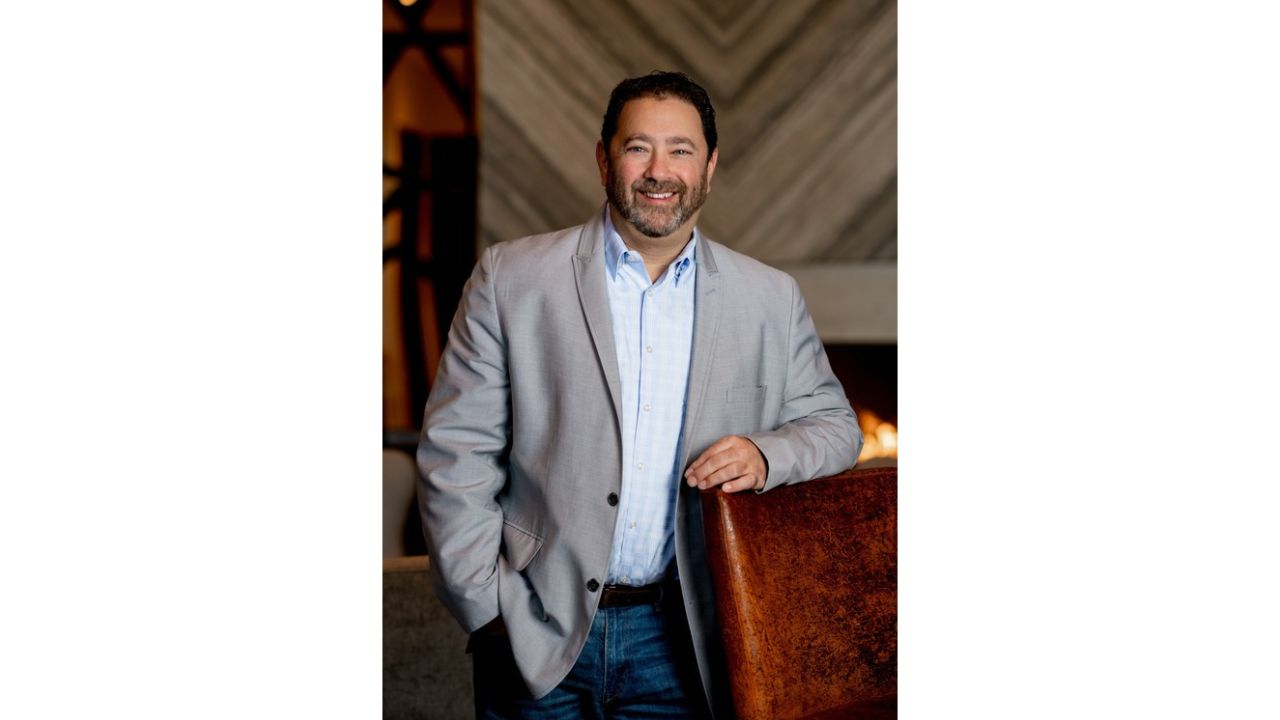
“Sometimes people think that if a parent is a nurse, that’s enough, or if our coaches are CPR certified, that’s enough,” says K Ellis F Mair, EdM, LAT, ATC, founder and chief clinical officer of Go4, who has worked extensively with athletic trainers and youth sports organizations. “A lot of times, that’s not quite what you need, and there’s a lot of conflict of interest there.”
EMS remains an essential partner, but its role is different. Athletic trainers manage sport-specific assessment and sideline care; EMS provides emergency stabilization and transport. Other licensed clinicians, including physicians and board-certified sports chiropractors, can strengthen the team when their duties, supervision, malpractice coverage, and scope of practice are defined in advance.
Helma notes university and community partnerships can expand field-of-play care, including through properly supervised clinical interns.
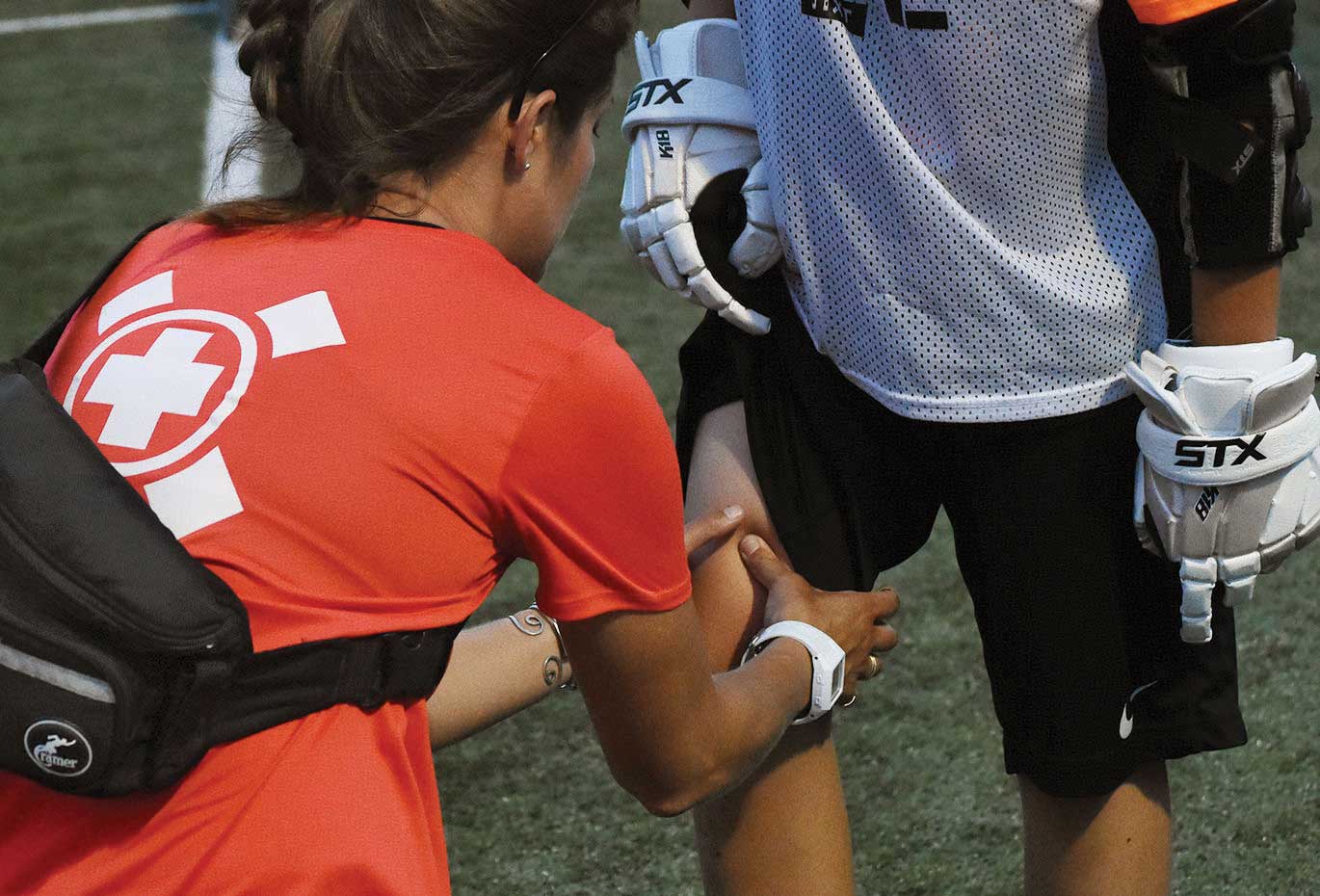
3. Share the complete event picture
An assignment listing should provide far more than the venue address and competition hours. Athletic trainers need the current schedule, expected attendance, athlete ages, sport and competition level, field or court map, number of medical staff, treatment location, weather policies, available equipment, emergency procedures, and contact information for decision-makers. Planners should also explain whether 1,000 athletes will compete at once or in separate morning and afternoon sessions because that distinction affects workload.
The event’s communication protocol should include a way to distribute last-minute changes. “Referees and athletic trainers are always the last people to find that stuff out,” Mair says. “They’re like, ‘Oh, I didn’t know it was moved.’”
Marcano recommends recurring touchpoints between event and medical leaders before a large tournament. Those meetings give both sides time to review staffing, policies, procedures, and emergency plans, and to address unresolved concerns.
4. Match staffing to risk and geography
No single ratio fits every event, and head count alone cannot determine staffing. “It depends largely on the age level and risk level,” Mair says. “If things are spread apart and it’s going to take a while for the medical staff to get back and forth, that’s something you want to take into consideration.”
Planners and their medical lead should consider the sport, athletes’ ages, intensity of competition, number of simultaneous games, distance between playing areas and likely volume of routine care. Mair says middle school tournaments can be deceptively demanding because athletes of the same age may differ greatly in size, coordination, and physical development.
Recruiting events can also raise the stakes when athletes feel pressure to play through an injury. Marcano’s ideal is one athletic trainer at every field or court, plus clinicians at a central area for taping, wound care, and nonurgent assessments. When distances make that impossible, place staff strategically and provide transportation such as a golf cart. A satellite field should never become a medical blind spot.
5. Make the emergency plan specific to the event
An emergency action plan, or EAP, must reflect the venue, competition, staffing, and conditions on that date.
At one venue, basketball and hockey may require different patient-removal routes; a concert or construction closure may change ambulance staging or access altogether.
“Just because it was the plan they used last week doesn’t mean that it necessarily applies to you,” Mair says. “Make sure all the information on that plan is accurate for that day.” Marcano identifies six essential elements: personnel and their roles; communication methods and information; maps, directions, and access points; emergency equipment and who can reach it; transportation, destination, method, and response time; and written documentation of the plan, rehearsals, and actual activations.
“An emergency action plan doesn’t exist alone,” Marcano says. “It should live alongside a comprehensive sports medicine plan that includes detailed policies and protocols for specific incident types.”
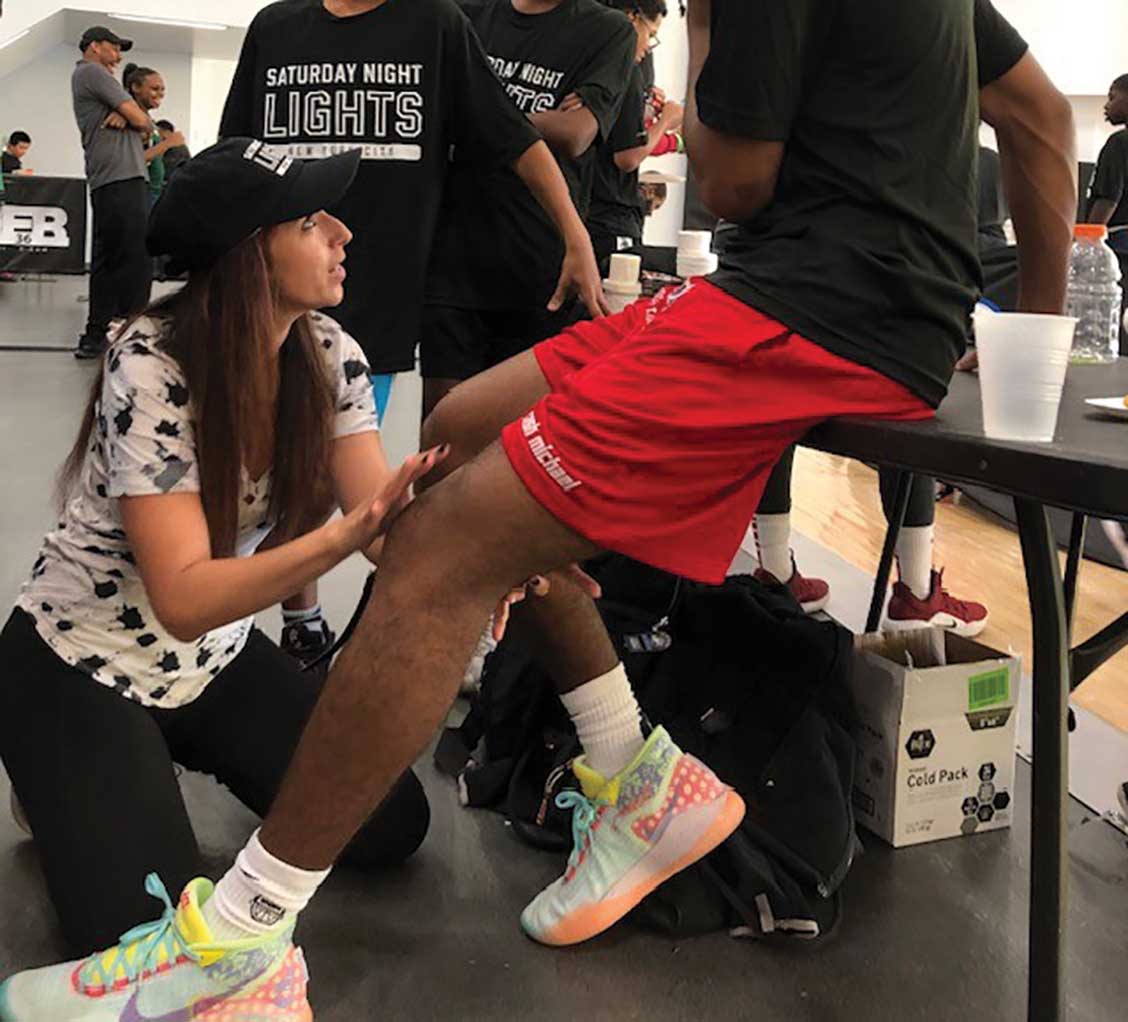
6. Assign every emergency role
The moment an athlete goes down is the wrong time to decide who calls 911, retrieves the AED, meets the ambulance or clears a sideline. Write those responsibilities into the plan and name the people who will perform them. Include the athletic trainers, event director, officials, field coordinators, coaches, security personnel, and volunteers whose jobs may change during an emergency.
Mair recommends a pre-event medical timeout with everyone who could be involved. The group can quickly review how an injury is reported, which radio channel to use, who controls the crowd, and how responders will reach the patient.
“The field coordinator radios for the athletic trainer, the athletic trainer responds, the coaches handle the sidelines and crowd control, and the referees can spot things ahead of time,” Mair says. “It’s really a team effort, so everybody gets read in on the plan before the event starts.”
Helma also recommends posting the EAP in multiple locations so staff members can identify the people responsible without searching for the event director.
7. Protect the route for emergency responders
Ambulance access requires more than a line on a map. A street address may lead responders to a sprawling sports complex without getting them to the correct field. “Scouting the venue beforehand is the most important thing you can do to understand specific needs,” Marcano says. “We need to understand ingress and egress routes for an ambulance, and what access points to a field or indoor venue are available.”
Planners should physically inspect those routes, verify gate widths and locks, keep lanes clear of parked vehicles and equipment, and designate someone who can meet EMS at the entrance and guide responders to the injury site. That guide needs a radio or phone and enough familiarity with the property to adjust if the primary route is blocked. Helma identifies ambulance ingress and egress, along with a person assigned to direct the ambulance, as details organizers frequently overlook.
8. Supply the equipment the emergency plan requires
Athletic trainers often arrive with personal kits, but organizers should never assume one clinician can supply everything a tournament needs. Equipment responsibilities must be settled before game day. “At least have lifesaving supplies, including an AED,” Mair says. “If it’s going to be warm, make sure you have a cold tub and ice designated for the cold tub only.”
That ice cannot disappear into drink coolers or bags for routine injuries. Marcano also advises checking whether the venue has water to fill a cold-immersion tub, shelter for a lightning delay and accessible AEDs. Routine consumables deserve the same advance conversation. A basketball tournament that generates heavy demand for taping may need to purchase additional tape or compensate the athletic trainer for bringing extra supplies.
Clarifying responsibility before the event prevents a shortage from becoming the medical team’s problem on game day.
9. Make the medical team easy to find and reach
Medical coverage loses value when athletes, officials, and volunteers cannot locate it. Establish a clearly marked, centrally located medical area and give clinicians clothing or credentials that distinguish them from other event staff. If one athletic trainer covers several competition areas, everyone should know that person’s base location and how to summon help.
“If only one athletic trainer is available, I typically advise that they remain in one location when possible,” Marcano says. “Whether they are needed for an emergency or nonemergent care, everyone knows where to find them.”
Equip the athletic trainer with a two-way radio, choose a dedicated channel, and tell each field who is responsible for making the call. A useful radio message should identify the exact location and describe the athlete by team, uniform color, and jersey number. By the time the clinician arrives, an athlete may
have returned to play, blended into the bench, or left with a family member. Specific information saves time and helps officials enforce removal-from-play decisions.
10. Rehearse the response before the competition
An EAP becomes useful when the people named in it have practiced their roles. Marcano recommends annual updates, review with every relevant group, and rehearsal whenever possible. Helma says emergency scenarios should be practiced repeatedly so assignments are familiar when pressure rises.
Mair saw the value during an event this past summer. The medical team reviewed its EAP each morning and practiced its response to sudden cardiac arrest. Three hours after one drill, a person collapsed in the vendor area outside the venue. Someone had already begun CPR when Mair ran through the building, collected the AED, and reached the patient. The team applied the AED within two minutes, delivered a shock and transferred the person to EMS conscious and breathing. Mair says the person is doing well today.
“That’s why we do all the planning, and that’s why we’re so annoying about some of these details sometimes,” Mair says. “Some people are like, ‘It’ll be fine.’ I’m like, ‘No, because one day it’s not going to be.’” And if (or when) that day comes, as the old Boy Scout saying goes, it’s always better to be prepared.