In small and mid-sized cities, youth and amateur sports events don’t get lost in the shuffle—they often take the spotlight
When a national tournament lands in a major metro, it can disappear into an already crowded sports calendar. In a small or mid-sized city, however, that same event might become one of the biggest things happening all year.
While facilities, field quality, and airport access remain essential factors in site selection, smaller markets often compete—and win—by offering something larger cities can’t always match: visibility, accessibility, and a level of hospitality and community engagement that turn tournaments into centerpiece events.
For planners, rights holders, or tournament directors, choosing a smaller city instead of a major metropolitan area can mean more local attention, stronger volunteer support, and deeper community investment.
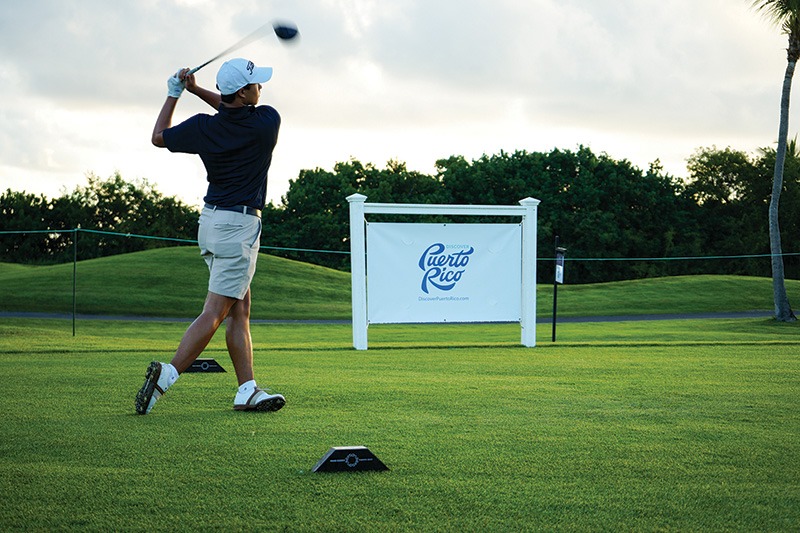
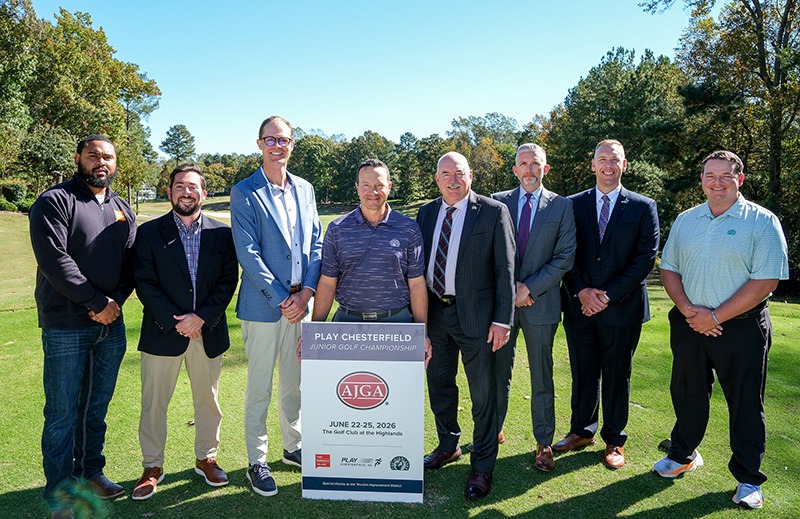
Patrick Cansfield, director of development for the American Junior Golf Association (AJGA), says the nonprofit’s most successful events are often in small and mid-sized markets. The AJGA hosts 150 events nationwide annually, plus 40 internationally, and serves as a primary recruiting ground for NCAA college golf.
He says the AJGA prefers to work with communities that can host events long-term, such as Williamsburg and Chesterfield, Va., where it recently signed three-year partnership deals.
AJGA events “really become like (host cities’) Super Bowl as opposed to some of the major cities where it’s kind of a drop in the bucket,” Cansfield says. “The goal is for the community to wrap its arms around it, where it would be one of their major events throughout the year.”
In smaller markets, that concentration of attention can have measurable advantages. Events often face less competition for media coverage, sponsorship dollars, and volunteer support. Local leaders, chambers of commerce, and tourism officials may prioritize a tournament’s success in ways that are harder to replicate in larger cities juggling multiple professional and convention events. For organizers, that visibility can translate into stronger attendance, more engaged partners, and a heightened sense of impact.
For communities without major league franchises or year-round convention traffic, sports tourism can also anchor a broader economic development strategy. Multi-day tournaments fill hotel rooms during shoulder seasons, drive restaurant traffic, and introduce visiting families to destinations they may not
otherwise consider.
Hospitality matters
In Columbia, S.C., welcoming local and regional youth baseball and soccer tournaments has helped establish the city as a strong sports destination. The community has an abundance of baseball and soccer players and fans.
“We have the largest youth sports organization in the state: the South Carolina United Football Club. We work with them a lot to host events they have in the spring and fall,” says Scott Powers, executive director of Experience Columbia SC Sports.
Columbia also hosts regional baseball tournaments, including Perfect Game and United States Specialty Sports Association events. Meanwhile, the city is home to the University of South Carolina, which competes in the Southeastern Conference, giving Columbia opportunities to host conference competitions, Powers says.
Strong coordination among visitor bureaus, hotels, restaurants, and local businesses strengthens a host city’s ability to give athletes and visitors a warm welcome and deliver a seamless experience. In many smaller markets, those relationships function as an informal infrastructure that supports events long before the first whistle.
Consistent communication with the hospitality community is especially important before an influx of teams, families, and fans. To that end, Experience Columbia SC Sports regularly sends newsletters to keep partners informed about upcoming tournaments, projected attendance, and room-night expectations. That advance notice allows hotels to adjust staffing levels, restaurants to plan inventory, and attractions to align promotions with tournament schedules.
In Virginia Beach, Va., the city’s sports tourism team extends “Virginia hospitality” by leaving handwritten welcome letters and business cards in athletes’ hotel rooms and offering recommendations for things to do and places to eat.
“It goes the extra mile. People appreciate that,” says Jordan Frazier, sports tourism event services manager. “We want you to feel like you’re family. When you come to Virginia Beach, we want to see you again.”
When facilities or dates aren’t available, Virginia Beach’s team contacts neighboring cities to help place events elsewhere—reinforcing long-term relationships over one-time transactions. That approach, Frazier says, strengthens the region’s reputation as a reliable partner rather than a competitor guarding calendar space.
Host cities nationwide can also make improvements by listening closely to participant feedback. In Virginia Beach, Frazier says officials added additional women’s restrooms and converted some men’s restrooms to accommodate female athletes when needed—adjustments that generated positive feedback from visitors and demonstrated responsiveness to changing participation trends.
Location and accessibility
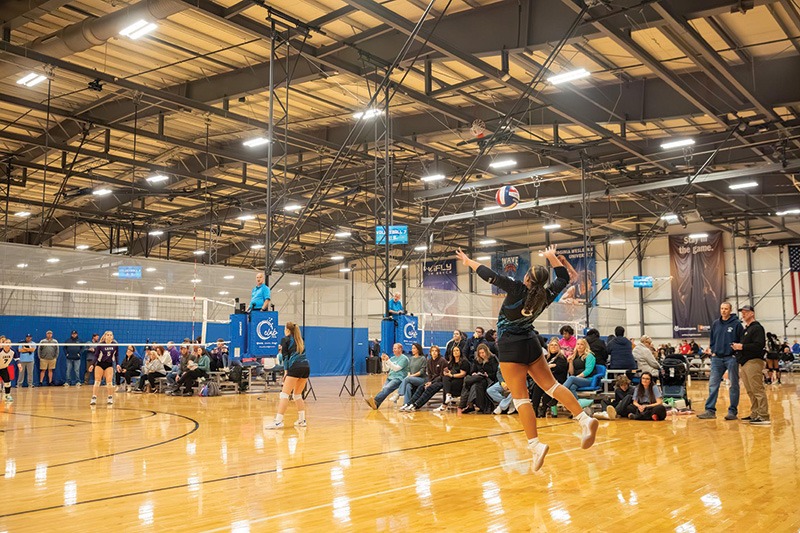
Ease of travel remains critical when organizations evaluate host cities. For youth and amateur events, especially, participation often depends on whether families can reasonably drive rather than fly.
In the nation’s heartland, Springfield, Ill., sits within a five-hour drive of roughly 20 percent of the U.S. population, according to Terry Truman, sales manager for Visit Springfield. The city is accessible via interstate highways, commercial air service, and Amtrak connections through nearby Chicago and St. Louis.With 3,500 hotel rooms, Truman describes affordable, family-friendly Springfield as “a good bang for the buck.”
Columbia’s central location in the Southeast makes it ideal for regional soccer and baseball tournaments, Powers says. Three interstates serve the area, which is about three hours from both Atlanta and Raleigh, placing it within driving distance for many teams and families.
“Being able to easily drive to get here on the East Coast allows us to host a lot of events,” Powers says.
Since its events draw players from across the country and around the world, proximity to airports is essential for the AJGA. Cansfield says the organization prefers host cities and venues within one to two hours of a commercial airport. Along with high-quality 18-hole golf courses, strong community backing remains a primary factor in site selection.
Accessible pricing can also influence registration decisions. When hotel rates, parking, and dining costs remain manageable, families may be more likely to commit to multi-day events—and to return in future years.
and tournaments. Courtesy Virginia Beach CVB
Versatility and investment
Small and mid-sized cities often maximize every available facility—from ball fields and collegiate venues to fairgrounds, parks, and beaches—to remain competitive.
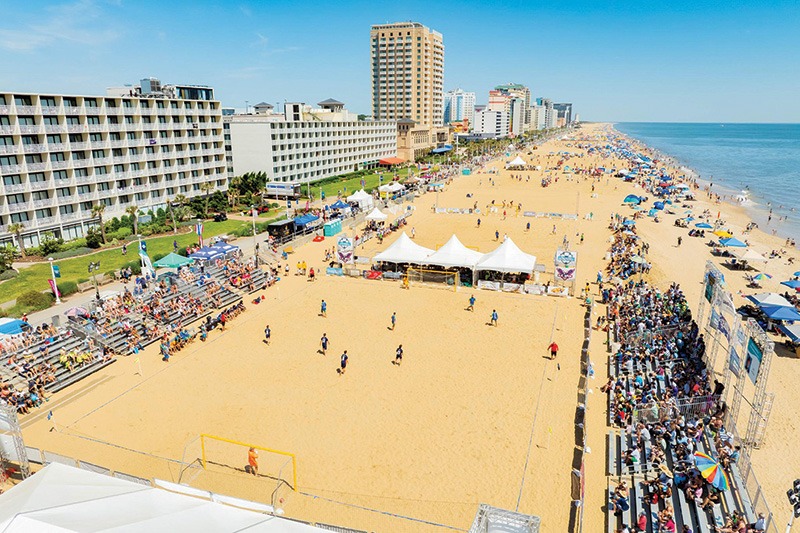
Virginia Beach leverages its coastline to attract beach sports, including ultimate Frisbee, jet skiing, and other watersports, as well as skateboarding and action sports. Just one block from the ocean, the Virginia Beach Sports Center’s indoor gyms host basketball, volleyball and more, while outdoor fields accommodate football and softball. The city has 11 sports facilities and recently invested in its Hampton Roads Soccer Complex, in preparation for hosting the all-women’s soccer league’s DPL Finals.
“We’ve diversified. We do a lot of pickleball and any sport you can think of. We’re big on lacrosse,” Frazier says. “We like to be adaptable. From local to regional to national NCAA levels in between, we’re open to every sport. We’re always looking for the next big thing.”
One emerging opportunity is girls’ flag football, as more colleges begin offering scholarships in the sport, Frazier adds.
Strategic facility investments can also reduce weather risk and extend tournament seasons. Indoor complexes allow cities to host winter events or provide backup space during inclement conditions, giving planners greater scheduling certainty.
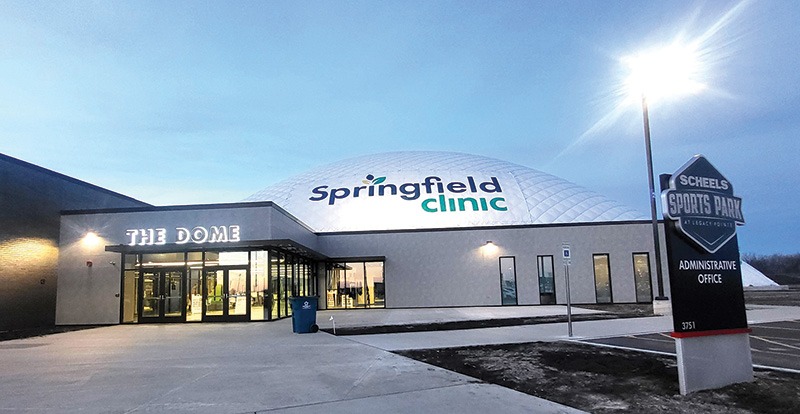
Springfield recently opened Scheels Sports Park, a two-part project that is partially operational. The complex features a 196,625-square-foot indoor dome—the largest of its kind in the world—along with eight outdoor multiuse fields, strengthening the city’s competitiveness for baseball, softball, football, and collegiate events.
Additional venues—including a soccer complex, facilities at the University of Illinois Springfield and the Illinois State Fairgrounds—add flexibility.
Springfield is known for hosting floor sports such as wrestling, cheer, dance, and national gymnastics tournaments, along with high school rodeo events
and emerging competitions like jujitsu and archery. In 2028, the city will host
the return of the World Horseshoe Pitching Championship.
In Columbia, Saluda Shoals Park offers an environmentally sensitive riverfront venue with a tennis complex, tournament fields, and a disc golf course. Six fields can accommodate soccer, baseball, quadball, lacrosse, flag football, and ultimate Frisbee.
“It is the city’s premier event facility when we need linear fields,” Powers says.
Beyond the competition
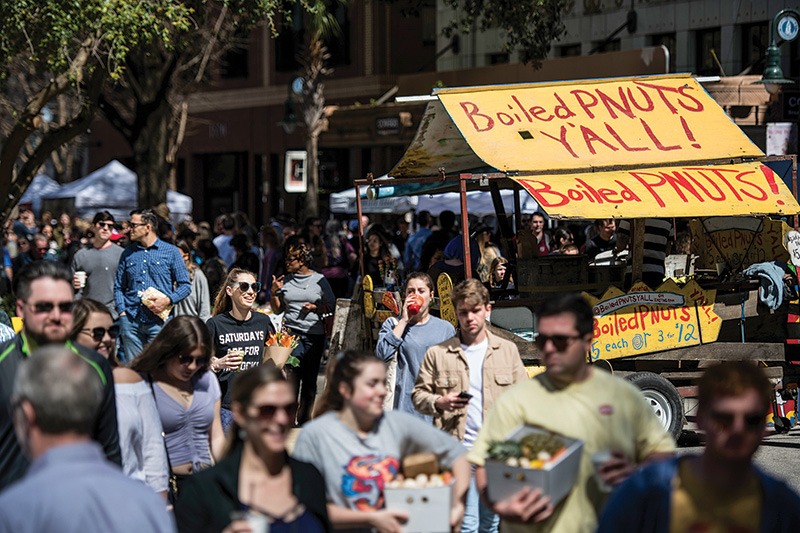
For many families, tournaments represent more than games—they are opportunities to travel together. Destination appeal can influence registration numbers, particularly for youth and amateur events where parents weigh both cost and experience.
Successful host cities promote entertainment and affordable attractions that appeal to multiple generations, including museums, historic sites, outdoor recreation, and dining districts, encouraging extended stays that increase economic impact.
As the United States marks its 250th anniversary, some cities are highlighting historic assets alongside sporting events.
Springfield, Ill., was Abraham Lincoln’s hometown, and the only home he ever owned remains there. The city features more Lincoln-related sites than anywhere in the world, Truman says, including the Abraham Lincoln Presidential Library and Museum near the downtown convention center. Visitors can also tour the Illinois State Capitol building, where Lincoln delivered his “House Divided” speech.
Springfield is also celebrating the centennial of Route 66, established in 1926 as one of the nation’s original numbered highways. Illinois contains the longest stretch of Route 66, Truman says. The Illinois State Fairgrounds are hosting the Route 66 Experience, highlighting the history of communities along the route.
In Columbia, visitors can tour the South Carolina State House grounds, Historic Columbia home tours and other museums, Powers says.
In Williamsburg, Va., Cansfield notes that history and higher education enhance the city’s appeal. “Celebrating 250 years as a country this year, for us it’s a great tie-in there, given the history and the importance of that with Williamsburg,” Cansfield says. “William & Mary college in Williamsburg has men’s and women’s golf teams. It’s easy for college coaches to come out and recruit, and it gets kids on campus to see if that could be a good fit.”
One of AJGA’s newest host cities, Rapid City, S.D., will host a Labor Day weekend tournament. Families can visit nearby Mount Rushmore National Memorial and explore the city’s walking tour of presidential statues.
“A big part (of choosing Rapid City) was … Mount Rushmore and the off-the-course stuff that’s available,” Cansfield says. “We’re excited for players to experience it.”
As more secondary markets invest in facilities and sports tourism infrastructure, competition among small and mid-sized cities continues to intensify. But for many organizers, the deciding factor remains whether a community treats an event as a booking, or as a partnership. For small and mid-sized cities, that distinction can make all the difference.