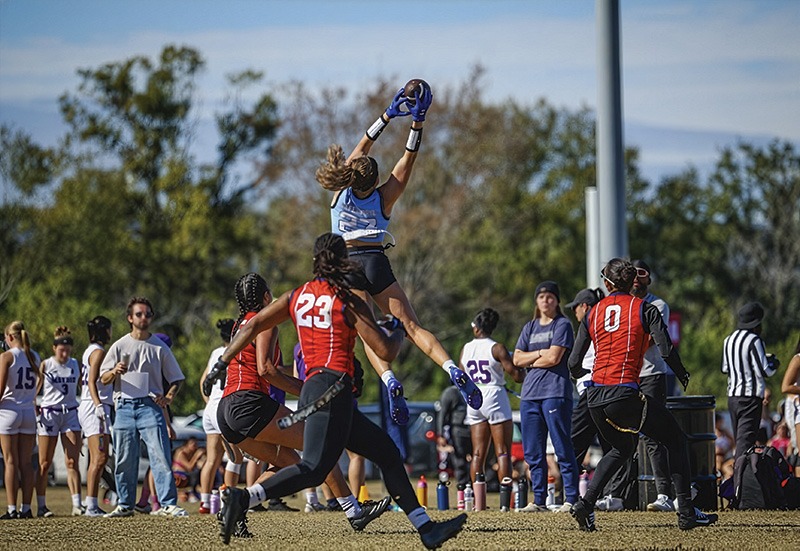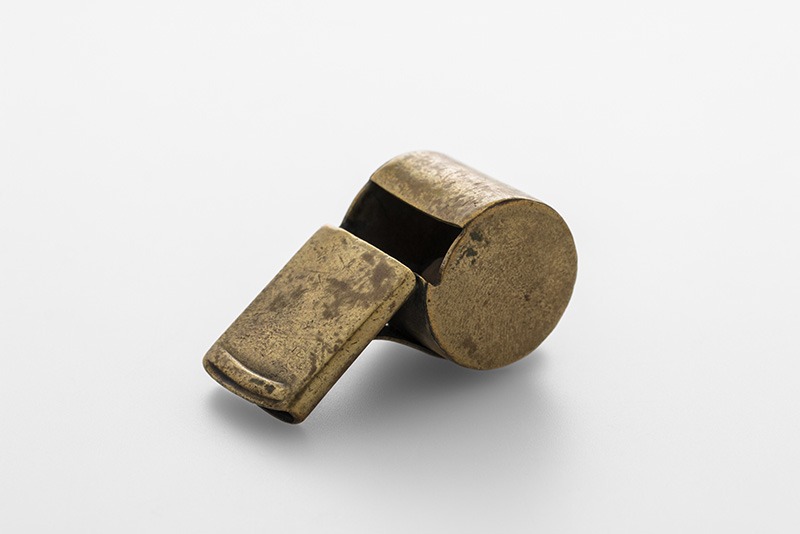
Whether you’re watching or playing a sport in a stadium, arena, or rink, there’s one sound that will, or at least should, cut through the roar of the crowd: the referee’s whistle. Designed to be heard in noisy situations, the whistle is used to start and stop play, signal a foul, or draw attention when needed. And while whistles have been around a long time—prehistoric bone instruments dating back roughly 12,000 years have been found in modern-day Israel—their use in sports goes back to 1884. That’s when a British inventor named Joseph Hudson designed the Acme Thunderer, the first pea whistle, which uses a small cork ball to create the loud, trilling sound now synonymous with a referee’s call. Before the whistle, referees used white handkerchiefs, hand signals and their own voices. Originally made of brass, the Thunderer (pictured, above) has been described as the loudest whistle in the world. A toolmaker by trade, Hudson certainly knew a thing or two about whistles before designing it. A year earlier, one of his whistles won a competition held by London’s Metropolitan Police, who were looking for a better way to signal colleagues for help or get people’s attention. They had been using a hand rattle. Founded in 1870, J Hudson and Co. still makes whistles today, producing hundreds of models, including dog whistles and hunting calls. Meanwhile, the Thunderer now comes in many sizes, and the plastic-bodied versions are available in a variety of colors.
As for their place in sports history, pea whistles remained the referee’s choice until the mid-1980s, when Canadian Ron Foxcroft invented the pealess Fox 40 whistle. It is now the whistle of choice for the NHL, NBA, NCAA, and NFL, largely because it performs better in wet and cold conditions and has no moving parts that can fail. Whether pea or pealess, the whistle remains one of sport’s most recognizable sounds—one that every athlete reacts to, and every fan can’t help but hear.