Bound for the 2028 Olympics, Sixes lacrosse is reshaping the sport

A faster, more compact version of lacrosse is gaining momentum across the U.S. and around the world. Sixes lacrosse is a streamlined, high-tempo version of the traditional field game, designed to prioritize speed, simplicity, and accessibility, and it will debut on the global stage at the 2028 Summer Olympics in Los Angeles.
While the sport’s origins go back to 2018, World Lacrosse officially announced the “World Lacrosse Sixes” discipline in May 2021. Commonly known as Sixes, the format’s first major international appearance came at the World Games in Birmingham, Alabama, in July 2022, says Brian Logue, senior director of communications for USA Lacrosse. “That was the first time it was competed at a high-level international stage.”
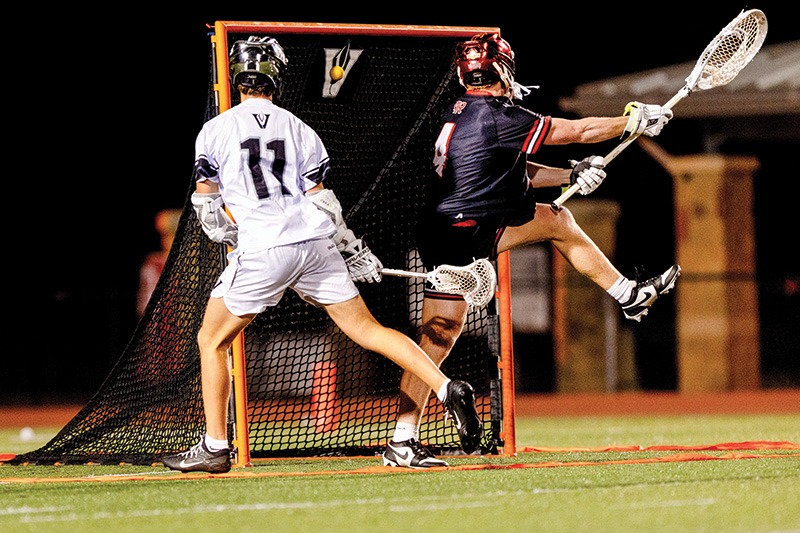
Unlike the traditional full-field format of lacrosse, which features 10 players on each side with specialized positions, Sixes is played with six players per team, including the goalie, and there are no offsides—meaning every player is responsible for both offense and defense.
While small-sided versions of lacrosse have existed for decades, Logue says the formalization of Sixes marked a turning point. World Lacrosse created it to promote global growth by lowering barriers to entry—reduced costs, smaller fields, and fewer players—while also developing a version suitable for Olympic inclusion. With limits on athlete participation and a need for fast-paced, television-friendly competition, Sixes emerged as the format that could bring lacrosse back to the Summer Games. Here’s a guide to this exciting sport, along with valuable insights on how you can get involved.
Understanding the differences
At its core, Sixes is a game of efficiency, and that’s where its impact has been felt most strongly by event organizers and facility operators. Mason Russo, a collegiate player who coaches a boys’ team in the Super Sixes Lacrosse tournament run by MDLX Events in the Washington, D.C. area, sees the differences firsthand.
“The game is played on a smaller field with all short sticks, eliminating long-pole defenders and emphasizing versatility and constant transition,” Russo says.
In traditional field lacrosse, defensive players use longer sticks to extend their reach for checks, interceptions and goal protection. Another key difference is the shot clock. “A 30-second shot clock keeps possessions moving, while games consist of four eight-minute running quarters,” Russo says.
Faceoffs also occur only at the start of each quarter rather than after every goal, creating a more continuous flow of play. “These differences produce a faster, more compact game that is easier to schedule, more adaptable to a wider range of venues and more accessible for new players and fans alike,” says Caitlin Kelley, senior director of sports administration for USA Lacrosse. “Rosters are about half size, fields about three-quarters, and it’s a shorter game, so that means more touches, more action and more games can be accommodated in an event.”
Logue adds that the format simplifies logistics by requiring fewer players. “If you’ve got a handful of good players, you can be much more competitive, and it levels the playing field,” he says.
From a development standpoint, the format also changes how the game is played. “With the smaller field, especially at younger ages, there are a lot more touches on the ball,” Logue says. “There are no long sticks, so everybody plays offense and defense. There are real advantages from a skill development standpoint.”
Ryan Disque, head coach and program director at Vandegrift High School in Texas, says those operational differences are immediately apparent at the program level.
“It’s all about roster size,” Disque says. “Sixes requires far fewer players, which lowers the barrier to entry for schools and programs. It reduces costs tied to equipment, uniforms, and travel, and gives smaller schools a much more realistic way to start a program.”
He also notes that scheduling becomes easier. “The shorter format makes it easier to fit games into tighter windows and opens the door for more event-style programming or multiple-game days,” he says. “There are trade-offs, however. Families do not always love traveling a long distance for a game that may last under an hour, so that piece has to be considered from a program-building standpoint.”
There are also operational considerations tied to gameplay. One of the biggest practical issues is the shot clock. “If you want to play Sixes correctly, the shot clock is essential, so there is still an operational cost,” Disque says. Those structural differences are not just changing how the game is played—they’re reshaping how and where it can be organized.
Expanding opportunities
With fewer players and a smaller footprint, the format has created opportunities for facilities and communities that previously could not accommodate full-field lacrosse.
“Sixes provides a very visible example of the game being played in small-sided format,” Kelley says. “It brings credibility to this approach and will encourage adoption in growing areas.”
For facilities, the advantages are tied to efficiency. “With a traditional field, it’s similar in size to a soccer field, but with Sixes you can go cross-field and maximize your space,” Logue says. “You can definitely get more fields into your facility because it is a smaller field.”
That means more games, teams, and programming opportunities in a single day, potentially increasing revenue for event operators. Still, Disque cautions that the format is not a plug-and-play solution.
“Sixes is not automatically a fit for every indoor or urban setting,” he says. “Once you move into spaces where you are playing off walls or dramatically changing the surface, you are drifting closer to box lacrosse. You also have to think about safety and spacing because you may not have the natural infrastructure built in.”
Players and fan experience
Those same changes are reshaping how the game is experienced. “There’s no faceoff after every goal. It’s just scooping the ball out of the net and going,” Logue says. “There’s really no dead time; it’s constant action.”
That pace is a major selling point. “Sixes is fast, condensed, and easier to follow,” Disque says. “It’s a much more approachable version of the sport for someone seeing it for the first time.”
At the same time, traditional audiences may need time to adjust. “People who have grown up around the field game can see something that feels more chaotic and less structured,” Disque says.
From the player’s perspective, the demands are different. “It’s very fast-paced, and there are no long poles,” says Nicholas Daniello, director and founder of Prime Time Lacrosse in Cross River, N.Y. “It’s similar in some ways to box lacrosse, but more up and down, almost like basketball. Everybody’s playing offense, everybody’s playing defense, everybody gets involved—and every player I’ve talked to has loved it.”

A growing movement
Although Sixes is gaining visibility, USA Lacrosse says adoption at the grassroots level is still evolving.
“I don’t think it’s a big pivot, but I’ve seen more events crop up in the last couple of years,” Logue says. “It’s a chance to pull a group together, and you can split one team into multiple teams and compete.”
Daniello sees Sixes as a complement to traditional leagues, particularly in the fall and winter.
“In those cases, Sixes can help keep players engaged,” he says. “If you’re short numbers because of football or hockey, it gives you a chance to still play. For younger kids, I could see Sixes replacing the 7v7 model.” He does caution that it may affect defensive development without long poles.
In Texas, adoption is being driven by the need to expand access. Disque says the Texas High School Lacrosse League sees Sixes as a practical solution for smaller schools that may not have the numbers or resources for full-field play. “By reducing roster requirements, Sixes opens the door for participation beyond major metro areas, particularly for smaller schools,” he says.
At the same time, adoption has been uneven, with some programs embracing it as a developmental tool while others remain hesitant.
The biggest accelerant, however, is expected to be Olympic inclusion. “We see this as an unprecedented opportunity for lacrosse to be seen
by new audiences,” Kelley says. “It’s the biggest stage in sports.”
Because that visibility could have a major impact, organizers need to be prepared. “If there is no local program in place, that excitement will not automatically turn into participation,” Logue says. Disque points to sports like curling, which see participation spikes after the Winter Games. “Growth happened because there was already something available for people to join,” he says. “If the infrastructure is there, LA28 could be a major accelerant.”
Even those cautious about Sixes’ long-term role see the Olympic effect as positive. “Any time the sport gets exposure, it’s an awesome thing,” Daniello says. “Sixes may not replace the traditional game, but it can expand the sport’s reach.”
For players, planners, organizers, and destinations, that expansion brings new opportunities—and with the Olympic spotlight approaching, those opportunities may arrive faster than ever.